
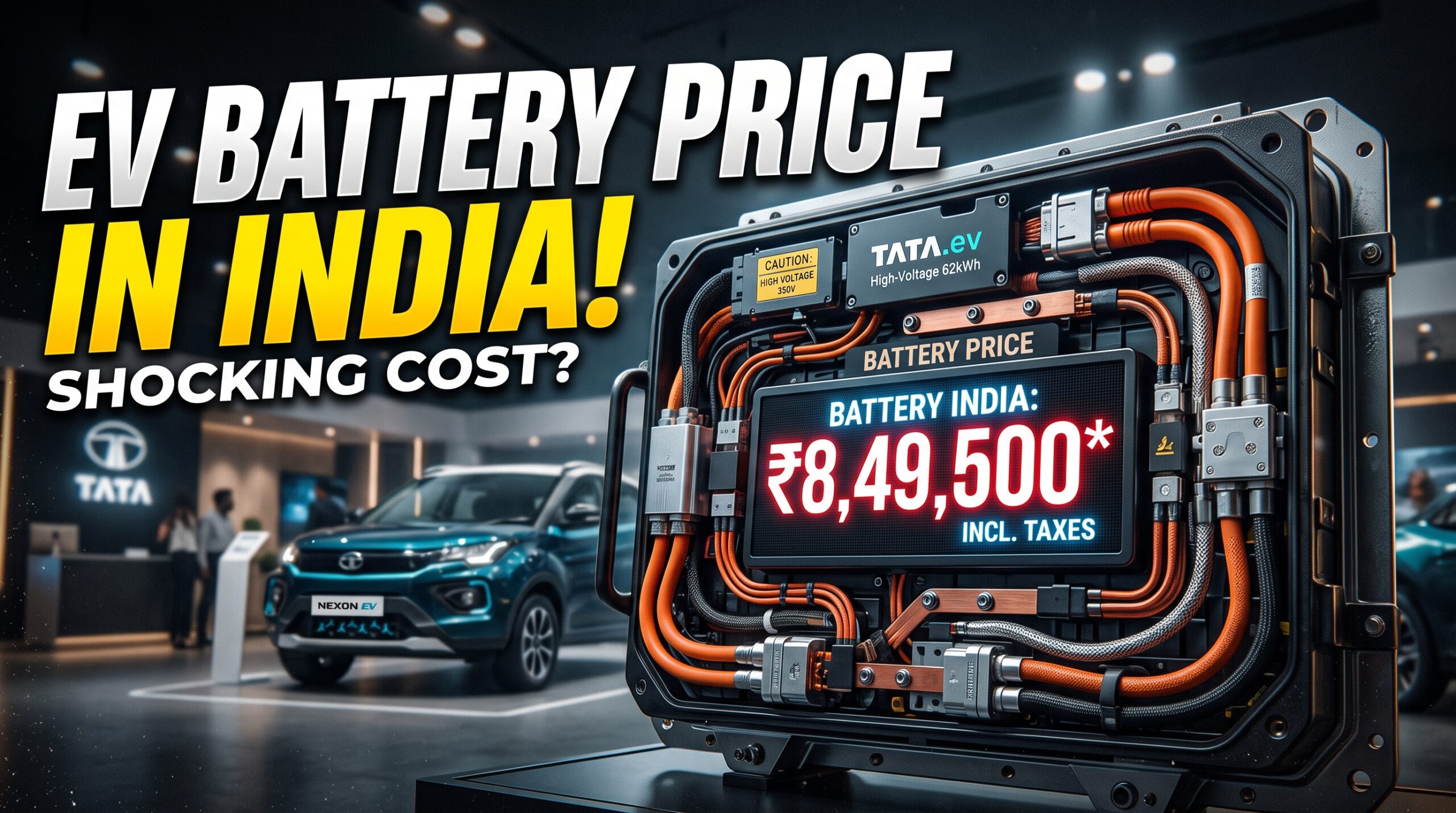
An EV battery replacement in India typically costs between ₹4 lakh and ₹8 lakh, depending on the size of the pack and the car it goes into.
That’s a big number, and it’s the single thing that worries most EV buyers. But here’s the part that gets lost in the panic: almost no one actually pays it, because the battery is covered by warranty for years, and prices are falling every year. Here’s exactly what an EV battery costs in 2026, what drives that price, and how to make sure you never have to pay it.
I am Gagan and I write about how much an EV owner can charge for an actual battery price during replacement. I am telling you a real incident in my experience, that is, I was going to an Indian maker EV Service station workshop, and found lots of users facing issues with damaged batteries and non-working BMSs.
Both components are mainly used in every type of electric vehicle, i.e., cars and bikes, etc., and I shuddered when a service man showed the job card and mentioned the price of a hatchback EV is around 5.25 Lakh rupees, for a 24 kWh Battery Pack.
The car name is Tata Tiago.
Note for editor: All ₹ figures below are estimates based on current battery pricing. Verify against the latest 2026 figures and any official Tata service-centre quotes before publishing, as battery prices drop year on year.
What Determines an EV Battery’s Price
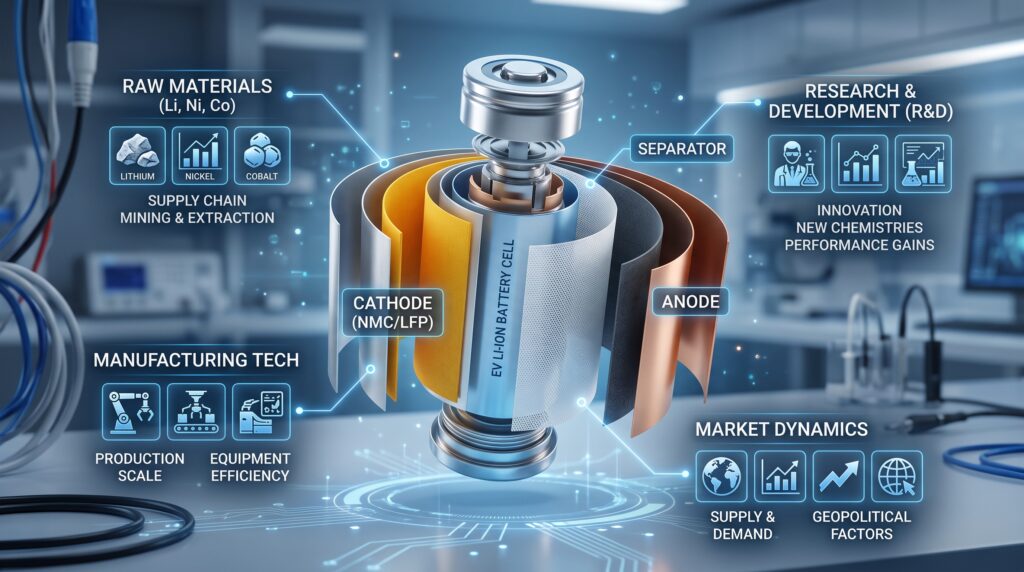
An EV battery’s price comes down mainly to its size in kWh, because the cells inside are the most expensive part, and you’re essentially paying per unit of energy stored. A bigger battery means more cells, more raw material, and a higher price. But size isn’t the only factor.
The Things That Move the Price
Several factors decide what you’ll actually pay for a replacement pack:
- Battery size (kWh): The biggest factor. More capacity means more cells and a higher cost. A 40 kWh pack costs far more than a 25 kWh one.
- Cell chemistry: LFP packs are generally cheaper than the NMC packs used in some EVs, because they use no cobalt or nickel.
- Brand and car model: Premium EVs use larger, costlier packs. A mass-market hatchback battery costs a fraction of a large SUV’s.
- Labour and GST: The replacement quote includes service-centre labour and 18 percent GST, which adds meaningfully to the raw pack cost.
- Whether you need the full pack or a module: Sometimes, only a faulty module needs replacing, not the entire battery, which costs much less.
Why the Price Keeps Falling
EV battery prices in India are dropping steadily as local manufacturing grows. For years, India imported most of its lithium-ion cells, which kept costs high. With Indian companies now building domestic cell factories, that dependence is reducing, and battery prices are expected to fall further over the next few years. The replacement that looks expensive today will cost noticeably less by the time most current EVs are out of warranty.
EV Battery Replacement Cost by kWh
The simplest way to estimate an EV battery’s cost is per kilowatt-hour, since that’s how the cells are priced. As a rough guide for 2026, a replacement pack works out to a certain cost per kWh, multiplied by the pack size, plus labour and GST on top.
A useful way to think about it:
- Small packs (around 25 to 30 kWh): roughly ₹4 lakh to ₹5.25 lakh
- Mid-size packs (around 35 to 45 kWh): roughly ₹5.5 lakh to ₹7 lakh
- Large packs (50 kWh and above): ₹7 lakh and upwards
Note for editor: These ranges are estimates. Confirm current per-kWh replacement pricing and any model-specific official quotes before publishing.
These figures include GST and labour. The raw pack alone is cheaper, but you never buy just the raw pack. This per-kWh logic is also why a buyer comparing two EVs should factor in battery size, not just the showroom price. For the full ownership picture, our EV battery cost, warranty and ownership guide covers the long-term maths.
Real Examples: Nexon, Tiago and Punch
Looking at specific Tata EVs makes the numbers concrete, since Tata sells the most EVs in India, and these are the models people ask about most. The replacement cost scales with each car’s battery size.
Tata Nexon EV
The Tata Nexon EV uses packs in the region of 30 to 45 kWh, depending on the variant, so an out-of-warranty replacement would fall roughly in the ₹5 lakh to ₹7 lakh range, including GST and labour. In practice, the Nexon EV’s battery is covered by an 8-year warranty, so most owners will never face this cost during normal ownership.
Tata Tiago EV
The Tiago EV uses smaller packs, around 19 to 24 kWh, making it one of the cheaper batteries to replace. An out-of-warranty estimate would land roughly in the ₹4 lakh to ₹5.25 lakh range. The 24 kWh variant also carries a lifetime battery warranty for the first owner, which effectively removes the replacement worry entirely.
Tata Punch EV
The Punch EV’s packs of around 25 to 35 kWh put a replacement estimate roughly in the ₹4.5 lakh to ₹6 lakh range. Like the Tiago, its larger battery option comes with a lifetime warranty for the first registered owner, so the headline replacement figure stays theoretical for most buyers.
Note for editor: Verify each model’s exact current battery capacities and warranty terms against Tata’s official spec sheets before publishing.
Warranty Coverage Changes Everything
The reason the scary replacement numbers rarely apply is that EV batteries come with long warranties, and most failures happen well within that window. Almost every EV sold in India covers the battery pack for 8 years or 1,60,000 km, and some Tata variants now offer a lifetime warranty for the first owner.
These warranties typically guarantee the battery will retain at least 70 per cent of its capacity within the term. If it drops below that or fails outright due to a manufacturing fault, the manufacturer repairs or replaces it at no cost to you. So the realistic question for most owners isn’t “what does a battery cost,” it’s “will my battery ever fail within warranty,” and for the vast majority, the answer is no. Our EV battery warranty guide explains exactly what’s covered and what isn’t.
How to Reduce Your Battery Replacement Risk
You can dramatically lower the chance of ever paying for a battery by treating it well, since most degradation is caused by habits, not age. A few simple practices keep the pack healthy enough to easily outlast its warranty.
- Avoid charging to 100 per cent daily on NMC batteries. Keep it around 80 percent for everyday use and save full charges for long trips.
- Don’t run it to zero regularly. Deep discharges stress the cells. Plug in before the battery gets critically low.
- Limit daily DC fast charging. Fast charging adds heat, which ages the pack faster than slow home charging.
- Park in shade where possible. Indian heat is hard on batteries, and LFP handles it better than NMC.
- Buy the lifetime-warranty variant if your budget allows. On cars like the Tiago and Punch, it removes the replacement risk for the first owner completely.
Follow these, and your battery will very likely never need replacing while you own the car.
FAQs
Q: How much does a Tata Nexon EV battery replacement cost?
A: An out-of-warranty Tata Nexon EV battery replacement is estimated at roughly ₹5 lakh to ₹7 lakh, including GST and labour, depending on the variant’s pack size. However, the battery is covered by an 8 year warranty, so most owners never pay this during normal ownership.
Q: How much does an EV battery cost to replace in India?
A: Most EV battery replacements in India fall between ₹4 lakh and ₹8 lakh, depending on the battery size in kWh and the car. Smaller hatchback packs cost less, while large SUV packs cost more. The figure includes GST and labour.
Q: Does the battery price drop after the warranty ends?
A: Yes. EV battery prices fall year on year as production scales and Indian manufacturing grows. A pack that costs a certain amount today will typically be cheaper to replace by the time a current EV is out of warranty, several years from now.
Q: What is the most expensive part of replacing an EV battery?
A: The cells themselves, which contain the costly lithium, nickel, cobalt or iron. They make up the large majority of the pack’s price. GST at 18 percent and service-centre labour then add further to the final replacement quote.
Q: Can I replace just part of an EV battery instead of the whole pack?
A: Sometimes, yes. If only one module is faulty rather than the entire pack, a service centre may replace just that module, which costs far less than a full battery. It depends on the nature of the fault and the car’s design.
Q: Is EV battery replacement covered under warranty?
A: Yes, in almost all cases. EV batteries in India are covered for 8 years or 1,60,000 km, and some Tata variants offer a lifetime warranty for the first owner. If the battery fails or drops below about 70 percent capacity within the term, it’s repaired or replaced free.

Gagandeep Singh
Founder, EV UnlockGagandeep Singh is an Electronics and Communication Engineering graduate from BGIET Sangrur and holds an M.Tech in eMobility from IIT Madras (CODE IITM). He is the founder of EV Unlock, an independent electric vehicle research platform. His work combines engineering knowledge, SEO strategy and electric mobility research to deliver verified EV specifications, buying guides and charging information that help buyers make confident, informed decisions.