
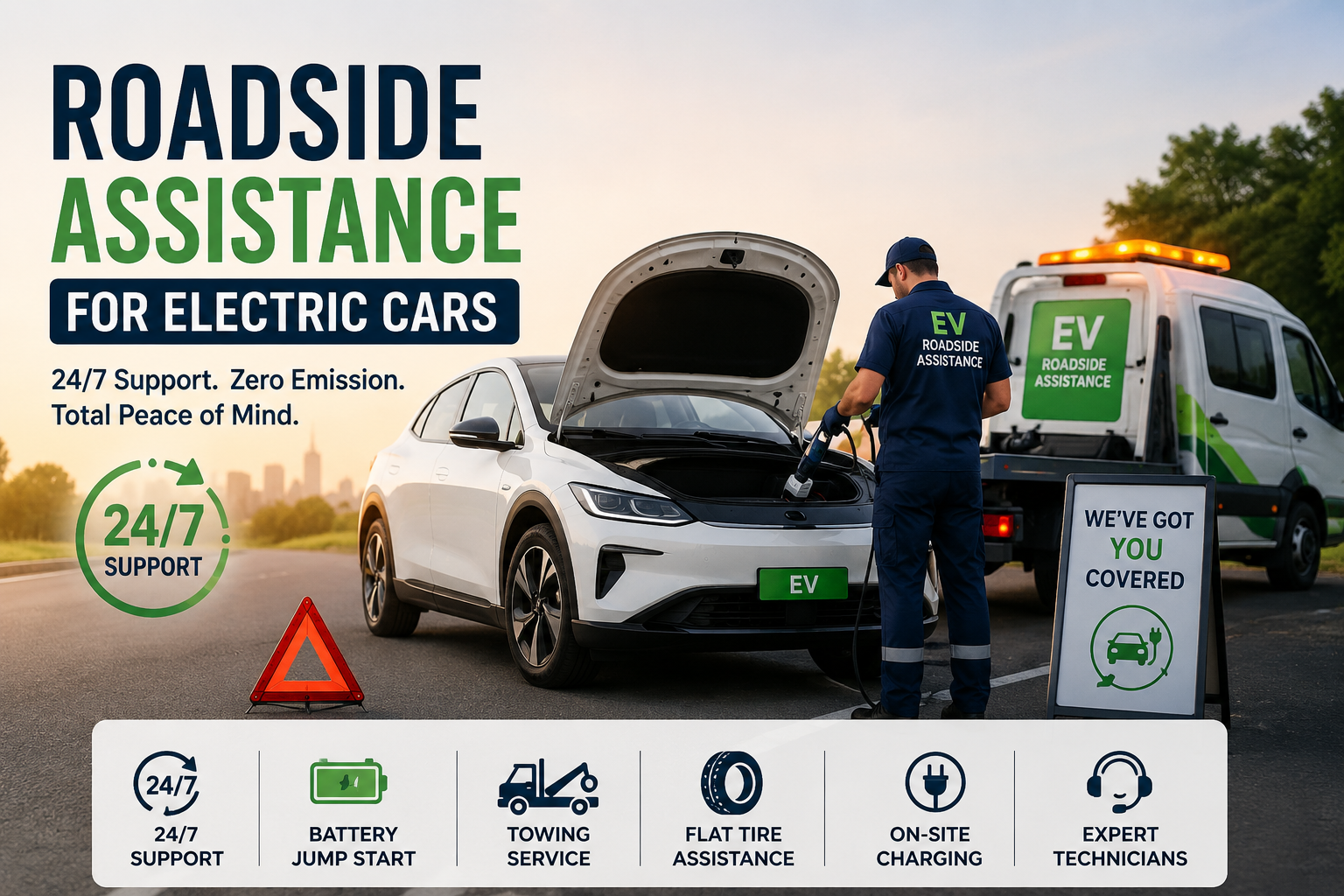
Picture this. You are 40 km from home on the highway, the battery reads 4%, and the nearest charger on the map is “temporarily offline.”
Now what? This is the moment every EV owner quietly worries about, and the honest answer is that roadside assistance for electric cars exists and works well, but only if you know what to ask for. A normal tow truck showing up can do more harm than the breakdown itself.
Do EVs Even Need Special Roadside Assistance?
Yes, and the reason is mechanical, not marketing. An electric car cannot be towed the way a petrol car often is, dragged along with its driving wheels spinning on the road. On an EV, those spinning wheels turn the motor, the motor generates current, and that current can fry the very electronics you are trying to save.
Why an EV Breakdown Is a Different Animal
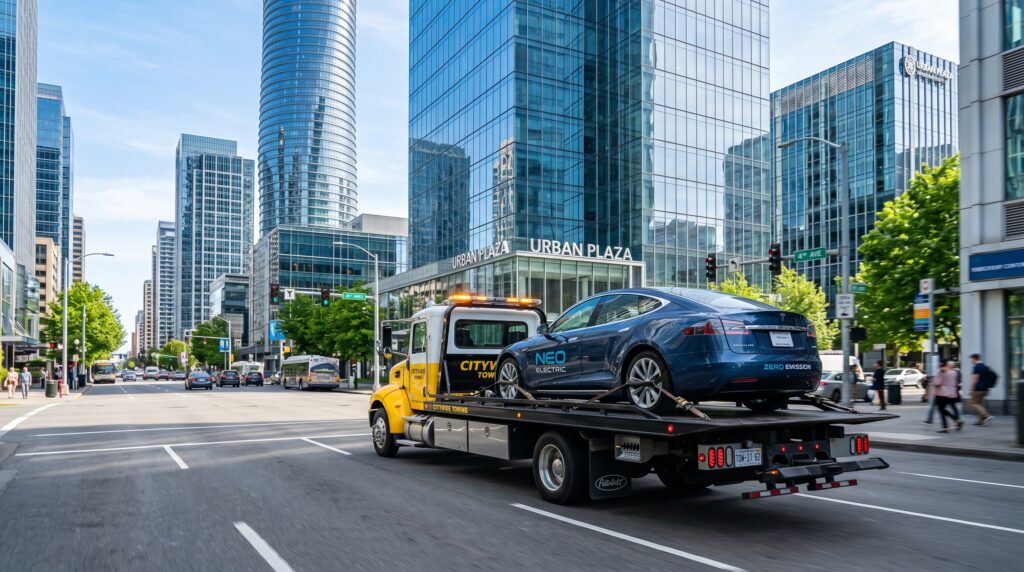
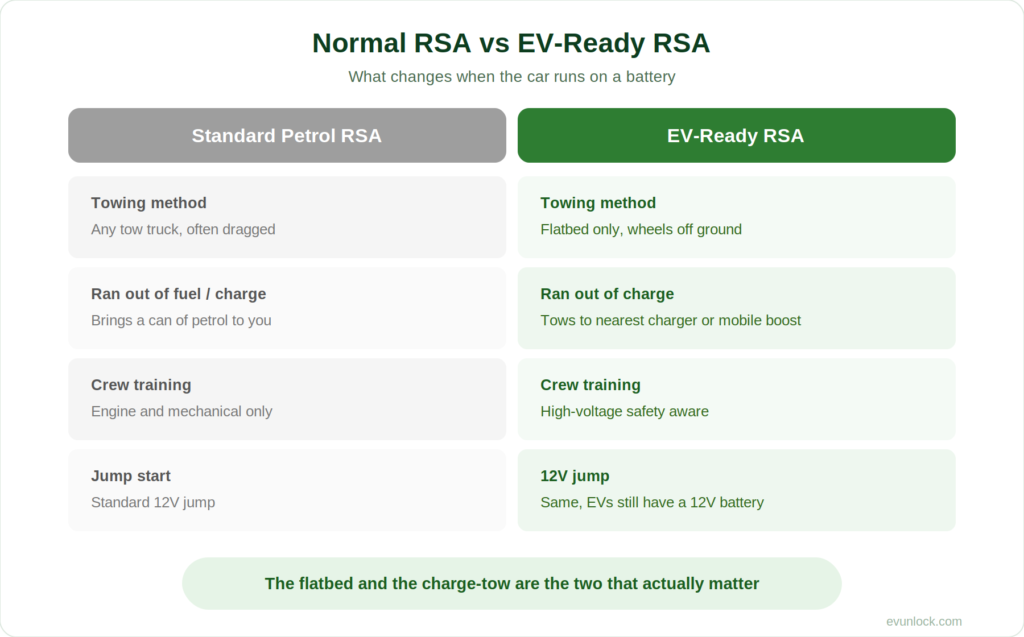
I have watched a recovery driver hook a chain to an EV’s front and start pulling before the owner stopped him. That owner got lucky. The fix is simple but non-negotiable: an EV needs a flatbed, where all four wheels sit off the ground. Any RSA crew that turns up with a regular hook-and-drag setup is the wrong crew for the job.
The second difference is the battery itself. Out of fuel, a petrol car gets a can of petrol delivered, and you are moving in five minutes. Out of charge, there is no can of electricity. You get towed to the nearest working charger, and that distance decides whether your evening is mildly annoying or completely ruined.
Choosing the Best Roadside Assistance for Your EV in 2026
The best roadside assistance for electric cars is not the cheapest one or the one with the longest brochure. It is the plan that does two specific things well: flatbed towing and a tow to the nearest charger when you are out of charge. Everything else is a bonus.
What Actually Matters on the Plan
At EVUnlock, we cross-check specifications against official manufacturer documentation before publishing, and after going through a stack of these plans, the same three things separate a real EV plan from a repackaged petrol one.
- Flatbed recovery as standard, not as a chargeable extra.
- A tow to the nearest charging station, with a stated minimum distance.
- A crew that is trained around high-voltage systems, so nobody pokes at an orange cable.
A 12V jump start is on every list, EV or not, because electric cars still run their lights and computers off a small 12V battery that can die exactly like a normal one. That is the breakdown nobody expects and it is more common than a flat traction battery.
Manufacturer Cover vs a Standalone Plan
Start with what you already have. The bundled manufacturer RSA is usually enough for the first three to four years, and paying for a second plan on top is money wasted in that window. Once the free period ends, that is the time to shop for a standalone EV plan or an add-on through your insurer.
When you get quotes, ask for the EV-specific terms in writing. Plenty of “EV roadside assistance quotes” are just the standard product with a sticker on it, and you only discover the difference at 4 percent battery on a dark highway. Our EV buying guides walk through the exact questions to put to a provider.
What About OnStar and the Global Picture?
OnStar does provide roadside assistance for electric cars, but it is a General Motors service tied mostly to GM vehicles in North America, so it is not something an Indian EV owner can sign up for. I mention it because the question comes up constantly, usually from people who saw it in an American review. In India the equivalents are your manufacturer’s app-based RSA and third-party networks like those bundled by insurers and charging companies.
Frequently Asked Questions
Is there roadside assistance for electric cars?
Yes. Most EVs sold in India come with manufacturer roadside assistance bundled in, often free for three to four years. It covers towing, flat tyres, 12V jump starts and lockouts. The key feature to confirm is flatbed towing and, for out-of-charge cases, a tow to the nearest charger rather than only the nearest dealer.
Can you tow an electric car like a normal car?
No. An EV should never be flat-towed with its driving wheels on the road, because the spinning wheels turn the motor and can feed current back into the electronics, causing damage. Electric cars must be moved on a flatbed truck with all four wheels lifted clear of the ground. Always confirm a flatbed is coming.
What happens if my EV runs out of charge?
There is no roadside refuel for electricity. A proper EV roadside assistance plan tows you to the nearest working charging station. Some basic plans only tow to the nearest workshop, which does not help a flat battery, so check the wording. A few providers now offer mobile boost charging, though coverage is still limited.
Does OnStar provide roadside assistance for electric cars?
OnStar does offer roadside assistance for electric vehicles, but it is a General Motors service available mainly in North America and tied to GM cars. It is not available to EV owners in India. Here, the practical options are your manufacturer’s bundled roadside assistance and third-party plans through insurers or charging networks.
How much does EV roadside assistance cost?
If your car is within its bundled manufacturer cover, it costs nothing extra. Standalone or add-on EV plans in India typically run a few thousand rupees a year, depending on coverage distance and inclusions. When comparing quotes, weigh flatbed towing and charge-tow distance more heavily than the headline price.
Do electric cars break down more than petrol cars?
Generally no. EVs have far fewer moving parts than petrol cars, so mechanical failures are rarer. The common EV roadside calls are flat tyres, a dead 12V battery, and running out of charge, none of which are engine faults. The breakdown profile is different, not necessarily more frequent.
Will normal roadside assistance work for my EV?
It might turn up, but it may not be equipped. A standard plan can send a tow truck that is not a flatbed, which is the wrong tool for an EV. It also will not solve an out-of-charge situation. Confirm your plan explicitly covers EV recovery before you rely on it.
Is flatbed towing really necessary for every EV?
For almost all of them, yes. A handful of EVs allow short, slow towing in a neutral or transport mode, but the safe default is a flatbed every time. When in doubt, treat flatbed as mandatory. It is far cheaper than risking damage to the motor or power electronics.

Gagandeep Singh
Founder, EV UnlockGagandeep Singh is an Electronics and Communication Engineering graduate from BGIET Sangrur and holds an M.Tech in eMobility from IIT Madras (CODE IITM). He is the founder of EV Unlock, an independent electric vehicle research platform. His work combines engineering knowledge, SEO strategy and electric mobility research to deliver verified EV specifications, buying guides and charging information that help buyers make confident, informed decisions.
1 thought on “Roadside Assistance for Electric Cars: What Actually Happens When You Break Down”