
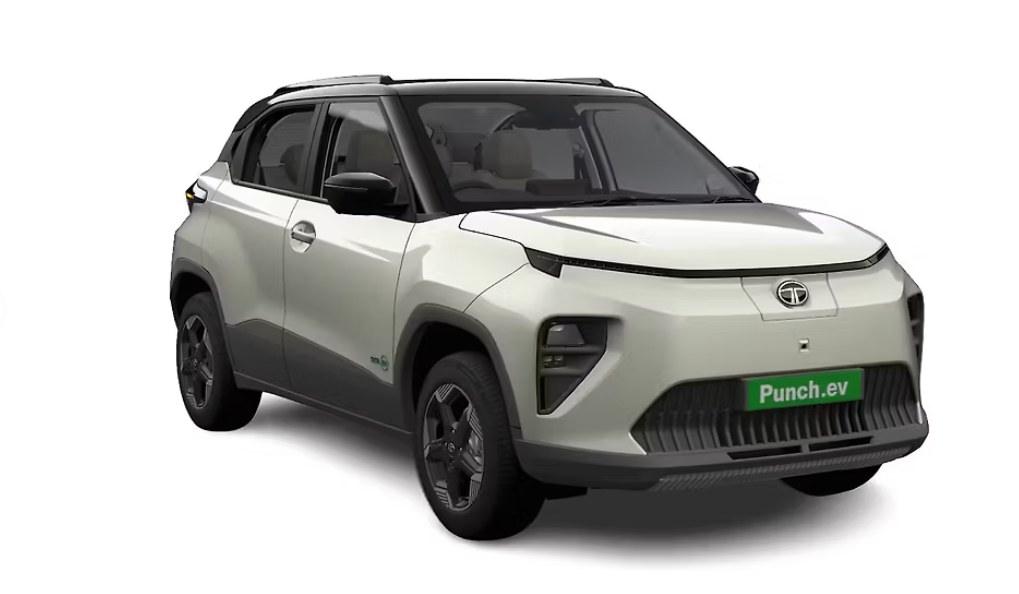
Ask any Tata Punch EV buyer what worries them most, and the answer is rarely the design or the features. It is the battery. What happens if it fails? How much range will I actually get? Will it survive ten Indian summers? These are fair questions, because in an electric car, the battery is half the vehicle’s cost and all of its anxiety. The good news is that the Punch EV’s battery story in 2026 is genuinely stronger than most buyers realise. Here is the complete picture.
The Battery Tata Chose, and Why It Suits India
The Punch EV runs on LFP Lithium Iron Phosphate chemistry, and this single decision solves most of the problems Indian EV owners actually face. LFP cells tolerate heat far better than the NMC cells used in many imported EVs. A car parked under the open sky on a 45-degree May afternoon is exactly the condition LFP handles well. The chemistry also accepts daily 100% charging without meaningful long-term damage, so you never have to babysit the charge limit the way NMC owners do.
The pack itself is liquid-cooled and carries an IP67 rating for both battery and motor, which means full protection against dust and water ingress, monsoon waterlogging included.
A rumour worth clearing right away: the Punch EV does not use BYD batteries. The packs are assembled through Tata AutoComp Systems with cells from partner suppliers. So if someone in a Facebook group tells you it’s a “Chinese BYD battery,” they are simply wrong.
Two Packs, Two Very Different Cars
The 2026 facelift brought two battery options, and the gap between them is bigger than the 10 kWh difference suggests.
The 30 kWh pack drives a 65 kW motor producing 154 Nm. ARAI certifies it at 365 to 375 km, and Tata’s own more honest C75 figure puts real-world range at around 260 to 275 km. The 0-100 km/h sprint takes 13.5 seconds. For a city car that charges at home every night, this is perfectly adequate.
The 40 kWh pack is where the Punch EV becomes a different vehicle. It switches to denser prismatic cells that pack tighter, which is how Tata fitted more energy into the same floor without redesigning the car. The motor jumps to 95 kW, the certified figure reads 468 km, the real-world C75 range lands at 335 to 350 km, and 0-100 km/h drops to 9.0 seconds.
The 40 kWh variants also get three drive modes: Eco, City and Sport, against two on the smaller pack. That is genuine intercity capability. Chandigarh to Delhi on one charge, with a margin.
My honest read: the 30 kWh exists to advertise a lower starting price. The 40 kWh is the car Tata actually wants you to buy, and the warranty proves it.
The Warranty That Changes the Maths
The 30 kWh pack carries the industry-standard cover of 8 years or 1,60,000 km. Respectable, nothing special. The motor on both versions carries the same 8-year/1,60,000 km cover, and the vehicle itself gets 3 years or 1,25,000 km.
The 40 kWh pack gets a lifetime, unlimited-kilometre battery warranty for the first registered private owner. No other EV in this price band offers this. For the single biggest fear in EV ownership, a multi-lakh battery failure, Tata has essentially said: not your problem, ever, as long as you bought it new in your own name.
Read the fine print, though. The warranty applies only to private individual registrations. Company registrations, fleet use, and commercial operation do not qualify. And it does not transfer; the second owner gets nothing. That last point matters if you are looking at a used Punch EV, where the battery risk quietly returns.
How Long Does the Battery Actually Last
Independent data on LFP packs globally suggests a well-treated Punch EV battery should hold 80 to 85% of its capacity even after 8 years. The liquid-cooled thermal management helps; heat is what kills batteries, and active cooling keeps cell temperatures in the safe band even during fast charging in summer. In practical terms, owners typically notice almost no range loss in the first four to five years.
What ages a pack faster is habit, not time. Daily DC fast-charging from near-empty stresses cells more than slow home charging. The healthiest routine is simple: charge at home between 20 and 80% for daily use, and save the 100% charges and fast-charging sessions for actual trips. Do that, and the battery will likely outlast your interest in the car.
What Replacement Actually Costs
Now the number everyone searches for. Tata has not officially published out-of-warranty replacement prices for the 2026 packs, so treat everything you read, including this, as an estimate based on current per-kWh battery pricing in India.
For the 30 kWh pack, a full out-of-warranty replacement at an authorised service centre is estimated at roughly ₹4.5 to 5.5 lakh, including GST and labour. For the 40 kWh pack, the estimate rises to around ₹6 to 7 lakh.
Scary numbers until you add context. First, the 40 kWh’s lifetime warranty makes this cost theoretical for first owners. Second, battery prices in India are falling as domestic cell manufacturing scales, with per-kWh costs expected to drop 20 to 30% over the next three to four years. The replacement you might need in year nine will cost meaningfully less than today’s estimate. And third, total failures outside warranty are rare; LFP gradual fade is the normal pattern, not sudden death.
Running Cost: Where the Battery Pays You Back
Charged at home on a ₹7 to 8 per unit tariff, a full 40 kWh charge costs about ₹280 to 320 under one rupee per kilometre. A comparable petrol SUV costs around ₹7.50 per km. Even if you rely entirely on public fast chargers at ₹18 to 22 per unit, you are still at roughly ₹2.50 per km, a third of petrol.
Charging speed is no longer the compromise it used to be, either. On a DC fast charger, the Punch EV goes 20 to 80% in about 26 minutes, or 10 to 80% in about 30 minutes. A 15-minute top-up adds up to 135 km of real-world C75 range on the 40 kWh pack and around 110 km on the 30 kWh. At home, the 7.2 kW AC fast charger fills the packs in roughly 4.5 to 5.3 hours, and a basic 3.3 kW AC option is also available for overnight charging.
The Bottom Line
The Punch EV’s battery package in 2026 is the strongest argument for the car itself. LFP chemistry suited to Indian heat, an IP67-rated liquid-cooled pack, honest real-world range figures that Tata publishes voluntarily, running costs at a fraction of petrol, and a 40 kWh lifetime warranty that removes the one fear that stops most people from going electric. Add the 5-star Bharat NCAP rating, and the case is complete. If the budget stretches to the 40 kWh variant, that is the one to buy. The battery is not the risk in this car. It is the reason to buy it.
Frequently Asked Questions
Does the Tata Punch EV have an LFP battery?
Yes. Both the 30 kWh and 40 kWh packs use LFP Lithium-ion chemistry with liquid cooling and an IP67 rating. LFP handles Indian heat well and supports daily 100% charging without significant degradation.
What is the Tata Punch EV battery capacity?
Two options: 30 kWh and 40 kWh. Certified ranges are 365–375 km and 468 km, respectively, with real-world C75 figures of roughly 260–275 km and 335–350 km.
What is the Tata Punch EV battery warranty?
The 30 kWh pack gets 8 years or 1,60,000 km. The 40 kWh pack gets a lifetime unlimited-kilometre warranty, valid only for the first registered private owner and non-transferable. The motor carries 8 years/1,60,000 km and the vehicle 3 years/1,25,000 km.
What is the cost of a battery change in the Tata Punch EV?
Estimated at ₹4.5–5.5 lakh for the 30 kWh and ₹6–7 lakh for the 40 kWh, including GST and labour. Tata has not officially published these prices; they are industry estimates.
Does the Tata EV use a BYD battery?
No. Punch EV packs are assembled through Tata AutoComp Systems with cells from partner suppliers. BYD is not a confirmed supplier for this model.
What is the real-world mileage of the Tata Punch EV?
Tata’s own C75 figures are 260–275 km for the 30 kWh and 335–350 km for the 40 kWh. With AC on in mixed driving, expect numbers slightly below these.
How much does it cost to charge the Tata Punch EV at home?
A full 40 kWh charge costs about ₹280–320 at residential tariffs of ₹7–8 per unit, roughly ₹0.90 per km, against about ₹7.50 per km for a comparable petrol SUV.
How fast does the Tata Punch EV charge?
20 to 80% in about 26 minutes and 10 to 80% in about 30 minutes on a DC fast charger. The 7.2 kW AC home charger takes around 4.5 hours (30 kWh) or 5.3 hours (40 kWh).
Which EV has a 700 km range in India?
None, in real-world terms. The highest certified figure in India is the Tata Curvv EV’s 585 km, and the actual road range is lower. The 700 km claims online come from lenient NEDC testing abroad.
Is the 40 kWh battery worth the extra cost?
Yes, for most buyers. The Smart+ 40 at ₹10.89 lakh costs only ₹60,000 more than the Smart+ 30, and you get the lifetime warranty, 95 kW motor, faster acceleration, an extra drive mode, and roughly 80 km more real range.

Gagandeep Singh
Founder, EV UnlockGagandeep Singh is an Electronics and Communication Engineering graduate from BGIET Sangrur and holds an M.Tech in eMobility from IIT Madras (CODE IITM). He is the founder of EV Unlock, an independent electric vehicle research platform. His work combines engineering knowledge, SEO strategy and electric mobility research to deliver verified EV specifications, buying guides and charging information that help buyers make confident, informed decisions.