
 Featured EV
1 / 2 Images
Volkswagen ID. Buzz
Electric MPV / Van

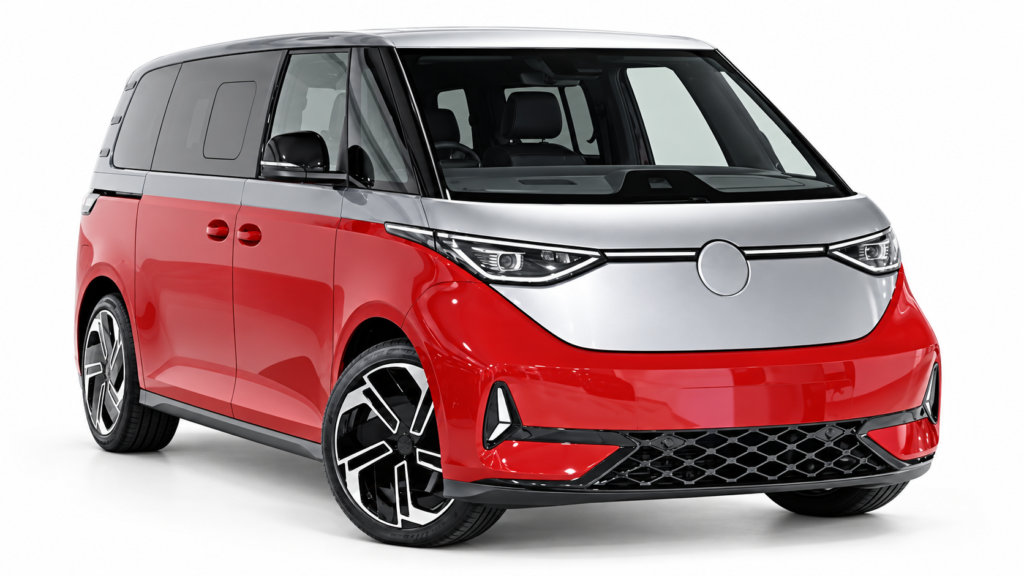
Volkswagen's retro-styled electric MPV, reviving the classic Microbus. An 86 kWh battery gives 255-258 miles WLTP, with 5, 6 or 7-seat layouts, up to 1,340 litres of load space and a 335 bhp GTX version - from just over GBP 59,000.
*Ex-showroom Price in London
Volkswagen ID. Buzz EV essentials
Volkswagen ID. Buzz pros and cons
Pros
- Genuinely joyful retro design - nothing else looks like it
- Rated around 9 out of 10 by reviewers, VW's best-rated EV
- Enormous space: up to 1,340 litres with the third row removed
- Seat upgrades cost almost nothing (GBP 150 for six seats)
- Quick charging: 10 to 80 percent in about 26 minutes
- Sliding doors and a flat floor make family life genuinely easier
Cons
- Real-world range of around 200 miles is only fair
- Expensive, starting just over GBP 59,000
- Large size makes tight multi-storey car parks awkward
- Boxy shape hurts motorway efficiency and range
- GTX at over GBP 67,000 is a lot for a family van
Best for
Volkswagen ID. Buzz specifications
Battery & Charging
Efficiency & Real-world Range
Motor & Performance
Dimensions & Capacity
Comfort & Tech
Safety
Pricing & Trims
Warranty
Features
Battery & Performance
- 86 kWh battery across the range
- 255 to 258 miles WLTP official range
- Rapid charging: 10 to 80 percent in about 26 minutes
- AC home charging: 8 to 11 hours for a full charge
- Standard 210 kW rear motor; GTX adds all-wheel drive and 335 bhp
- Built on VW's dedicated MEB electric platform
- 8-year / 100,000-mile battery warranty
Comfort & Interior
- Retro Microbus-inspired styling, often in two-tone paint
- Five, six or seven-seat layouts (LWB gets 2/3/2 seven-seat)
- Huge load space: 1,121 litres SWB, up to 1,340 litres LWB
- Removable third row on the seven-seater
- Flat floor and van-like headroom from the MEB platform
- Large central touchscreen with updated software
- Sliding rear doors for easy access in tight spaces
- Panoramic glass roof available
Safety
- 5-star Euro NCAP rating (verify current test result)
- Adaptive cruise control with Travel Assist
- Automatic emergency braking
- Lane keeping assist
- Blind spot monitoring
- 360-degree camera on higher trims
- Multiple airbags
- ISOFIX child seat anchors
Volkswagen ID. Buzz trims and pricing
Compare available Volkswagen ID. Buzz trims, their ex-showroom prices and key configuration details.
Life (5-seat, SWB)
86 kWh - 255-258 miles WLTP - 1,121 L boot
Life (6-seat)
Six-seat layout - only GBP 150 more than 5-seat
Life LWB (7-seat)
Long wheelbase - 7 seats (2/3/2) - up to 1,340 L
About Volkswagen ID. Buzz
The Volkswagen ID. Buzz is the rarest thing in modern motoring – a car that makes people smile. It is a full electric reimagining of the classic VW Microbus, and unlike most retro tributes it actually works, because the flat-floor MEB electric platform delivers exactly the boxy, space-efficient shape the original was famous for. Reviewers adore it, typically scoring it around 9 out of 10, which makes it the best-rated car in VW’s whole ID range.
Underneath the charm is a genuinely practical van-MPV. The 86 kWh battery gives 255 to 258 miles WLTP – realistically around 200 miles, or a little more in warm weather – and charges quickly, going from 10 to 80 percent in about 26 minutes on a rapid charger. The standard motor makes 210 kW, while the GTX version adds all-wheel drive and 335 bhp. Space is the real party trick: the short-wheelbase version swallows 1,121 litres behind the rear seats, and the long-wheelbase seven-seater can be opened up to 1,340 litres by removing the third row.
Pricing is refreshingly straightforward. It starts a little over £59,000 for the five-seat Life, and VW charges just £150 to go from five to six seats and only £200 more for the long-wheelbase model with its seven-seat option – so the practical versions are barely more expensive. Style trim adds around £4,800, topping out at £64,345 for the LWB seven-seater, and the GTX runs from £67,435. It is not cheap, and the real-world range is only fair, but nothing else on sale combines this much space, character and joy.
Trending news for Volkswagen ID. Buzz
The Volkswagen ID. Buzz has become the star of VW's electric range, typically scoring around 9 out of 10 with reviewers - the highest of any ID model - thanks to its retro Microbus styling, enormous practicality and genuine feel-good factor.
The big development was the long-wheelbase seven-seater added in late 2024, which brings a 2/3/2 layout as standard and, with the third row removed, opens up 1,340 litres of cargo space - 219 litres more than the short-wheelbase version. Pricing is refreshingly sensible about seats: just GBP 150 to go from five to six, and GBP 200 more for the LWB, so the practical versions barely cost extra. The 86 kWh battery delivers 255 to 258 miles WLTP with a 26-minute 10 to 80 percent rapid charge, while the 335 bhp GTX tops the range from GBP 67,435. Real-world range of around 200 miles remains the main compromise.
Volkswagen ID. Buzz range and performance
The ID. Buzz uses a single 86 kWh battery across the range, giving an official 255 to 258 miles WLTP. Because of its tall, boxy shape, real-world range settles at around 200 miles - a little more in warm weather with gentle driving, noticeably less on a fast motorway run. That is the honest trade-off for the space and style.
Performance is more than adequate. The standard 210 kW rear motor moves the ID. Buzz along smoothly and quietly, while the GTX adds a front motor for 335 bhp, all-wheel drive and a 6.5-second 0-62 mph time. Top speed is limited to around 90 mph, which suits its relaxed character. It rides comfortably, the visibility is superb thanks to that upright windscreen, and it is far easier to drive than its size suggests.
Volkswagen ID. Buzz safety overview
The Volkswagen ID. Buzz carries a 5-star Euro NCAP rating, and comes with a comprehensive safety suite including adaptive cruise control with VW's Travel Assist lane-centring, automatic emergency braking, lane keeping assist, blind spot monitoring, a 360-degree camera on higher trims, multiple airbags and ISOFIX anchors. As Euro NCAP protocols are updated over time, it is worth checking the latest published result for the current model year. For a family vehicle carrying up to seven people, the safety package is reassuringly complete.
Volkswagen ID. Buzz battery and charging guide
Charging is quick for such a large vehicle. On the fastest public rapid chargers, the 86 kWh battery goes from 10 to 80 percent in about 26 minutes, which keeps journey stops short despite the modest real-world range. At home, an 11 kW AC supply gives a full charge in around 8 hours, while a more common 7.4 kW wallbox takes closer to 11 hours - fine overnight. It uses a CCS (Type 2) connector. Given the roughly 200-mile real-world range, having a home charger makes ID. Buzz ownership considerably easier.
Volkswagen ID. Buzz warranty details
Volkswagen covers the ID. Buzz with a 3-year or 60,000-mile vehicle warranty plus an 8-year or 100,000-mile high-voltage battery warranty, in line with the rest of the ID range. VW's large UK dealer network makes servicing convenient, and fixed-price service plans are available to spread the cost. Confirm the latest terms and any extended-warranty options with your Volkswagen dealer at purchase, particularly if you plan to use the ID. Buzz for high-mileage family or business duty.
Quick verdict: Volkswagen ID. Buzz
The Volkswagen ID. Buzz is the most likeable electric vehicle on sale, and it is not just about the styling. Reviewers rate it around 9 out of 10 because underneath the retro charm sits a genuinely brilliant family vehicle - sliding doors, a flat floor, up to seven seats and as much as 1,340 litres of load space. The pricing of the seat and wheelbase upgrades is refreshingly fair too. The honest limitations are the 200-mile real-world range and a starting price just over GBP 59,000, which is a lot. But if you need space, want character, and can live with planning longer journeys, nothing else comes close. The LWB seven-seater is the one to have.
Volkswagen ID. Buzz vs rivals: how it compares
The ID. Buzz has few direct rivals. Against conventional electric MPVs and van-based models like the Citroen e-Berlingo or Mercedes EQV, it is far more desirable and better finished, though the Citroen is much cheaper and the Mercedes more overtly luxurious. Against seven-seat electric SUVs such as the Kia EV9, the Kia offers longer range and a more conventional SUV feel, while the ID. Buzz counters with sliding doors, a boxier and more usable cabin and vastly more character. In short: choose the ID. Buzz if you want maximum space and joy; choose an EV9 or similar if outright range matters more than personality.
Volkswagen ID. Buzz: who should buy it (and who should not)
Buy the ID. Buzz if you need serious family space and want a vehicle with real character - and go for the long-wheelbase seven-seater, since VW charges only about GBP 200 extra for it and it brings the removable third row and 1,340 litres of load space. Life trim is well equipped enough for most buyers, with Style adding around GBP 4,800; the GTX is fun but hard to justify at over GBP 67,000 for a family van. Look elsewhere if you regularly drive long motorway distances, since the roughly 200-mile real-world range will frustrate, or if you need something that fits easily in tight multi-storey car parks. A home charger is close to essential.
Volkswagen ID. Buzz ownership and running costs
The ID. Buzz is cheap to run in daily use but not the most efficient EV. Real-world efficiency of around 3.0 to 3.3 miles per kWh means home charging still costs far less than petrol or diesel for an equivalent van or large MPV, and EV maintenance is minimal. Company-car drivers benefit from the very low EV Benefit-in-Kind rate, which on a vehicle priced above GBP 59,000 is a substantial saving. Residual values are expected to hold up well thanks to strong demand and the model's desirability. The main cost consideration is the high purchase price itself.
Volkswagen ID. Buzz tax benefits and incentives
As an electric vehicle, the ID. Buzz is attractive on tax in the UK. Company-car drivers benefit from the very low Benefit-in-Kind rate on EVs, which on a vehicle of this price delivers a large monthly saving versus a diesel MPV or van equivalent. Since April 2025 EVs do pay Vehicle Excise Duty, and the ID. Buzz's price means it may attract the expensive-car VED supplement, so check that before ordering. It is also ULEZ-compliant, which matters for family and business use in low-emission zones. Confirm current rates before buying.
Volkswagen ID. Buzz maintenance and service
Like all EVs, the ID. Buzz needs far less maintenance than a diesel van or MPV - no engine oil, no spark plugs, no clutch and no exhaust - and regenerative braking reduces brake wear, which is welcome on a heavy vehicle. Routine servicing covers tyres, brake fluid, cabin filter and software updates at set intervals. Tyres are one running cost to watch given the weight and size. Volkswagen's large UK dealer network makes servicing easy, and the 8-year battery warranty protects the most expensive component.
EV Running Cost Calculator
*Estimated figures based on entered electricity price, fuel price, mileage and average daily driving. Actual running costs can vary.
Related articles for Volkswagen ID. Buzz
Frequently asked questions about Volkswagen ID. Buzz
How much does the Volkswagen ID. Buzz cost in the UK?
Prices start a little over GBP 59,000 for the five-seat Life. Usefully, VW charges only GBP 150 to upgrade from five to six seats and just GBP 200 more for the long-wheelbase version with its seven-seat option. Style trim adds around GBP 4,800, topping out at GBP 64,345 for the LWB seven-seater, and the GTX runs from GBP 67,435 to GBP 67,945.
What is the range of the Volkswagen ID. Buzz?
The 86 kWh battery gives an official WLTP range of 255 to 258 miles. In real-world driving expect closer to 200 miles, or a little more in warm weather with gentle driving - the boxy shape means motorway running hits efficiency harder than in a conventional car.
How many seats does the Volkswagen ID. Buzz have?
You can have five, six or seven seats. The short-wheelbase version comes as a five or six-seater, while the long-wheelbase model offers seven seats as standard in a 2/3/2 layout. On the seven-seater, the third row can be removed entirely to create 1,340 litres of cargo space.
How fast does the Volkswagen ID. Buzz charge?
On the fastest public rapid chargers, the 86 kWh battery goes from 10 to 80 percent in about 26 minutes - genuinely quick for a vehicle this size. At home, an 11 kW AC supply gives a full charge in around 8 hours, while a 7.4 kW wallbox takes closer to 11 hours.
What is the Volkswagen ID. Buzz GTX?
The GTX is the performance flagship, with 335 bhp, dual-motor all-wheel drive and sportier design details. It brings noticeably stronger acceleration and better traction in poor weather, and starts from GBP 67,435 - though that is a lot of money for a family van.
Is the Volkswagen ID. Buzz a good car?
Reviewers love it - it typically scores around 9 out of 10, making it the best-rated model in VW's electric range. The combination of character, enormous space, sliding doors and a flat floor is genuinely special. The honest caveats are the high price and a real-world range of about 200 miles, which is only fair for the money.
Owner feedback for Volkswagen ID. Buzz
No approved owner feedback yet. Be the first to share your experience.
Available colours
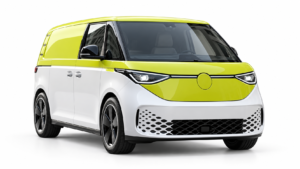
The ID. Buzz is famous for its cheerful two-tone paint schemes, pairing a white upper body with shades such as Lime Yellow, Bay Leaf Green, Starlight Blue and Energetic Orange, alongside single-tone options like Candy White and Deep Black. The two-tone finishes are central to the retro Microbus look, so choose carefully - colour availability varies by trim.