
 Featured EV
1 / 4 Images
Featured EV
1 / 4 Images 
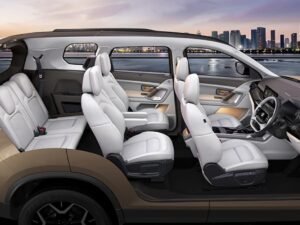
Tata Safari EV (Upcoming)
Upcoming (6 and 7 seat, RWD and QWD expected)

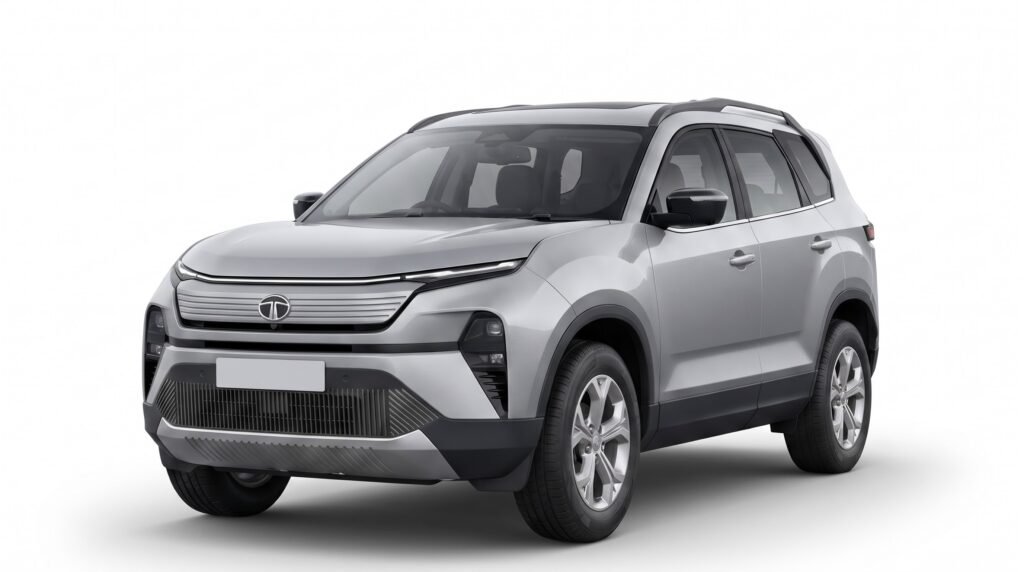
The electric Safari brings a genuine seven-seat layout to India's EV market on Tata's acti.ev platform, with dual-motor all-wheel drive expected and a flat floor that finally makes the third row usable.
*Ex-showroom Price in New Delhi
Tata Safari EV (Upcoming) EV essentials
Tata Safari EV (Upcoming) pros and cons
Pros
- Genuinely fills a gap, since India has almost no seven-seat electric SUVs at a mainstream price
- Flat floor makes the third row properly usable, which a diesel Safari's transmission tunnel prevents
- Battery weight low in the floor improves body control on a tall SUV carrying seven people
- Expected QWD dual-motor layout delivers all-wheel drive without a transfer case
- Shares platform, battery and motors with the Harrier EV, so the engineering is already proven
- Tata operates the widest EV service and charging network in India, which matters on long family trips
- Running cost roughly a seventh of the diesel Safari, which adds up quickly on a family vehicle
Cons
- Price, final specification and launch date all remain unconfirmed
- Boot space with all three rows up will be tight, a constraint the diesel Safari shares
- Real-world range with seven people and luggage will fall well below the certified figure
- Expected Rs 26 lakh entry price is a significant step above five-seat electric SUVs
- Kerb weight likely to exceed 2,300 kg, which affects tyre wear and braking distances
- Tata launched the Harrier EV first, so the Safari EV has been waiting behind it
- No confirmed crash rating for the EV variant specifically, though the diesel scores well
Best for
Tata Safari EV (Upcoming) specifications
Battery & Charging
Efficiency & Real-world Range
Motor & Performance
Dimensions & Weight
Suspension Brakes & Tyres
Comfort & Tech
Safety
Warranty
Features
Battery & Performance
- acti.ev architecture, Tata's dedicated electric platform shared with the Harrier EV
- 65 kWh and 75 kWh battery options expected, matching the Harrier EV lineup
- Liquid cooled battery pack with active thermal management for Indian summer conditions
- IP67 rated pack, sealed against dust and water ingress
- Skateboard battery layout mounted in the floor, lowering the centre of gravity significantly
- Flat floor across all three rows, freeing up genuine foot space in the third row
- Multi-level regenerative braking with paddle shifter control
- V2L and V2V support expected, matching the Harrier EV specification
- Cell to pack construction expected, improving energy density over older Tata packs
Comfort & Interior
- Six-seat captain chair and seven-seat bench layouts both expected
- Boss mode on the second row captain chair, carried over from the diesel Safari
- Panoramic sunroof expected on higher trims
- Large touchscreen infotainment with wireless Android Auto and Apple CarPlay
- Fully digital instrument cluster
- Ventilated front and second row seats expected on top trims
- Dual zone automatic climate control with third row vents
- JBL audio system expected, standard fitment on higher Tata SUV trims
- Tata iRA connected car suite with remote climate control and over the air updates
- Powered tailgate with gesture control expected on top trims
- Air purifier with AQI display
Safety
- 7 airbags expected as standard, matching Tata's current SUV specification
- Level 2 ADAS suite expected including adaptive cruise, lane keep assist and autonomous emergency braking
- Electronic stability control with roll over mitigation, important on a tall three-row body
- Hill hold and hill descent control
- 360-degree surround view camera with blind view monitor
- Blind spot warning and rear cross traffic alert
- ISOFIX child seat anchors on second row
- IP67 battery pack with high voltage automatic crash disconnect
- Diesel Safari holds a 5 star Bharat NCAP rating, and the EV shares its body structure
Tata Safari EV (Upcoming) trims and pricing
Compare available Tata Safari EV (Upcoming) trims, their ex-showroom prices and key configuration details.
Safari EV 65 RWD (expected)
65 kWh - ~500 km expected - Automatic
Safari EV 75 RWD (expected)
75 kWh - ~600 km expected - Automatic
Safari EV 75 QWD (expected)
75 kWh - ~540 km expected - Automatic AWD
About Tata Safari EV (Upcoming)
The Tata Safari EV is the electric version of India’s most recognisable three-row SUV nameplate, and it sits in a gap almost nobody has filled. India has no shortage of five-seat electric SUVs. What it does not have is a proper seven-seat electric SUV built for Indian families at a price that ordinary buyers can reach. The Safari EV is Tata’s answer to that, developed on the same acti.ev architecture that underpins the Harrier EV, and shown publicly alongside it at Auto Expo 2023 before Tata took the Harrier to market first.
The engineering case for a Safari EV is stronger than it looks. Three-row SUVs are heavy and they carry weight badly, which is exactly the situation where an electric drivetrain helps rather than hurts. A large battery mounted low in the floor drops the centre of gravity substantially compared with a diesel Safari, which improves body control with a full load of passengers. The flat floor that comes with a skateboard battery layout also does something a diesel Safari cannot, which is free up genuine foot space in the third row instead of forcing passengers to sit knees-up over a transmission tunnel. On the drivetrain side, Tata’s QWD dual-motor layout puts a motor on each axle, delivering all-wheel drive without the weight and complexity of a transfer case.
What has not been published is a full production specification. Tata has not confirmed the tata safari ev price, the final battery configuration, the certified range, or a firm tata safari ev launch date. Because the Safari EV shares its platform, battery packs, and motors with the Harrier EV, the estimates in this listing are anchored to that vehicle and then adjusted for the Safari’s greater length, height, and kerb weight, which will cost it some range. Every such figure is labelled as expected rather than confirmed. At EVUnlock, we cross-check specifications against official manufacturer documentation before publishing, and buyers should treat the estimated fields here as informed projection until Tata publishes official numbers.
Trending news for Tata Safari EV (Upcoming)
Safari EV shown alongside Harrier EV as Tata's acti.ev flagship pair. Tata presented electric versions of both its flagship SUVs on the acti.ev architecture, then chose to bring the Harrier EV to market first. Because both vehicles share the platform, battery packs, and motors, the Safari EV benefits from engineering and validation work already completed, which typically shortens the path to production considerably.
Seven-seat electric SUVs remain almost absent from the Indian market. India's electric SUV segment has filled rapidly at the five-seat end while the three-row space stays nearly empty, particularly at prices mainstream family buyers can reach. This leaves the Safari EV with an unusually clear run if Tata prices it sensibly, since large families currently have very little to choose from when shopping for an electric vehicle.
Tata Safari EV (Upcoming) range and performance
Expect roughly 500 km certified on the 65 kWh pack and up to 600 km on the 75 kWh, based on Harrier EV figures adjusted downward for the Safari's greater length, height, and an estimated 2,350 kg kerb weight. Real-world numbers matter more on this vehicle than most, because a three-row SUV rarely travels empty. With seven passengers and luggage on a highway run, realistic range is likely 350 km to 420 km rather than the certified figure, and buyers planning long family trips should budget accordingly. Performance is where the electric layout genuinely improves on the diesel Safari. The expected QWD dual-motor configuration would produce around 390 bhp combined, which is roughly double the diesel Safari's output, delivering a 0 to 100 km/h time near 6.5 seconds on a seven-seat SUV. More useful than the headline figure is the low-end response. Overtaking on a two-lane highway with a full load, which requires patience and gear selection in the diesel, becomes immediate. The battery's position low in the floor also drops the centre of gravity substantially, which improves body control noticeably on a tall vehicle carrying seven people.
Tata Safari EV (Upcoming) safety overview
The diesel Safari holds a 5 star Bharat NCAP rating, and since the electric version shares its body structure, a similar result is a reasonable expectation, though the EV has not been separately tested and carries no rating of its own. Seven airbags are expected as standard, matching Tata's current SUV specification, with a Level 2 ADAS suite including adaptive cruise control with stop and go, autonomous emergency braking front and rear, lane keep assist, blind spot warning, and rear cross traffic alert. One safety benefit is specific to the electric version and often overlooked. A tall three-row SUV carrying seven passengers has a high centre of gravity, which is precisely the condition that makes roll over a genuine risk. Mounting a heavy battery pack in the floor lowers that centre of gravity considerably, which improves stability in emergency lane changes far more effectively than any electronic intervention can. Electronic stability control with roll over mitigation is expected alongside it. The battery pack is IP67 rated with automatic high voltage disconnect in a collision.
Tata Safari EV (Upcoming) battery and charging guide
DC fast charging around 120 kW is expected, delivering a 20 to 80 percent charge in roughly 25 minutes on the 75 kWh pack, with 11 kW AC charging giving a full overnight charge in approximately 7 hours at a home wallbox. A CCS-II port is standard across Tata's EV range. V2L and V2V support are expected, which on a family SUV has real practical value for powering equipment at a campsite or helping a stranded EV. The charging story is arguably better for the Safari EV than for most Indian electric vehicles, because Tata operates the widest EV charging network in the country and has concentrated its fast charging deployment along major intercity highway corridors. For a vehicle that will spend its life carrying families on long routes, that network coverage matters considerably more than a few kilowatts of peak charging rate. Practical advice for owners would be to charge to 80 percent for daily use and only fill to 100 percent before a long journey, since charge rate tapers sharply above 80 percent and repeated full charges accelerate battery degradation.
Tata Safari EV (Upcoming) warranty details
Tata applies a consistent warranty structure across its electric range, which the Safari EV is expected to follow. That means approximately 3 years or 1,25,000 kilometres on the vehicle and 8 years or 1,60,000 kilometres on the battery and motor, with roadside assistance included. The battery warranty covers manufacturing defects and capacity degradation below a defined threshold, which is the term worth reading carefully, since the guaranteed state of health percentage determines what is actually covered. Extended warranty plans are available through Tata Motors authorised service centres. Final terms will be confirmed at launch.
Quick verdict: Tata Safari EV (Upcoming)
The Safari EV is the most obviously necessary vehicle Tata has not yet launched. India's electric SUV market has become crowded at the five-seat end while the three-row space sits almost empty, and large families who want an electric vehicle currently have very little to choose from. The Safari EV walks into that gap with a nameplate people already trust and a platform already proven in the Harrier EV, which removes most of the technical risk. The flat floor deserves particular attention, because it fixes the diesel Safari's genuine weakness. Third-row passengers in the diesel sit with their knees raised over a transmission tunnel, and no amount of seat trim disguises it. A skateboard battery removes that constraint entirely. Two things will decide whether this works. Price, because Rs 26 lakh is a serious step up from five-seat electric SUVs and Tata needs to justify it. And honesty about loaded range, because a family that plans a trip using the certified figure and travels with seven people and luggage will be unpleasantly surprised. Get both right and this becomes a very difficult vehicle to argue against.
Tata Safari EV (Upcoming) vs rivals: how it compares
Against the Harrier EV, the comparison is simple, since they share a platform, battery, and motors. The Safari EV adds a third row and roughly 350 mm of length, which costs range and money. If five seats are sufficient, the Harrier EV is the more sensible purchase, being lighter, cheaper, and slightly more efficient. Against the diesel Safari, the electric version wins on running cost by a wide margin, on refinement, on performance, and on third-row space thanks to the flat floor. The diesel wins on outright range, on refuelling time, and on suitability for remote areas where charging is unreliable. Against other three-row electric SUVs in India, the Safari EV faces remarkably little competition, since the segment barely exists at a mainstream price. Its most realistic rivals are premium three-row diesel SUVs and MPVs, where the argument becomes running cost and refinement against range flexibility and lower purchase price.
Tata Safari EV (Upcoming): who should buy it (and who should not)
Wait for confirmed specifications before committing, since Tata has published no official price or range figures. If you need seven seats and an electric drivetrain today, options are extremely limited, which is itself worth factoring into how long you are willing to wait. When the Safari EV does launch, four things deserve scrutiny. First, real-world range with a full load rather than the certified figure, because a three-row SUV rarely travels empty. Second, boot space with the third row upright, which is likely to be tight. Third, whether QWD is genuinely necessary for your use, since RWD will be cheaper and go further on the same battery. Fourth, the exact state of health percentage guaranteed under the battery warranty. If five seats would actually suffice, buy the Harrier EV instead and save both money and weight. Do not pay a booking amount to any dealer claiming to accept Safari EV orders before Tata formally opens the order book.
Tata Safari EV (Upcoming) ownership and running costs
At an estimated Rs 30 lakh on-road and roughly 7.5 km/kWh real-world efficiency, running cost works out to approximately Rs 1.13 per kilometre at Rs 8.5 per kWh. Over 15,000 km a year that is around Rs 17,000 in electricity. The diesel Safari at 16.3 km/l and Rs 94 per litre costs approximately Rs 5.77 per kilometre, or Rs 86,550 over the same distance, giving an annual saving of roughly Rs 69,500. That gap widens for high-mileage users, and three-row SUVs are typically driven harder than average, so a family covering 25,000 km annually would save well over Rs 1.1 lakh a year. Annual maintenance on an electric SUV in this class typically runs Rs 12,000 to Rs 18,000 against Rs 28,000 to Rs 38,000 for the diesel Safari, since there is no engine oil, fuel filter, DPF service, or clutch. Insurance will be somewhat higher than the diesel because of the battery's replacement value. All figures are estimates pending official pricing.
Tata Safari EV (Upcoming) tax benefits and incentives
The Safari EV would qualify for the standard Indian electric vehicle incentives. Section 80EEB of the Income Tax Act allows individual buyers a deduction of up to Rs 1.5 lakh on interest paid on an electric vehicle loan, worth roughly Rs 46,800 in tax saved over the loan tenure for someone in the 30 percent bracket. GST on electric vehicles is 5 percent against 28 percent plus cess on comparable diesel SUVs, which is already reflected in ex-showroom pricing and represents a substantial saving at this price point. State-level benefits vary considerably, with Delhi offering a purchase subsidy and registration fee waiver, Maharashtra and Gujarat offering purchase subsidies, and several states including Uttar Pradesh and Rajasthan waiving road tax on electric vehicles. On a vehicle priced around Rs 30 lakh, a full registration waiver alone can save Rs 2 lakh to Rs 3 lakh. Corporate and fleet buyers can additionally claim accelerated depreciation, which is particularly relevant for a seven-seat vehicle likely to see commercial use. State policies change frequently, so confirm current incentives at the dealership.
Tata Safari EV (Upcoming) maintenance and service
Service intervals are expected at 15,000 km or annually, matching Tata's other electric vehicles. The electric drivetrain removes engine oil and filter changes, fuel filters, DPF regeneration and servicing, AdBlue top-ups, timing belt replacement, and clutch wear, which together account for most of what diesel Safari owners currently pay at each service. What remains is tyre rotation, brake fluid checks at extended intervals since regenerative braking dramatically reduces pad wear, cabin air filter, coolant for the battery thermal system, and annual battery health diagnostics. Two items will run higher than on a lighter EV. Tyres wear faster on an estimated 2,350 kg vehicle, particularly if it regularly carries seven passengers, so budget for replacement closer to every 35,000 to 40,000 km. Suspension components also work harder under sustained load. Estimated annual servicing cost is Rs 12,000 to Rs 18,000 against Rs 28,000 to Rs 38,000 for the diesel Safari. Tata's EV-trained technician network is the most extensive in India, which reduces the risk of being stranded far from a capable workshop.
EV Running Cost Calculator
*Estimated figures based on entered electricity price, fuel price, mileage and average daily driving. Actual running costs can vary.
Related articles for Tata Safari EV (Upcoming)

Frequently asked questions about Tata Safari EV (Upcoming)
Is the Tata Safari EV launched in India?
Tata has not confirmed a launch for the Safari EV. It was shown alongside the Harrier EV at Auto Expo 2023, and Tata chose to bring the Harrier EV to market first. The Safari EV is widely expected to follow on the same acti.ev platform. Check Tata's official EV website for the current status, since the situation may have moved since this listing was written.
What is the expected Tata Safari EV price?
Around Rs 26 lakh to Rs 34 lakh ex-showroom is the reasonable expectation, though Tata has confirmed nothing. The logic is straightforward. The Safari sits roughly Rs 2 lakh to Rs 3 lakh above the Harrier in Tata's diesel range because of its longer body and third row, and the electric versions are likely to maintain a similar gap. A top-spec QWD Safari EV could push past Rs 34 lakh.
What is the Tata Safari EV launch date?
Tata has not announced a launch date. The Safari EV appeared at Auto Expo 2023 and Tata prioritised the Harrier EV, which reached the market first. Bringing a second vehicle to production on an already validated platform is considerably faster than developing the first, so the Safari EV should follow within a reasonable window rather than requiring years of further development. Any specific date circulating online is speculation until Tata confirms it.
How many seats does the Tata Safari EV have?
Six or seven, matching the diesel Safari. The six-seat layout uses captain chairs in the second row with a walk-through to the third, while the seven-seat version uses a bench. The electric version has one genuine advantage here. A skateboard battery creates a flat floor, so third row passengers get proper foot space instead of sitting knees-up over a transmission tunnel, which is the diesel Safari's biggest third-row complaint.
What is the expected Tata Safari EV range?
Roughly 500 km on the 65 kWh pack and up to 600 km on the 75 kWh pack, based on Harrier EV figures adjusted for the Safari's greater size and weight. No certification has been issued. Real-world range matters more here than on most EVs, because a full load of seven passengers plus luggage on a heavy three-row SUV will realistically deliver 380 km to 450 km rather than the certified number.
Will the Tata Safari EV have all-wheel drive?
A QWD dual-motor layout is expected on higher variants, matching the Harrier EV. QWD is Tata's term for a motor on each axle, which delivers all-wheel drive electronically rather than through a mechanical transfer case. Torque split between front and rear adjusts in milliseconds, which helps on wet roads and loose surfaces. Lower variants are expected to be rear-wheel drive with a single motor, which is also the more efficient configuration.
How does the Tata Safari EV compare with the Harrier EV?
They share the acti.ev platform, battery packs, and motors, so the mechanical difference is minimal. What separates them is the body. The Safari is longer and taller with a third row, seating six or seven against the Harrier EV's five. That extra length and weight costs the Safari EV some range on the same battery and pushes its price higher. Choose the Harrier EV if five seats are enough, since it will be cheaper, lighter, and go slightly further on a charge.
Is there any other seven-seat electric SUV in India?
Very few, which is precisely why the Safari EV matters. The Indian market is saturated with five-seat electric SUVs while seven-seat electric options remain rare, and those that exist are typically priced well above what a mainstream family buyer can consider. If the Safari EV arrives around Rs 26 lakh with a genuine third row, it would have little direct competition, which is an unusual position for any vehicle in India's crowded SUV market.
Owner feedback for Tata Safari EV (Upcoming)
No approved owner feedback yet. Be the first to share your experience.
Available colours
Tata has not announced a colour palette for the Safari EV. The shades listed here reflect the current Safari range, which is the most likely starting point for the electric version. Tata typically introduces at least one EV-specific colour to visually distinguish its electric models, as it has done across the Nexon EV and Harrier EV, so an exclusive shade is a reasonable expectation at launch. Dual tone options with a contrasting black roof are also likely, since these are popular across Tata's SUV lineup.