
 Featured EV
1 / 4 Images



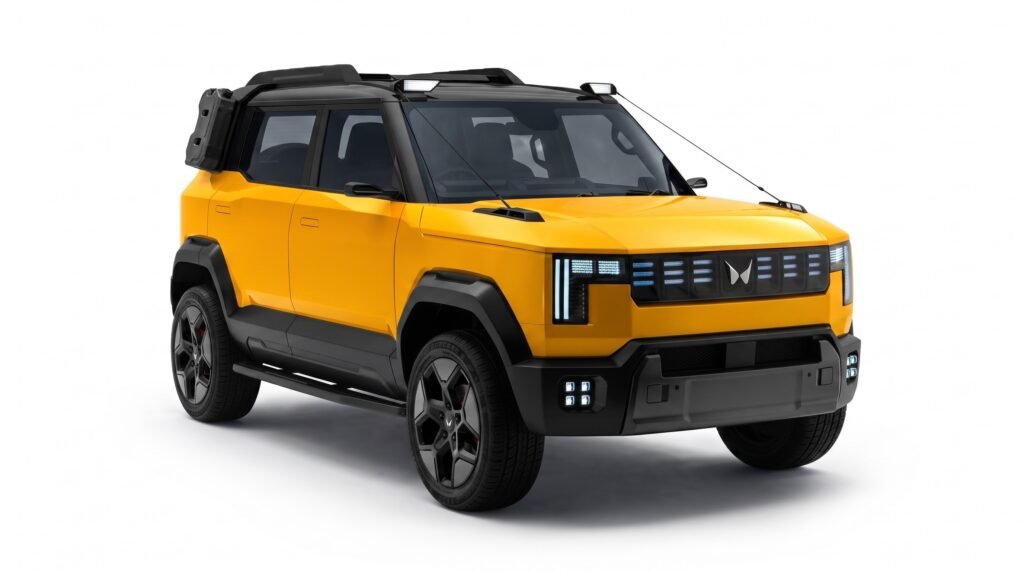
Mahindra Vision.S
Sub-4m Rugged Lifestyle SUV (Concept, launching petrol/diesel first)

Concept previewing a sub-4m rugged SUV due early-to-mid 2027. Launches with 1.2 turbo-petrol and 1.5 turbo-diesel; hybrid and EV planned later. Dual 12.3-inch screens, Level 2 ADAS, 6 airbags.
*Ex-showroom Price in New Delhi
Mahindra Vision.S EV essentials
Mahindra Vision.S pros and cons
Pros
- First of Mahindra's four Vision concepts to reach production - expected 2027
- Genuinely premium cabin for a sub-4m SUV: dual 12.3-inch screens, panoramic roof, ventilated seats
- Six airbags and Level 2 ADAS reported as standard
- Physical climate controls retained alongside the screens - increasingly rare
- Flat rear floor and 60:40 split seats improve real-world practicality
- Rugged, upright design with a tailgate-mounted spare wheel
- Diesel automatic option confirmed - rare in the sub-4m segment
- Estimated Rs 9.50 lakh starting price would be aggressively competitive
- Platform allows Mahindra to add hybrid and electric versions later
Cons
- NOT an electric vehicle at launch - petrol and diesel confirmed by spy shots
- EV version is planned but has no announced timeline, battery or range
- Concept only - no official price, specification or firm launch date
- Production not expected before early to mid-2027
- Production name still unconfirmed
- Sub-4m segment is India's most competitive - Brezza, Venue, Sonet, Sierra, Nexon
- Concept design elements are routinely diluted before production
- All interior and powertrain detail comes from spy shots, not Mahindra
- Mahindra already sells the XUV 3XO in the same sub-4m space
Best for
Mahindra Vision.S specifications
Reality Check - read this first
Powertrain (spy-shot confirmed)
NU_IQ Platform
Positioning & Segment
Exterior Design
Interior & Features (prototype sightings)
Safety (reported)
Development Status
Features
Battery & Performance
- IMPORTANT: the Vision.S launches with petrol and diesel engines, not electric
- Spy shots confirmed a 1.5-litre turbo-diesel with an AdBlue tank and automatic gearbox
- A 1.2-litre turbo-petrol is also expected at launch
- Built on the NU_IQ modular multi-energy platform
- NU_IQ supports petrol, diesel, hybrid and full-electric powertrains
- Monocoque construction with a flat-floor architecture
- Front-wheel drive layout with all-wheel-drive capability
- Hybrid and full-electric versions are planned for later, with no timeline announced
- If an EV version arrives, LFP chemistry is likely, matching the BE 6 and XEV 9e
- CCS-II charging port would be expected on any future electric version
- Mahindra's current INGLO electric SUVs support 175 kW-class DC fast charging
- No battery capacity, range or charging figure has been announced for any EV version
- Wheelbase of around 2,665 mm, comparable to the current Bolero
Comfort & Interior
- Dual 12.3-inch digital screens - instrument cluster and infotainment
- Full-length panoramic sunroof
- Ventilated front seats
- Dual-zone automatic climate control
- Physical climate control buttons retained below the screens
- Flat rear floor - no transmission tunnel intrusion for the middle passenger
- 60:40 split-folding rear seats
- Command seating position, per Mahindra's NU_IQ platform claims
- Class-leading boot space claimed for the platform
- Next-generation Integrated Domain Architecture for vehicle electronics
- Connected car technology expected
- Flush door handles for a cleaner profile
- Interior emphasis on ergonomics rather than screen-only controls
- Premium cabin materials reported from prototype sightings
Safety
- Six airbags reported as standard
- Level 2 ADAS suite reported as standard
- 360-degree surround view camera
- NU_IQ platform designed for lightweight construction with top-tier safety standards
- Flat-floor architecture contributes to torsional rigidity
- Thick rugged cladding around squared-off wheel arches offers minor impact protection
- Mahindra's recent models hold strong Bharat NCAP results
- The Mahindra XUV 3XO holds a 5-star Bharat NCAP rating
- The BE 6 and XEV 9e both hold 5-star Bharat NCAP ratings
- Note: the Vision.S is a concept and has never been crash-tested
- Note: safety equipment is reported from prototype sightings, not a published specification
Mahindra Vision.S trims and pricing
Compare available Mahindra Vision.S trims, their ex-showroom prices and key configuration details.
Vision.S Concept (as shown)
Freedom_NU event, 15 August 2025 - sub-4m rugged SUV concept, Sporty Solidity design theme
Expected: 1.2L Turbo-Petrol
Confirmed by spy shots - expected entry powertrain at launch
Expected: 1.5L Turbo-Diesel Automatic
Confirmed by spy shots including an AdBlue tank - automatic transmission spotted
Planned later: Hybrid
NU_IQ supports hybrid; no timeline announced
Planned later: Full Electric
NU_IQ supports pure EV; no timeline, battery or range announced
About Mahindra Vision.S
Important context first: the Mahindra Vision.S will not launch as an electric vehicle. Spy shots of running prototypes have confirmed a 1.5-litre turbo-diesel with an automatic gearbox and an AdBlue tank, alongside a 1.2-litre turbo-petrol. Hybrid and full-electric versions are planned for later on the same platform, but the car that reaches showrooms first will run on fuel. If you are shopping specifically for an EV, note that clearly before reading further.
With that said, the Vision.S is the most significant of Mahindra’s four Freedom_NU concepts, because it is the one reaching production first. Revealed on 15 August 2025 in Mumbai under the design theme Sporty Solidity, it is a sub-four-metre rugged lifestyle SUV expected in showrooms by early to mid-2027.
It looks like a scaled-down Scorpio N, and the resemblance is deliberate. A boxy silhouette sits under an upright clamshell bonnet, with a rectangular blacked-out grille carrying horizontal slats and the twin-peaks Mahindra logo at its centre. Projector LED headlamps, squared-off wheel arches wrapped in thick rugged cladding, flush door handles and a tailgate-mounted spare wheel complete a look several observers have compared to a compact Land Rover Defender. Reports on the daytime running lamp design vary between circular units and vertical strips – the production treatment is not yet settled.
What spy shots have revealed inside is more surprising than the exterior. Dual 12.3-inch digital screens, a full-length panoramic sunroof, ventilated front seats, dual-zone climate control with physical buttons retained, a flat rear floor with 60:40 split seats, a Level 2 ADAS suite, a 360-degree camera and six airbags as standard. That is a genuinely premium specification for a sub-four-metre SUV.
Underneath sits Mahindra’s NU_IQ platform – a modular monocoque with a flat-floor architecture, front-wheel drive with all-wheel-drive capability, and support for petrol, diesel, hybrid and electric powertrains. The wheelbase is around 2,665 mm, comparable to the current Bolero.
Media estimates place pricing between Rs 9.50 lakh and Rs 16 lakh. The production name is unconfirmed – Baby Scorpio, Scorpio Sports, Bolero Neo 2.0 and Thar Sports have all been floated. Most observers read it as the spiritual successor to the Bolero rather than to the Scorpio.
Trending news for Mahindra Vision.S
Two developments define where the Vision.S stands, and both are more concrete than typical concept-car news.
First, this is the one that is actually happening. Of the four concepts Mahindra revealed at the Freedom_NU event on 15 August 2025 - Vision.S, Vision.X, Vision.T and Vision.SXT - the Vision.S is reported to be the first entering series production, with a launch expected in early to mid-2027. That elevates it from design study to imminent product, and it makes the Vision.S the vehicle that will introduce Mahindra's new NU_IQ platform to buyers.
Second, prototypes have been spotted testing repeatedly on Indian roads, and what they revealed is genuinely informative. Spy shots confirmed a 1.5-litre turbo-diesel paired with an automatic transmission - identified in part by the AdBlue tank fitted to test cars - which settles the powertrain question that the concept reveal left open. The same sightings showed a production-style cabin with dual 12.3-inch screens, physical climate control buttons retained beneath them, and a level of material quality described as premium for a sub-four-metre SUV. Running prototypes with finished interiors indicate development is well advanced rather than early.
The consequence for anyone reading this on an EV site: the Vision.S is launching as a petrol and diesel vehicle. NU_IQ does support hybrid and full-electric powertrains and Mahindra is reported to be planning both, but no timeline, battery specification or range has been announced for an electric version. Do not wait for this car expecting an EV.
Mahindra Vision.S range and performance
The Vision.S launches with combustion engines, so this section covers what is known about them and what an eventual electric version might offer.
On the confirmed powertrains, spy shots have established a 1.5-litre turbo-diesel with an automatic gearbox, identified partly by the AdBlue selective catalytic reduction tank fitted to test vehicles. A 1.2-litre turbo-petrol is also expected, which would follow Mahindra's existing engine strategy in the sub-four-metre class. Manual transmissions would be expected alongside the automatic on lower variants.
A diesel automatic is genuinely uncommon in India's sub-four-metre SUV segment, where most rivals have moved to petrol-only or petrol-plus-CNG line-ups. If it reaches production it would be a real point of difference for buyers who cover high annual mileage and want the torque and economy a modern turbo-diesel delivers. No power or torque figures have been published.
The platform allows all-wheel drive alongside the standard front-wheel-drive layout, though whether Mahindra offers AWD on a sub-four-metre model is unconfirmed.
On a potential electric version: nothing has been announced. If Mahindra follows its own current practice, an EV variant would likely use LFP battery chemistry as on the BE 6 and XEV 9e, and a sub-four-metre SUV would typically suit a pack in the 35 to 45 kWh region delivering perhaps 350 to 450 km claimed. Those are class-norm inferences rather than reported figures, and no timeline exists.
On dimensions, the wheelbase of around 2,665 mm is comparable to the current Bolero and generous for the class. Combined with the flat rear floor confirmed in prototype sightings - a benefit of the NU_IQ architecture - rear seat space should be a genuine strength rather than the usual sub-four-metre compromise.
Mahindra Vision.S safety overview
The Vision.S is a concept and has never been crash-tested, so it carries no rating from Bharat NCAP or any other programme. What follows is what prototype sightings have revealed and what Mahindra's record suggests.
Reported equipment is strong for the segment. Six airbags are said to be standard, along with a Level 2 ADAS suite and a 360-degree surround view camera. If accurate, that would place the Vision.S at or above the best-equipped cars in India's sub-four-metre class, where six airbags have only recently become common and full ADAS remains a top-variant feature on most rivals.
An important qualification: all of this comes from spy shots and industry reporting, not from a published Mahindra specification. Equipment levels frequently change between prototype and production, and features seen on a test vehicle may end up restricted to higher variants rather than fitted as standard.
On the platform, Mahindra describes NU_IQ as combining lightweight construction with top-tier safety standards, and the flat-floor architecture contributes to torsional rigidity regardless of powertrain.
Mahindra's track record supports optimism. The XUV 3XO holds a 5-star Bharat NCAP rating, as do the BE 6 and XEV 9e. The company has built its recent brand positioning substantially on crash performance, and launching the first vehicle on an all-new platform with anything less than a 5-star result would be commercially damaging.
One design detail worth noting: the thick cladding around the squared-off wheel arches offers some protection against minor urban impacts and kerb damage, which is a small but practical benefit on a vehicle likely to be used on rougher roads.
Mahindra Vision.S battery and charging guide
The Vision.S launches with petrol and diesel engines, so charging is not applicable to the car that will reach showrooms in 2027. This section covers what would apply if the planned electric version arrives.
Mahindra has announced no timeline, battery capacity, charging speed or range for an electric Vision.S. What is known is that the NU_IQ platform supports a full-electric powertrain, and that Mahindra is reported to be planning one.
If it arrives, the charging port would almost certainly be CCS-II, the Indian standard used across every current Mahindra electric vehicle and compatible with essentially all public networks in the country.
Mahindra's born-electric SUVs on the INGLO platform - the BE 6 and XEV 9e - support DC fast charging in the 175 kW class, among the fastest available in India. A sub-four-metre SUV with a smaller battery would not need or safely accept that much, and would likely be specified lower. For a pack in the 35 to 45 kWh region, a 10 to 80 percent DC charge in the region of 35 to 50 minutes would be a realistic class-norm expectation.
Home AC charging with an overnight full charge would be the daily pattern for most owners. A 7.4 kW wallbox would typically fill a battery of that size in five to seven hours.
If LFP chemistry is used, as on Mahindra's current EVs, charging to 100 percent regularly is acceptable without the accelerated ageing that affects nickel-based packs.
Every figure in this section is inference from Mahindra's existing products and segment norms. None of it comes from a Mahindra announcement about the Vision.S, and there is currently no confirmed electric version to apply it to.
Mahindra Vision.S warranty details
No warranty terms have been announced for the Vision.S, since it remains a concept with a production launch expected in 2027.
For the petrol and diesel versions that will launch first, Mahindra's standard vehicle warranty would apply, with extended warranty packages typically available at purchase. Mahindra's current warranty terms across its combustion range are the best available guide, and these are periodically revised so the position at launch may differ.
If an electric version follows, the structure would change substantially. Mahindra's born-electric SUVs launched with battery warranty terms designed around long-term ownership confidence, including lifetime battery warranty provisions for first owners on certain variants. Lifetime terms always carry conditions on mileage, transferability and servicing, so the wording matters far more than the headline.
There is a practical point specific to this vehicle. Because the Vision.S is expected to be the first production model on the all-new NU_IQ platform, an extended warranty is worth pricing more seriously than usual. First-generation products on new architectures historically see more teething issues than established models, and extended coverage on a new platform is a reasonable hedge rather than an upsell.
When the production car is announced, the questions worth asking are the standard ones: what the base warranty term and mileage limit are, what extended options cost and cover, what roadside assistance actually includes, and - if you choose a future electric version - the battery capacity degradation threshold that triggers a replacement.
Mahindra's service network reach across India, including smaller towns, remains one of the stronger practical arguments for the brand.
Quick verdict: Mahindra Vision.S
The Vision.S is the most consequential of Mahindra's four Freedom_NU concepts, for a simple reason: it is the one that is actually being built. Prototypes are testing on Indian roads with production-style interiors, and a launch is expected in early to mid-2027.
What prototype sightings have revealed is genuinely impressive for a sub-four-metre SUV. Dual 12.3-inch screens, a full-length panoramic sunroof, ventilated front seats, dual-zone climate control, a flat rear floor with 60:40 split seats, Level 2 ADAS, a 360-degree camera and six airbags reported as standard. Retaining physical climate buttons beneath the screens is a small detail that says a lot about how the car has been thought through. A 2,665 mm wheelbase and flat floor should also fix the rear-space compromise that defines the segment.
The design works too. Boxy, upright, clamshell bonnet, blacked-out slatted grille, rugged arch cladding and a tailgate-mounted spare wheel - it reads as a scaled-down Scorpio N with a hint of compact Defender, and it occupies a rugged-lifestyle space in the sub-four-metre class that is currently underserved. Most observers read it as the Bolero's spiritual successor rather than the Scorpio's.
But the caveat is the one that matters most on an EV site, and it is not a small one. The Vision.S launches with a 1.2-litre turbo-petrol and a 1.5-litre turbo-diesel. Spy shots showing an AdBlue tank settled that question. Hybrid and electric versions are planned on the same platform, but with no announced timeline, battery specification or range.
Who should follow it: buyers wanting a rugged, well-equipped sub-four-metre SUV in 2027, and Bolero Neo owners considering what comes next.
Who should look elsewhere: anyone shopping specifically for an electric vehicle. Mahindra's XUV400, BE 6 and XEV 9e are on sale today.
Mahindra Vision.S vs rivals: how it compares
The Vision.S sits in India's most contested segment, and the comparisons split into two groups.
Against its own siblings: the Vision.X is the other sub-four-metre concept on NU_IQ, with the same approximate 2,665 mm wheelbase but an opposite brief - sculpted urban surfaces, flush handles, roof spoiler and full-width tail lights, expected to replace the XUV 3XO. The Vision.S is the rugged one: boxy, clad, tailgate spare wheel, Bolero successor. The Vision.T is the serious off-roader previewing an electric Thar, and the Vision.SXT sits above as a balance of muscle and refinement. The Vision.S is expected to reach production first.
Against the Tata Sierra: the closest philosophical rival, another boxy lifestyle SUV reviving a nameplate with strong recall. Both target buyers who want character rather than another rounded crossover.
Against the Maruti Brezza, Hyundai Venue and Kia Sonet: these are the segment's volume players, all well established with wide service networks. The Vision.S would counter with a more rugged character, a diesel automatic option that most rivals no longer offer, and - if prototype sightings hold - a considerably more premium cabin.
Against the Tata Nexon: the Nexon offers petrol, diesel and a fully developed electric version already on sale. That last point matters: if you want an electric sub-four-metre SUV, the Nexon EV exists today and the Vision.S will not for years.
Against Mahindra's own Bolero Neo: the Bolero Neo is the vehicle the Vision.S is expected to succeed spiritually. It is on sale now, cheaper and more utilitarian, with none of the Vision.S's technology.
Against the Mahindra XUV 3XO: both are sub-four-metre Mahindras, but the 3XO is the urban option and the Vision.S the rugged one. Mahindra appears to be planning to sell both.
Mahindra Vision.S: who should buy it (and who should not)
You cannot buy a Vision.S yet, so this covers whether to wait and what to watch.
Start with the powertrain question, because it settles things for many readers. The Vision.S launches with petrol and diesel engines. If you are shopping specifically for an electric vehicle, this is not your car and waiting for it would be a mistake - the EV version has no announced timeline, battery specification or range. Mahindra's XUV400, BE 6 and XEV 9e are available today.
If a combustion sub-four-metre SUV works for you, the wait is more reasonable than for most concepts. Prototypes are already testing with production-style interiors, Mahindra has indicated this is the first Vision concept entering series production, and a launch is expected in early to mid-2027. That is a defined window rather than an open-ended one, though it is still eighteen months or more away.
If you need a vehicle sooner, the Bolero Neo, Thar and Scorpio N cover Mahindra's rugged range today, and the XUV 3XO covers the sub-four-metre urban option.
Four signals worth watching. First, Mahindra confirming the production name - that usually comes close to launch. Second, official specifications being published, particularly engine outputs and whether the reported six airbags and Level 2 ADAS are genuinely standard or restricted to top variants. Third, bookings opening. Fourth, the Bharat NCAP result, which for a Mahindra is usually published soon after launch.
One specific thing to verify when it arrives: whether the diesel automatic actually reaches production. It was clearly visible in testing and would be a genuine differentiator, but diesel line-ups have been shrinking across the Indian market and plans can change between prototype and showroom.
Also check in person whether the flat rear floor delivers the space the wheelbase promises - that is the Vision.S's most practical potential advantage.
Mahindra Vision.S ownership and running costs
Because the Vision.S launches with petrol and diesel engines, the running-cost picture is conventional rather than electric. Here is how it would look, using segment norms and the estimated pricing.
Petrol: a 1.2-litre turbo-petrol sub-four-metre SUV would typically return around 18 kmpl in mixed use. At Rs 100 per litre, that works out to roughly Rs 5.55 per kilometre. At 12,000 km a year, about Rs 67,000 in fuel.
Diesel: a 1.5-litre turbo-diesel would typically return around 21 kmpl. At Rs 95 per litre, that is roughly Rs 4.50 per kilometre - about Rs 1.05 per kilometre cheaper than the petrol. Over 12,000 km a year that saves around Rs 12,600; over 25,000 km a year, closer to Rs 26,000. Diesel variants normally carry a price premium of Rs 1 to Rs 1.5 lakh, so the break-even sits somewhere between 95,000 and 1,40,000 km - which is why diesel makes sense for high-mileage drivers and not for low-mileage ones. Factor in AdBlue top-ups, which the spy shots confirm this engine requires.
For comparison, if an electric version eventually arrives with a battery in the 35 to 45 kWh region, home charging at around Rs 10 per unit would cost approximately Rs 1.30 per kilometre - roughly a quarter of the petrol figure. That gap is the reason to consider waiting for an EV version, but with no announced timeline it is not something to plan around.
Servicing on the combustion versions would follow segment norms: oil changes, filters and the usual wear items, with diesel typically costing somewhat more per service than petrol.
One consideration specific to this vehicle: as the first production model on the NU_IQ platform, early examples may see more warranty work and software updates than an established model. Budget for the possibility of extra service visits in the first year, and consider extended warranty coverage.
Mahindra Vision.S tax benefits and incentives
The tax position of the Vision.S depends on which version you buy, and the distinction matters because this vehicle launches with combustion engines rather than as an EV.
For the petrol and diesel versions arriving in 2027, the relevant benefit is the sub-four-metre rule. Vehicles under four metres in length with engines below specified displacement limits attract a lower GST rate in India than larger SUVs, which is precisely why the sub-four-metre segment exists in the form it does and why nearly every manufacturer engineers to that length limit. The Vision.S is expected to be a sub-four-metre vehicle, so it would benefit from this treatment. Electric vehicle incentives such as Section 80EEB, road tax waivers and green number plate exemptions would not apply.
If a full-electric version arrives later, the picture changes entirely. GST on electric vehicles is charged at 5 percent against a much higher rate plus cess on comparable petrol and diesel vehicles. Road tax and registration exemptions vary by state - Delhi, Maharashtra, Gujarat, Tamil Nadu, Karnataka, Telangana and several others waive or sharply reduce them for EVs while other states offer nothing. Under Section 80EEB, individual buyers financing an electric vehicle can claim a deduction of up to Rs 1.5 lakh on loan interest, subject to the loan being sanctioned in the eligible window and the buyer using the old tax regime. Green number plates additionally exempt EVs from certain city-level restrictions.
A hybrid version, if offered, would fall between the two - hybrids do not receive full EV treatment in India, though some states offer partial concessions.
All of these policies are revised periodically. Confirm the current position with your dealer and state transport department at the time of purchase rather than relying on figures published years earlier.
Mahindra Vision.S maintenance and service
The Vision.S launches with combustion engines, so its maintenance profile is conventional. Here is what to expect across the powertrains, plus one consideration specific to this vehicle.
Petrol: the 1.2-litre turbo-petrol would follow standard servicing - engine oil and filter, air filter, spark plugs, cabin filter, brake fluid, coolant and the usual wear items at segment-normal intervals and cost.
Diesel: the 1.5-litre turbo-diesel requires more attention and costs more to maintain. Oil changes are typically more expensive, the fuel filter needs regular replacement, and the AdBlue selective catalytic reduction system confirmed by spy shots means periodic AdBlue top-ups plus the possibility of injector or sensor issues over time. Diesel particulate filters also require regular highway running to regenerate properly - a diesel used exclusively for short urban trips can develop DPF problems. Buyers doing mostly city driving should think carefully about whether diesel suits their use.
If a future electric version arrives, maintenance would drop substantially - no engine oil, filters, spark plugs, clutch or exhaust, with servicing largely inspection-based and costs typically a third to a half of a petrol equivalent.
The consideration specific to this vehicle applies regardless of powertrain. The Vision.S is expected to be the first production model on the all-new NU_IQ platform, and first-generation products on new architectures historically see more teething issues, software updates and minor recalls than established models. Service centres also take time to build familiarity with new platforms. This is not a reason to avoid the car, but it is a reason to use authorised service centres during the warranty period, keep documentation carefully, and consider extended warranty coverage.
The rugged wheel arch cladding shown on the concept should reduce minor body damage costs, which is a genuine practical benefit.
EV Running Cost Calculator
*Estimated figures based on entered electricity price, fuel price, mileage and average daily driving. Actual running costs can vary.
Related articles for Mahindra Vision.S


Frequently asked questions about Mahindra Vision.S
Is the Mahindra Vision.S an electric vehicle?
Not at launch, and this is the most important thing to know about it. Spy shots of running prototypes have confirmed a 1.5-litre turbo-diesel with an automatic gearbox and an AdBlue tank, and a 1.2-litre turbo-petrol is also expected. The underlying NU_IQ platform does support hybrid and full-electric powertrains, and Mahindra is reported to be planning both for later, but no timeline, battery capacity or range has been announced for an electric version. The car that reaches showrooms first will be petrol or diesel.
Is the Mahindra Vision.S on sale?
No. The Vision.S is a concept, revealed on 15 August 2025 at Mahindra's Freedom_NU event in Mumbai as part of the company's Global Vision 2027 announcement. It is not on sale and bookings have not opened. However, it is the first of the four Vision concepts expected to enter series production, with a launch anticipated in early to mid-2027. Prototypes have already been spotted testing on Indian roads, which is a meaningful signal that development is well advanced.
What will the Mahindra Vision.S be called in production?
Mahindra has not confirmed a name. Baby Scorpio, Scorpio Sports, Bolero Neo 2.0 and Thar Sports have all been suggested in media coverage. The design closely resembles a scaled-down Scorpio N, which is where the Baby Scorpio label comes from, but most observers read the vehicle as a spiritual successor to the Bolero rather than to the Scorpio - it sits below the Scorpio N in Mahindra's range, between the XUV 3XO and the Scorpio N.
What engines will the Mahindra Vision.S have?
Spy shots have confirmed a 1.5-litre turbo-diesel paired with an automatic transmission, identified partly by the AdBlue tank visible on test vehicles. A 1.2-litre turbo-petrol is also expected at launch. Manual transmissions would be expected alongside the automatic. A diesel automatic is relatively rare in India's sub-four-metre SUV segment, so if it reaches production it would be a genuine point of difference. Hybrid and electric versions are planned for later on the same platform.
How much will the Mahindra Vision.S cost?
Mahindra has announced nothing. Media estimates place the range between roughly Rs 9.50 lakh for the entry petrol variant and around Rs 16 lakh for a fully loaded diesel automatic, ex-showroom. That would position it aggressively against the Maruti Brezza, Hyundai Venue, Kia Sonet, Tata Nexon and Tata Sierra. Any electric version, whenever it arrives, would sit considerably higher - for context, Mahindra's BE 6 starts around Rs 18.90 lakh.
What is the Mahindra Vision.S interior like?
Considerably more premium than the sub-four-metre segment norm, based on prototype sightings. Reported equipment includes dual 12.3-inch digital screens for instrumentation and infotainment, a full-length panoramic sunroof, ventilated front seats, dual-zone automatic climate control, a flat rear floor with 60:40 split-folding seats, a Level 2 ADAS suite, a 360-degree camera and six airbags as standard. Notably, physical climate control buttons have been retained below the screens - a deliberate ergonomic choice that is becoming rare.
What is the Mahindra NU_IQ platform?
NU_IQ is Mahindra's all-new modular, multi-energy monocoque platform, announced at the Freedom_NU event in August 2025 as the foundation of the company's Global Vision 2027. It uses a flat-floor architecture and supports petrol, diesel, hybrid and full-electric powertrains, with a front-wheel-drive layout that also allows all-wheel drive, plus left and right-hand drive for global markets. Mahindra highlights lightweight construction with top-tier safety standards, command seating and class-leading boot space. The Vision.S is expected to be the first production vehicle on it.
How does the Vision.S differ from the Vision.X?
They are two sides of the same platform. Both are sub-four-metre SUVs on NU_IQ with a wheelbase around 2,665 mm, but the design briefs are opposite. The Vision.S follows the Sporty Solidity theme - boxy, upright, rugged cladding, tailgate-mounted spare wheel, Scorpio N-inspired - and is read as a Bolero successor. The Vision.X follows Sculptural Athleticism - sculpted urban surfaces, flush handles, roof spoiler, full-width LED tail lights - and is expected to replace the XUV 3XO. The Vision.S is expected to reach production first.
Should I wait for the Vision.S?
If you need a vehicle within the next eighteen months, no. Launch is not expected before early to mid-2027, and Mahindra has announced no price, specification or firm date. If you specifically want an electric vehicle, definitely not - the Vision.S launches with petrol and diesel engines, and an EV version has no announced timeline at all. If you want a rugged Mahindra SUV now, the Bolero Neo, Thar and Scorpio N are all on sale. If you want an electric Mahindra, the XUV400, BE 6 and XEV 9e are available today.
Owner feedback for Mahindra Vision.S
No approved owner feedback yet. Be the first to share your experience.
Available colours
Mahindra has not announced a production colour palette for the Vision.S, because it remains a concept with launch expected in 2027. The show car was presented in a muted metallic finish contrasted against a blacked-out grille and dark wheel arch cladding - a treatment that emphasises the boxy surfacing and rugged character Mahindra describes as Sporty Solidity. Concept vehicles are almost always finished in bespoke show paint that does not reach production, so read this as design intent rather than a future option. For a realistic guide to what a production palette would contain, Mahindra's current rugged range offers the best indication: the Thar, Thar Roxx, Bolero Neo and Scorpio N are collectively sold in shades including a white, a silver, a grey, a black, a red and at least one earthy green, typically with the option of a contrasting black roof on higher variants. Mahindra has increasingly offered matte and satin finishes on its lifestyle models, and a rugged sub-four-metre SUV aimed at younger buyers would be a natural candidate for one. The blacked-out grille and dark arch cladding seen on the concept are the kind of details that usually survive to production, because they are inexpensive to implement and central to the vehicle's character. The confirmed palette will be added here once Mahindra announces production specification.