
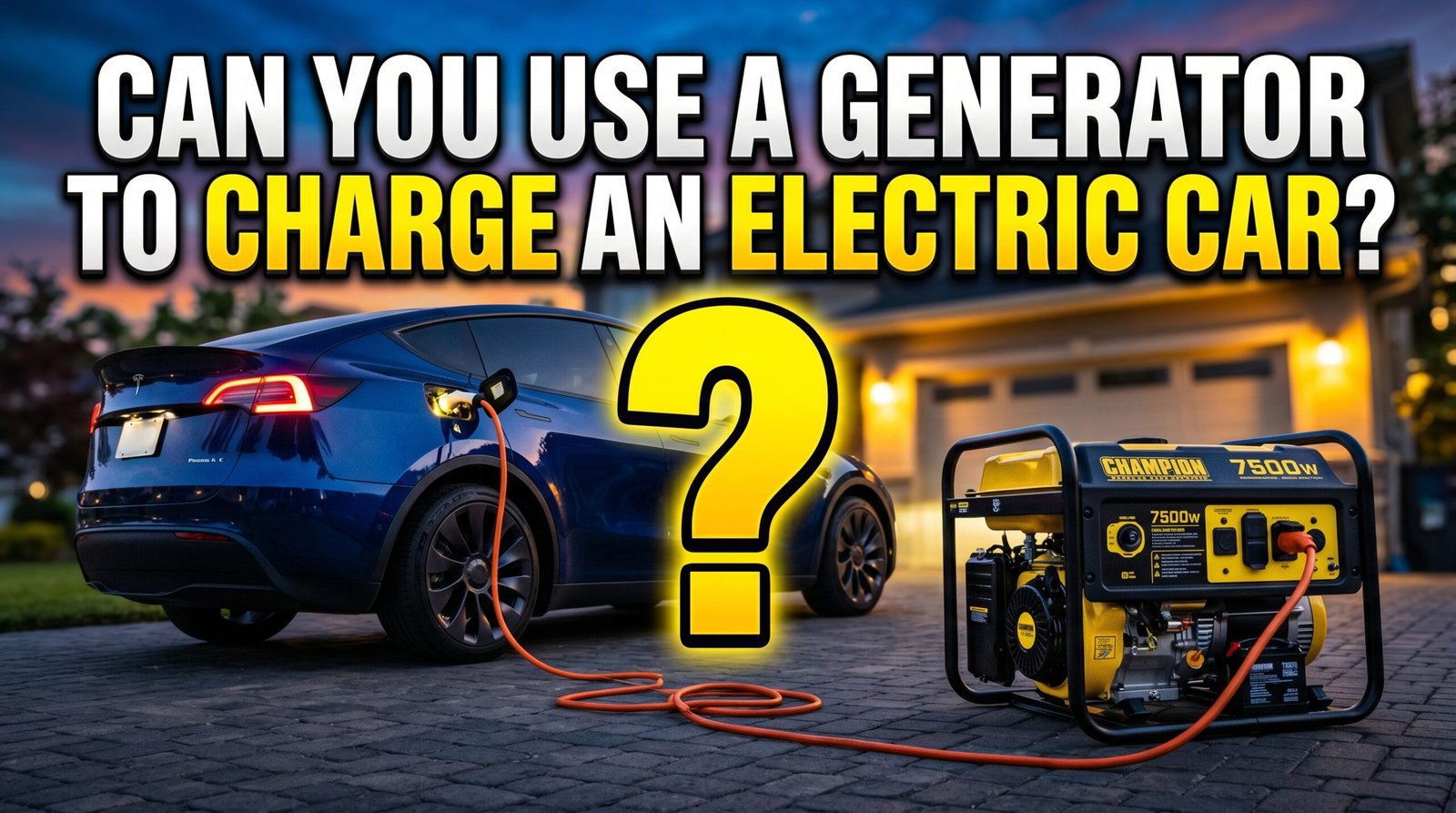
Yes, you can charge an electric car with a generator, but it only works with the right kind of generator and the right setup. The generator must produce clean, pure sine wave power, have enough output, and be properly grounded, or your EV will simply refuse to charge.
It’s a genuine option for emergencies, off-grid spots, or remote travel, but it’s slow and burns fuel inefficiently, so think of it as a backup plan and not a daily habit.
Can a Generator Actually Charge an EV?
A generator can charge an electric car as long as it delivers clean, stable power that the car’s onboard charger will accept. Your EV doesn’t care whether the electricity comes from a wall socket or a generator. It only cares about the quality of that power. Cheap generators produce “dirty” power with voltage spikes and distortion, and modern EVs are built to reject exactly that to protect their electronics.
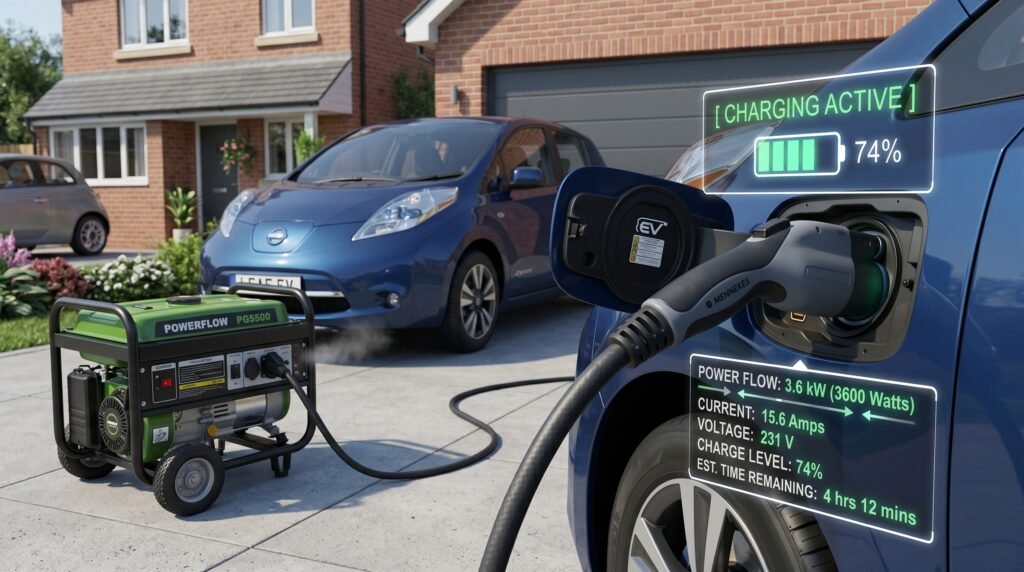
So the question isn’t really “can a generator charge an EV?” It’s “Does this particular generator produce power clean enough for the car to accept?” Get that part right, and it works reliably.
The Pure Sine Wave Requirement
Your EV needs a pure sine wave generator, not a basic or modified sine wave one. Inverter generators are the type that produce this clean, low-distortion power, which is why they’re the standard recommendation for EV charging. A conventional construction-site generator often outputs rougher power that the car’s charger will detect and reject.
This is the single most common reason a generator fails to charge an EV. The generator runs fine, but the car flashes a fault and refuses to draw current, because it has sensed that the power isn’t clean enough.
The Grounding Requirement
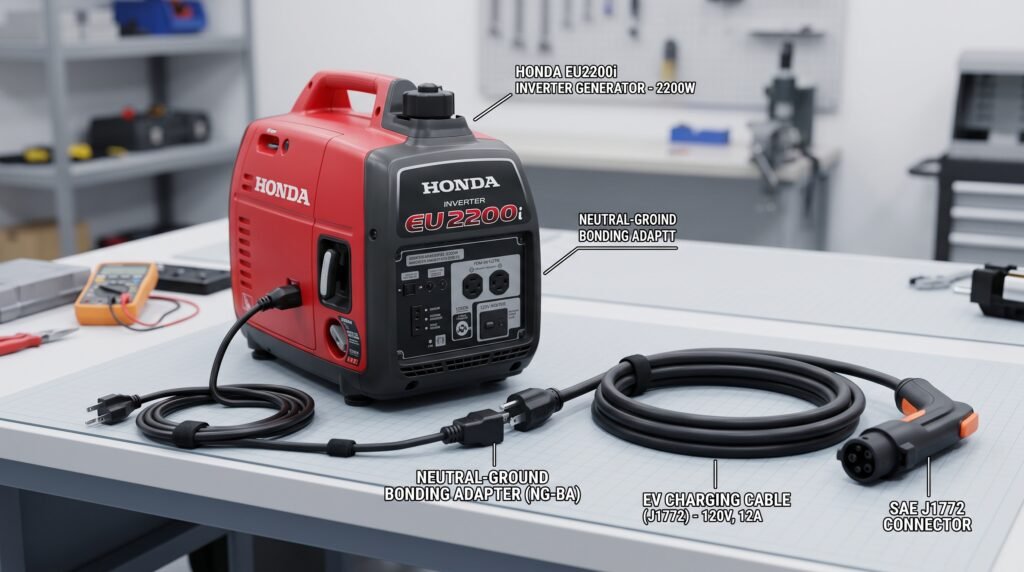
The generator must have a proper bonded neutral-ground connection, or the EV won’t recognise it as a valid power source. EV charging equipment runs a safety check on the supply before it allows current to flow. If the generator’s neutral isn’t bonded to ground, the car reads it as an unsafe or invalid source and stops. Many portable generators need a simple grounding plug or adapter to satisfy this check. It’s a small detail that catches a lot of people out.
What You Need to Charge an EV With a Generator
Charging an EV from a generator comes down to three things: enough power, clean output, and the correct connection. Get these right and the car charges. Get anyone wrong and it won’t.
Generator Types That Work
Different generators suit different needs, and your choice depends on how much power you want and how portable it needs to be:
- Inverter generators are the safest choice because they produce the clean, pure sine wave power EVs demand. Good for occasional or emergency charging.
- Dual-fuel inverter generators run on petrol or LPG and offer flexibility for off-grid or remote use, with enough clean output for steady charging.
- Large portable power stations (big battery units, not fuel generators) can charge an EV silently and cleanly, useful for short top-ups, though their own capacity limits how much they can deliver.
For most people, a quality inverter generator in the 3.5 to 7 kW range is the practical sweet spot for emergency EV charging.
Match the Amperage and Connection
You usually need to lower your EV’s charging amperage to match the generator’s output. Standard EV chargers default to a high current draw, often 30 to 50 amps, which a portable generator can’t sustain. You manually reduce the amperage on your car’s screen or in the charger’s app, typically to around 15 to 30 amps, so the steady draw stays within what the generator can comfortably supply. Push it too high and the generator overloads or stalls.
The connection also has to be right. Generators typically output standard household-style voltage, and you’ll need the correct adapter so your EV’s portable charging cable (the EVSE) plugs in safely. Using the right socket and adapter for your region matters here, since plug standards differ between countries.
Don’t Expect Fast Charging
Generator charging is slow, and that’s the honest trade-off. A typical 3 to 5 kW portable generator delivers roughly the equivalent of slow home AC charging, adding only a small amount of range per hour. Over several hours it can add meaningful charge, but it will never match a proper DC fast charger or even a full-speed home wall box. Treat it as a way to add enough range to reach the next real charger, not as a full overnight fill.
Should You Actually Do This?
Generator charging is best kept as an emergency or off-grid solution, not a routine one, because it’s slow and inefficiently burns fuel. Running a petrol or diesel generator to make electricity, then feeding that into a battery, loses energy at every step.
You’re effectively paying for fuel to charge a car that’s meant to avoid fuel in the first place, so the running cost per kilometre is high, and the environmental benefit of the EV is reduced while you do it.
Where it genuinely makes sense is in specific situations: a roadside emergency when you’ve run out of charge far from any station, remote travel through areas with no charging network, or as a backup during long power cuts. For those cases, a clean inverter generator is a sensible thing to have access to.
For everyday charging, home or public chargers will always be cheaper, faster and cleaner. If you want to understand normal charging options first, our EV buying guides cover home and public charging in detail.
FAQs
Q: Can you charge an electric car with a generator?
A: Yes, but the generator must produce clean, pure sine wave power, have enough output, and be properly grounded. Inverter generators are the recommended type. It works for emergencies and off-grid use, though it’s slow and fuel-inefficient.
Q: What type of generator do I need to charge an EV?
A: A pure sine wave inverter generator, ideally in the 3.5 to 7 kW range. Standard or modified sine wave generators produce power too rough for an EV’s charger, which will reject it to protect the car’s electronics.
Q: Why won’t my generator charge my electric car?
A: The two most common reasons are dirty power and missing grounding. If the generator isn’t a pure sine wave type, or its neutral isn’t bonded to ground, the EV’s safety check rejects it as an invalid source and refuses to charge.
Q: How long does it take to charge an EV with a generator?
A: It’s slow, similar to basic home AC charging. A 3 to 5 kW portable generator adds only a small amount of range per hour, so it’s best for topping up enough to reach a proper charger rather than for a full charge.
Q: Do I need to lower my EV’s charging current for a generator?
A: Yes. You usually reduce the charging amperage through the car’s screen or charger app, often down to 15 to 30 amps, so the draw stays within the generator’s capacity. Too high a setting will overload or stall the generator.
Q: Is using a generator to charge an EV worth it?
A: Only as a backup. It’s slow, burns fuel inefficiently, and costs more per kilometre than normal charging. It makes sense for emergencies, remote travel or power cuts, but home and public chargers are always the better everyday option.

Gagandeep Singh
Founder, EV UnlockGagandeep Singh is an Electronics and Communication Engineering graduate from BGIET Sangrur and holds an M.Tech in eMobility from IIT Madras (CODE IITM). He is the founder of EV Unlock, an independent electric vehicle research platform. His work combines engineering knowledge, SEO strategy and electric mobility research to deliver verified EV specifications, buying guides and charging information that help buyers make confident, informed decisions.