

Tata Avinya has a stunning modern appeal
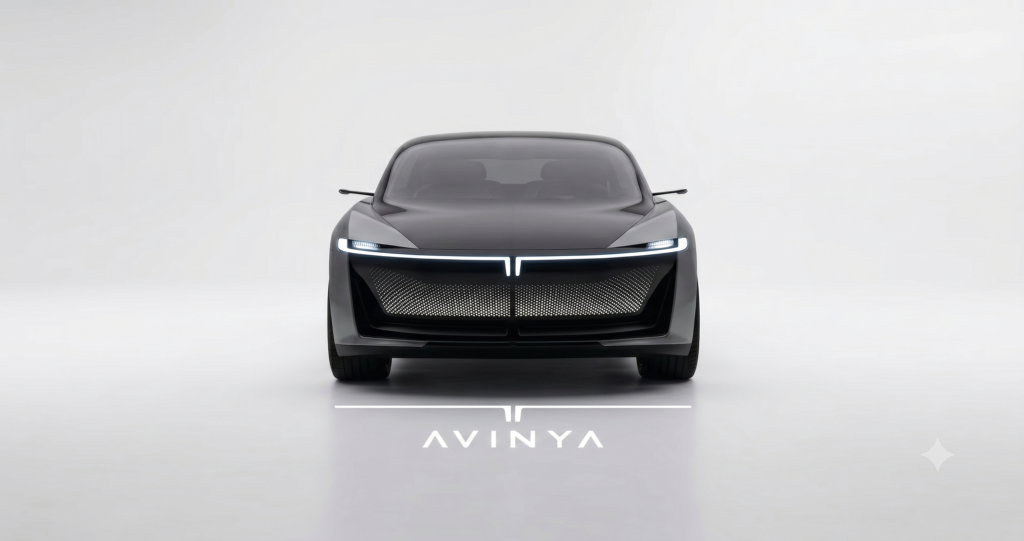 1 / 4 Images
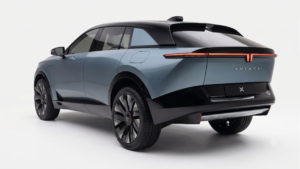
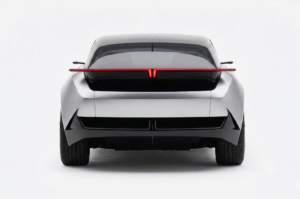
Tata Avinya
Concept programme (no production variants announced)

Tata's premium electric flagship, announced on a Jaguar Land Rover derived platform rather than the acti.ev architecture behind every Tata EV actually on sale. Still listed under Concept Cars.
~₹40 Lakh (projected, not announced) - ~₹55 Lakh (projected, not announced)
*Ex-showroom Price in India
Updated August 7, 2026 · Data verified from Tata Motors concept reveal communications and EMA platform announcements
Calculate EMIRange~500 km (concept target, no certification issued)
Battery~80 kWh (projected, not announced)
Charging Time~30 Minutes for a substantial charge (concept claim)
Tata Avinya EV essentials
Driving Range~500 km (concept target, no certification issued)
Battery Capacity~80 kWh (projected, not announced)
Fast Charging DC~30 Minutes for a substantial charge (concept claim)
AC Charging Time~8 Hours for a full charge (projected)
Top Speed~200 km/h (projected)
Power Output~400 bhp (projected, dual motor)
Acceleration0-100 km/h in ~5 sec (projected)
Drive TypeAWD dual motor (projected)
Seating Capacity5 Seats
Boot Space~450 Litres (projected)
Safety RatingNot yet tested (5 Star expected on a JLR derived platform)
Warranty8 Years battery expected (Tata EV standard)
Tata Avinya pros and cons
Pros
- EMA is a genuinely premium architecture, derived from Jaguar Land Rover engineering
- Lounge style rear cabin concept targets a buyer nobody else in India is serving directly
- Flat floor and long wheelbase would deliver rear space unusual for the footprint
- Fast charging ambition, if delivered, would exceed anything Tata currently offers
- Avinya X SUV variant broadens the appeal beyond a single body style
- Tata's EV service and charging network is the most developed in India
Cons
- Still listed under Concept Cars on Tata's own website years after the original reveal
- Built on a different platform from every Tata EV that has actually reached showrooms
- EMA is a premium European architecture, which makes Indian price positioning genuinely difficult
- Original launch target has passed with no revised date announced
- Concept features such as butterfly doors and a pillar-free cabin rarely survive to production
- No confirmed price, specification, battery size, or range
- Tata's commercial momentum sits with acti.ev models, which reduces urgency behind Avinya
Best for
Tata Avinya specifications
Battery & Charging
PlatformEMA, Electrified Modular Architecture derived from Jaguar Land Rover
Platform NoteDifferent from acti.ev, which underpins all Tata EVs currently on sale
Battery Capacity~80 kWh (projected, not announced)
Battery TypeLithium-ion, liquid cooled (projected)
Range Target~500 km (concept stage target, not certified)
DC Fast ChargingSubstantial charge in ~30 minutes (concept claim)
AC Charging~11 kW projected, roughly 8 hours for a full charge
Charging PortCCS-II (projected, India standard)
V2L Vehicle to LoadExpected on a premium platform (projected)
Battery Warranty8 years expected, matching Tata EV policy
Efficiency & Real-world Range
Range Target~500 km (concept stage, not certified)
Projected Real-world City Range~400 to 450 km (estimated)
Projected Highway Range~350 to 400 km (estimated)
Projected Efficiency~6.5 to 7.5 km/kWh (estimated)
Projected Running Cost~₹1.20 per km at ₹8.5/kWh (estimated)
Harrier EV Reference627 km certified on acti.ev+, already exceeding the Avinya target
Regenerative BrakingMulti-level expected (projected)
NoteAll figures are projections. No certification or testing has been carried out.
Motor & Performance
Motor TypePermanent Magnet Synchronous Motor (projected)
Drive LayoutDual motor all wheel drive (projected)
Max Power~400 bhp (projected)
Max Torque~600 Nm (projected)
0 to 100 km/h~5 seconds (projected)
Top Speed~200 km/h (projected)
TransmissionSingle-speed automatic
Drive ModesNot announced (projected multi-mode)
Dimensions & Weight
Length~4,400 mm (concept proportions)
Width~1,850 mm (concept proportions)
Height~1,500 mm (concept proportions)
Wheelbase~2,750 mm (projected, long for lounge rear space)
Ground Clearance~180 mm (projected)
Kerb Weight~2,200 kg (projected)
Turning Radius~5.4 m (projected)
Boot Space~450 Litres (projected)
Seating Capacity5 Seats
Suspension Brakes & Tyres
Front SuspensionIndependent, specification not announced (projected)
Rear SuspensionMulti-link independent expected on a premium platform
Brakes FrontVentilated disc (projected)
Brakes RearDisc (projected)
Tyre Size~245/45 R20 (projected, large alloys shown on concept)
Wheel Size20 inch (concept renders)
Regenerative BrakingMulti-level expected
Air SuspensionPossible on an EMA derived platform, not announced
Comfort & Tech
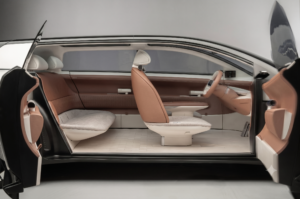
Rear CabinLounge style seating, the concept's defining feature
RoofFull length glass roof (concept design)
DoorsButterfly style shown on concept, production feasibility unconfirmed
DashboardMinimalist with no conventional instrument binnacle (concept)
Floor LayoutFlat floor throughout, enabled by skateboard battery
InfotainmentSpecification not announced
Connected CarTata iRA expected (projected)
Over the Air UpdatesExpected, standard across Tata EVs
Ambient LightingYes (concept design)
Safety
Crash RatingNot tested, 5 Star expected on a JLR derived platform
AirbagsMultiple expected, count not announced
ADASLevel 2 or higher expected on a premium platform
Electronic Stability ControlExpected as standard
StructureEMA, engineered to European safety standards
B-PillarAbsent in concept renders, production feasibility unconfirmed
HV Crash DisconnectExpected, standard on production EVs
Battery IP RatingIP67 expected, matching Tata EV standard
Warranty
Vehicle Warranty3 years expected, matching Tata policy
Battery Warranty8 years or 1,60,000 km expected
Motor Warranty8 years expected
Roadside AssistanceExpected, included at launch
Programme StatusConcept, no production warranty issued
Features
Battery & Performance
- Built on EMA, the Electrified Modular Architecture derived from Jaguar Land Rover
- This is a different platform from acti.ev, which underpins every Tata EV currently on sale
- Battery around 80 kWh projected, sized for the premium segment rather than mass market pricing
- Range target of approximately 500 km stated at concept stage
- Very fast charging was a headline concept claim, with a substantial charge targeted in around 30 minutes
- Skateboard battery layout creating a flat floor throughout the cabin
- Liquid cooled thermal management expected, standard for a premium electric platform
- Higher voltage architecture than acti.ev expected, enabling the faster charging claim
- No production battery specification has been published
Comfort & Interior
- Lounge style rear cabin, the defining idea of the concept
- Full length glass roof shown at concept stage
- Flat floor throughout, enabled by the skateboard battery layout
- Minimalist dashboard with no conventional instrument binnacle in concept form
- Butterfly style doors shown on the concept, production feasibility unconfirmed
- Pillar-free cabin opening shown in renders, production feasibility unconfirmed
- Ambient lighting throughout
- Premium material palette emphasising sustainable finishes
- Note that concept interiors routinely change substantially before production
Safety
- EMA is a Jaguar Land Rover derived architecture engineered to European safety standards
- Multiple airbags expected, count not announced
- Level 2 or higher ADAS expected on a premium platform
- Electronic stability control expected as standard
- High voltage isolation and automatic crash disconnect expected
- Pillar-free concept design raises structural questions that production would need to resolve
- Not crash tested, as no production vehicle exists
- Tata's recent EV range has performed strongly in Bharat NCAP testing
Tata Avinya trims and pricing
Compare available Tata Avinya trims, their ex-showroom prices and key configuration details.
VariantEx-Showroom PriceOffers
Avinya (concept)
~80 kWh projected - ~500 km target - Automatic AWD
Not announcedCalculate EMI
View OffersAvinya X (SUV concept)
~80 kWh projected - ~480 km projected - Automatic AWD
Not announcedCalculate EMI
View OffersAbout Tata Avinya
The Tata Avinya has been coming for years, and understanding why it keeps not arriving is more useful than any speculative price estimate. Tata revealed it in 2022 as the flagship of a new premium electric sub-brand, with a launch target originally set around 2025. That date passed. Meanwhile Tata has launched the Punch EV, Curvv EV, Harrier EV, and Sierra EV, all of which reached showrooms while Avinya remained a concept. On Tata’s own website it still sits under Concept Cars rather than in the main electric range, which tells you more about its status than any rumoured launch date circulating online.
The reason is architectural, and almost nobody explains it. Every electric vehicle Tata has actually brought to market runs on acti.ev, the in-house platform developed specifically for Indian pricing and Indian conditions. The Avinya does not. It was announced on EMA, the Electrified Modular Architecture derived from Jaguar Land Rover, which Tata Motors owns. That is a premium platform engineered to European standards for European price points. Bringing it to India is not a matter of finishing a design, it is a matter of making a fundamentally more expensive architecture work commercially in a market where the best selling electric SUVs sit under ₹25 lakh. That is a far harder problem than adding another model to an existing platform, and it explains the repeated slippage better than any supply chain story.
So what is the honest picture for someone searching for the tata avinya price or launch date today? There is no confirmed price, no confirmed specification, and no confirmed launch date. What Tata has shown is a design study with a lounge style rear cabin, a full length glass roof, and an ambition to deliver substantial range with very fast charging. An Avinya X SUV variant was also shown. Whether either reaches production in a recognisable form remains genuinely open. This listing sets out what was shown, clearly labels every projection as such, and explains where the programme actually stands. At EVUnlock, we cross-check specifications against official manufacturer documentation before publishing.
Trending news for Tata Avinya
Tata's electric range has expanded around acti.ev while Avinya stayed a concept. The Punch EV, Curvv EV, Harrier EV, and Sierra EV have all reached showrooms on Tata's in-house electric architecture. Avinya, announced on the Jaguar Land Rover derived EMA platform, still appears under Concept Cars on Tata's own website. That divergence is the clearest signal available about where the company's commercial priorities actually sit.
The Harrier EV has already exceeded Avinya's stated range target. Tata's acti.ev+ flagship delivers 627 km certified against the roughly 500 km the Avinya concept aimed at. This complicates the Avinya's positioning, since a premium flagship needs to offer something beyond range to justify a substantially higher price than a car already on sale.
Tata Avinya range and performance
The Avinya concept targeted approximately 500 km alongside an ambition to deliver a substantial charge in around 30 minutes. Both were credible goals when announced. What has changed since is that Tata's own acti.ev+ platform has moved past the range figure, with the Harrier EV certified at 627 km and supporting 120 kW DC fast charging that takes it from 20 to 80 percent in roughly 25 minutes. That creates an awkward situation for the Avinya. A premium flagship justified largely on range and charging speed has been overtaken by the mainstream platform beneath it. If Avinya reaches production, its case will need to rest on the things EMA genuinely brings that acti.ev cannot match, which are ride refinement, structural sophistication, and the interior packaging freedom that a longer wheelbase and flat floor allow. Performance projections of around 400 bhp and a five second 0 to 100 km/h time are plausible for a dual motor premium platform, but they remain projections. No production vehicle has been driven or tested.
Tata Avinya safety overview
No crash testing has been carried out because no production Avinya exists. What can be said is that EMA is derived from Jaguar Land Rover engineering and developed to European safety standards, which is a strong structural foundation. Tata's recent electric vehicles have performed well in Bharat NCAP testing, with the Harrier EV achieving a 5 Star rating, and a production Avinya on a premium platform would be expected to target the same. One design element from the concept raises a genuine question. The renders showed a pillar-free cabin opening with butterfly doors, which removes the B-pillar that normally carries side impact loads. Several global manufacturers have engineered around this using reinforced door structures, so it is solvable, but it is the kind of detail that typically gets reconsidered between concept and production. Airbag count, ADAS specification, and battery protection ratings have not been announced.
Tata Avinya battery and charging guide
The concept claimed the ability to add a substantial charge in around 30 minutes, which implies a higher voltage architecture than acti.ev currently uses. EMA was designed with fast charging capability in mind, so the ambition is technically credible. No confirmed charging specification exists, including peak DC rate, AC onboard charger capacity, or connector standard, though CCS-II would be expected for the Indian market. For practical context, Tata's existing fast charging network is the most developed in India and covers major intercity corridors, so an Avinya owner would inherit that infrastructure advantage. The more relevant point is that the Harrier EV already delivers 20 to 80 percent in around 25 minutes at 120 kW, which means the Avinya's charging claim no longer represents the leap forward it did when announced.
Tata Avinya warranty details
No warranty terms exist for the Avinya because it has not reached production. Tata applies a consistent structure across its electric range, being approximately 3 years or 1,25,000 km on the vehicle and 8 years or 1,60,000 km on the battery and motor, with roadside assistance included. A production Avinya would be expected to match or exceed this given its premium positioning. Final terms would be announced at launch, and the clause worth examining would be the guaranteed battery state of health percentage rather than simply the warranty duration.
Quick verdict: Tata Avinya
The Avinya is a genuinely interesting product idea trapped in a difficult commercial position, and that is a more useful summary than any speculative launch date. The concept was ambitious in the right ways. A lounge style rear cabin, a flat floor from a skateboard battery, and Jaguar Land Rover derived engineering would give Tata something to sell above the Harrier EV that nobody else in India offers. The problem is arithmetic. EMA is a premium European architecture, and every rupee of that sophistication has to be recovered in a market where Tata's best selling electric SUVs sit under ₹25 lakh. Meanwhile acti.ev has quietly become very good, with the Harrier EV already delivering more certified range and comparable charging speed to what Avinya originally promised. That leaves the Avinya needing to justify itself on refinement and packaging rather than headline numbers, which is a harder sell in India than in Europe. The programme has not been cancelled, and Tata may yet find the positioning. But anyone waiting to buy one should be planning around the Harrier EV or Curvv EV instead, because those exist.
Tata Avinya vs rivals: how it compares
The most instructive comparison is against Tata's own range. The Harrier EV, on acti.ev+, delivers 627 km certified, dual motor all wheel drive, 120 kW charging, and a 5 Star Bharat NCAP rating from around ₹21.49 lakh. That is a comprehensive product, and it exists. An Avinya projected at ₹40 lakh or above would need to offer materially more than range and charging to justify roughly double the price, which points to refinement, interior space, and brand positioning rather than specification. Against premium electric vehicles from global manufacturers in the ₹40 lakh to ₹60 lakh bracket, an Avinya on JLR derived architecture would be genuinely competitive on engineering while benefiting from Tata's local service network and considerably lower parts costs. That is arguably the strongest case for the programme. The weakest is that the Indian market above ₹40 lakh is small, and Tata's proven strength lies well below it.
Tata Avinya: who should buy it (and who should not)
There is nothing to buy. The Avinya has not launched, Tata has not opened bookings, and no revised timeline has been announced. If you want a Tata electric vehicle now, the Harrier EV is the flagship with up to 627 km certified range and dual motor all wheel drive on QWD variants. The Curvv EV covers the ₹17 lakh to ₹22 lakh bracket with a distinctive SUV coupé body. The Sierra EV is the newest model in the range. All are on sale with real ownership histories behind them. Do not pay a booking or token amount to any dealer or website claiming to accept Avinya orders, since no order book exists. Bookmark this page and EVUnlock will update it if Tata moves the programme forward.
Tata Avinya ownership and running costs
Precise ownership costs cannot be calculated without confirmed pricing or specification. As an indicative projection at ₹45 lakh on-road and around 7 km per kWh, running cost would be approximately ₹1.20 per kilometre at ₹8.5 per kWh, or roughly ₹18,000 a year at 15,000 km. A comparable premium petrol SUV at 12 km/l and ₹103 per litre costs approximately ₹8.58 per kilometre, or ₹1,28,700 over the same distance, giving an annual saving near ₹1.1 lakh. Annual maintenance on a premium EV typically runs ₹12,000 to ₹20,000 against ₹35,000 to ₹50,000 for the petrol equivalent. Insurance at this price point would be substantially higher than mainstream EVs because of the battery and platform replacement values. All figures will be revised if Tata confirms production specification and pricing.
Tata Avinya tax benefits and incentives
A production Avinya would qualify for the standard Indian electric vehicle incentives. Section 80EEB of the Income Tax Act allows individual buyers a deduction of up to ₹1.5 lakh on interest paid on an electric vehicle loan, worth roughly ₹46,800 in tax saved over the loan tenure at the 30 percent bracket. GST on electric vehicles is 5 percent against 28 percent plus cess on comparable premium petrol vehicles, which at a ₹45 lakh price point represents a saving well into several lakh rupees and is already reflected in ex-showroom pricing. State-level benefits vary, with Delhi offering a registration fee waiver, and several states including Uttar Pradesh and Rajasthan waiving road tax on electric vehicles. At this price a registration waiver alone can save ₹3 lakh to ₹5 lakh depending on the state. Corporate buyers can claim accelerated depreciation, which is particularly relevant at premium price points. State policies change frequently, so confirm current terms at the time of any purchase.
Tata Avinya maintenance and service
No service schedule exists for the Avinya. Based on Tata's electric range, a 15,000 km or annual interval would be the expected pattern. An electric drivetrain removes engine oil and filter changes, spark plugs, air filters, fuel filters, and clutch wear entirely. What remains is tyre rotation, brake fluid checks at extended intervals since regenerative braking substantially reduces pad wear, cabin air filter replacement, battery coolant, and annual battery health diagnostics. Two factors would push costs above Tata's mainstream EVs. A JLR derived platform may use components with premium pricing and less local availability, and 20 inch tyres on a roughly 2,200 kg vehicle are expensive to replace. Tata's EV-trained technician network is the most extensive in India, though servicing an EMA based vehicle may require additional specialist training that would need rolling out. Actual intervals and costs would be published at production launch.
EV Running Cost Calculator
0% estimated savings on fuel cost
EV Running Cost₹0/km
ICE Running Cost₹0/km
Saving per month₹0
*Estimated figures based on entered electricity price, fuel price, mileage and average daily driving. Actual running costs can vary.
Related articles for Tata Avinya
Frequently asked questions about Tata Avinya
Is the Tata Avinya launched in India?
No. Years after its original reveal, the Avinya still appears under Concept Cars on Tata's own website rather than in the main electric vehicle range alongside the Sierra EV, Harrier EV, Curvv EV, Punch EV, Nexon EV, Tiago EV, and Tigor EV. No production version has reached showrooms, no price has been announced, and no revised launch date has been confirmed.
Why has the Tata Avinya been delayed?
The most likely reason is architectural rather than a simple development delay. Avinya was announced on EMA, the Electrified Modular Architecture derived from Jaguar Land Rover, which Tata Motors owns. Every Tata EV that has actually reached the market runs on acti.ev, an in-house platform built around Indian pricing and conditions. EMA is a premium European architecture, and making it commercially viable at Indian price points is a fundamentally harder problem than adding another model to acti.ev. Tata has not issued a public explanation, so this remains analysis rather than official confirmation.
What is the expected Tata Avinya price?
Roughly ₹40 lakh to ₹55 lakh is a reasonable projection given the platform, though Tata has confirmed nothing. The reasoning matters more than the number. EMA is a premium architecture, and Tata's flagship acti.ev product, the Harrier EV, already reaches around ₹30 lakh in top form. An Avinya positioned below that would make little commercial sense, which points to a price well above it. Any figure circulating online is speculation.
What platform is the Tata Avinya built on?
EMA, the Electrified Modular Architecture derived from Jaguar Land Rover. This is the single most important fact about the car and the one most often left out. It is not the acti.ev or acti.ev+ platform that underpins the Punch EV, Curvv EV, Harrier EV, and Sierra EV. EMA is engineered to European premium standards, which brings higher capability and higher cost. That divergence explains both the Avinya's ambition and the difficulty of bringing it to market in India.
What is the Tata Avinya X?
The Avinya X is an SUV crossover variant shown on the same platform, offering a taller and more conventional SUV silhouette against the standard Avinya's lower, lounge focused body. Indian buyers strongly favour SUV proportions, so the X arguably has a clearer commercial case. Like the standard Avinya, it remains a concept with no confirmed specification, price, or launch timeline.
What is the Tata Avinya range?
Approximately 500 km was the target stated at concept stage, alongside an ambition to deliver a substantial charge in around 30 minutes. No certification testing has been carried out because no production vehicle exists, so this is a design goal rather than a measured figure. For context, Tata's Harrier EV already achieves 627 km certified on acti.ev+, which means the Avinya would need to offer more than range alone to justify its premium positioning.
Which Tata electric car should I buy instead?
The Harrier EV is Tata's current flagship, offering up to 627 km certified range, dual motor all wheel drive on QWD variants, and 120 kW fast charging from around ₹21.49 lakh. The Curvv EV covers the ₹17 lakh to ₹22 lakh bracket with a distinctive SUV coupé body and up to 585 km certified range. The Sierra EV is the newest addition to the range. All three are on sale now with real service histories behind them, which is a considerably better basis for a purchase decision than an unannounced concept.
Will the Tata Avinya ever launch?
Genuinely uncertain, and anyone claiming otherwise is guessing. What can be observed is that Tata's commercial momentum sits firmly with acti.ev, that the company has launched four electric vehicles on that platform while Avinya remained a concept, and that Tata has not issued a revised timeline. The programme has not been publicly cancelled either. The most honest position is that Avinya remains an ambition rather than a product, and buyers should plan around what is actually on sale.
Owner feedback for Tata Avinya
5 ★2 approved owner reviews
Tata Avinya looks truly futuristic
Available colours
Tata has not announced a production colour palette for the Avinya, as no production version exists. The concept was presented primarily in a clean white show finish that emphasised the surfacing and the full length glass roof. The additional shades listed here reflect Tata's current electric range palette, which would be a reasonable starting point. Premium electric vehicles typically launch with a smaller, more curated colour selection than mainstream models, often with matte or satin finishes offered at extra cost. Confirmed options would be published at launch.