
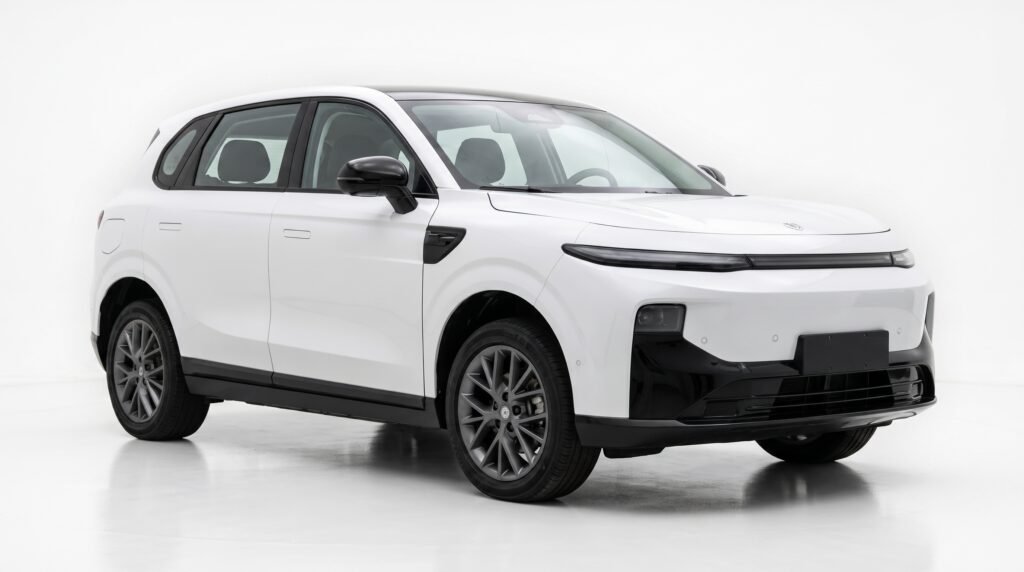
 1 / 4 Images

Leapmotor B10
Compact Electric SUV (on sale China, Europe rollout via Stellantis)

A compact electric SUV on Leapmotor's LEAP 3.5 architecture, offering lidar-based driver assistance at a price point where that is rare. On sale in China, expanding to Europe through Stellantis. No India launch announced.
*Ex-showroom Price in China and Europe (India availability not announced)
Leapmotor B10 EV essentials
Leapmotor B10 pros and cons
Pros
- Lidar-based driver assistance at a price where almost nobody else offers it
- LFP chemistry with cell to chassis construction favours battery longevity and packaging
- 2,735 mm wheelbase gives rear space unusual for a 4,515 mm footprint
- Rear wheel drive layout gives better balance than the front drive norm in this class
- Stellantis backing means European buyers get an established dealer and service network
- DC fast charging from 30 to 80 percent in around 20 minutes is genuinely quick
- Aggressive China pricing from roughly CNY 99,800 for the specification offered
- V2L support adds practical utility for outdoor use
Cons
- No Leapmotor presence in India, so this car cannot currently be bought here
- CLTC range figures are optimistic and WLTP equivalents land considerably lower
- No India certification, pricing, service network, or launch timeline announced
- Chinese brand recognition in India is limited and import policy is a barrier
- Euro NCAP result not yet published, so European safety credentials are unverified
- Resale value for a new brand in any new market is unpredictable
- Software and connected features may vary considerably between China and export markets
- Right hand drive availability for markets like India has not been confirmed
Best for
Leapmotor B10 specifications
Battery & Charging
Efficiency & Real-world Range
Motor & Performance
Dimensions & Weight
Suspension Brakes & Tyres
Comfort & Tech
Safety
Warranty
Features
Battery & Performance
- Two LFP battery options at approximately 56.2 kWh and 67.1 kWh
- LFP chemistry favours cycle life and thermal safety over outright energy density
- Cell to chassis construction, integrating the pack into the vehicle structure for packaging efficiency
- 510 km and 600 km CLTC certified, with WLTP figures for Europe landing considerably lower
- DC fast charging from 30 to 80 percent in approximately 20 minutes
- AC charging at 11 kW, giving a full charge in roughly 6 to 8 hours
- LEAP 3.5 architecture, Leapmotor's current generation electric platform
- Battery thermal management with heat pump on higher variants
- V2L vehicle to load supported, allowing external equipment to run from the battery
Comfort & Interior
- Large central touchscreen with Snapdragon-based processing
- Digital instrument cluster
- 2,735 mm wheelbase delivering generous rear legroom for a compact SUV
- Flat floor from the cell to chassis battery layout
- Panoramic glass roof on higher variants
- Ventilated and heated front seats on higher variants
- Automatic climate control with heat pump on higher trims
- Approximately 420 litres of boot space
- Over the air software updates
- Wireless phone charging
- Voice control with natural language processing
Safety
- Lidar-based driver assistance on higher variants, rare at this price point
- Multiple airbags, count varies by market specification
- Adaptive cruise control and lane keeping assist
- Autonomous emergency braking
- Electronic stability control
- 360-degree camera system
- Blind spot monitoring
- LFP battery chemistry with better thermal stability than NMC
- Cell to chassis construction contributing to structural rigidity
- Euro NCAP assessment pending for the European market
Leapmotor B10 trims and pricing
Compare available Leapmotor B10 trims, their ex-showroom prices and key configuration details.
B10 67.1 kWh Lidar
67.1 kWh LFP - 600 km CLTC - lidar driver assistance
About Leapmotor B10
The Leapmotor B10 is a compact electric SUV that matters more for what it signals than for what it is. Leapmotor is a Chinese manufacturer in which Stellantis holds a significant stake, and the two operate a joint venture called Leapmotor International that handles distribution outside China. That arrangement is the interesting part. It means a Chinese-developed electric car reaches European showrooms through Stellantis dealerships rather than requiring Leapmotor to build a retail network from scratch, which is a genuinely different model from how Chinese brands have expanded elsewhere.
The car itself sits on Leapmotor’s LEAP 3.5 architecture and measures around 4,515 mm long on a 2,735 mm wheelbase, which places it in compact SUV territory with unusually generous rear space for the footprint. Two LFP battery options are offered, roughly 56.2 kWh and 67.1 kWh, delivering approximately 510 km and 600 km on the CLTC cycle. Those CLTC figures are optimistic by design, and the equivalent WLTP numbers for Europe land considerably lower, which is worth understanding before comparing against European or Indian certified ranges. A single rear-mounted motor produces around 218 PS and 240 Nm, driving the rear wheels.
Where the B10 becomes genuinely notable is equipment. Higher variants offer lidar-based driver assistance, which at this price point is rare anywhere in the world, alongside a Snapdragon-based infotainment platform. In China the B10 is priced from roughly 99,800 yuan, which is aggressive for the specification. On India specifically, Leapmotor has no confirmed presence. Stellantis operates in India through other brands, so a route exists in principle, but no Leapmotor India launch, pricing, or timeline has been announced. Anyone researching the B10 as an India purchase should treat it as unavailable rather than upcoming. At EVUnlock, we cross-check specifications against official manufacturer documentation before publishing.
Trending news for Leapmotor B10
Stellantis distributes Leapmotor products outside China through a joint venture. Leapmotor International handles sales and service for export markets, which gives Leapmotor access to established Stellantis dealer networks rather than requiring it to build retail infrastructure independently. This is a materially different expansion model from how most Chinese manufacturers have entered Western markets, and it shortens the time to a credible service footprint.
Lidar at mainstream pricing remains uncommon outside China. The B10 offers lidar-based driver assistance at a price point where camera-only systems are the norm globally. Chinese manufacturers have driven lidar costs down substantially, and the B10 is one example of that filtering into more affordable vehicles, though how well the software exploits the hardware is a separate question from whether the sensor is fitted.
Leapmotor B10 range and performance
The B10's headline figures of 510 km and 600 km are measured on CLTC, the Chinese test cycle, and this matters more than it might appear. CLTC is notably optimistic and typically produces numbers 15 to 25 percent higher than WLTP for the same vehicle, which puts the larger pack at roughly 470 km to 500 km WLTP equivalent. Real world range in mixed driving would realistically be around 400 km to 440 km, dropping to 340 km to 380 km at sustained highway speeds. None of this is a criticism of the car, it is simply how test standards differ, and anyone comparing a CLTC figure against an ARAI or WLTP figure is not comparing like with like. On performance, a single rear motor producing approximately 218 PS and 240 Nm delivers 0 to 100 km/h in around 6.8 seconds, which is brisk for a compact SUV. The rear wheel drive layout is the more interesting choice, since it gives better weight distribution and cleaner steering feel than the front drive arrangement most rivals in this class use.
Leapmotor B10 safety overview
Euro NCAP has not published a result for the B10, so European safety credentials remain unverified, and no Indian rating exists since the car is not sold here. What can be assessed is the equipment. Higher variants carry lidar-based driver assistance, which is genuinely uncommon at this price. Lidar builds a three dimensional map using laser pulses, measuring distance directly rather than inferring it from camera images, and performs more consistently in poor light and adverse weather. Whether the software makes full use of that hardware is a separate matter, and independent reviews are the right place to check. Standard equipment includes adaptive cruise control, lane keeping assist, autonomous emergency braking, blind spot monitoring, and a 360-degree camera. The LFP battery chemistry offers better thermal stability than NMC, which is a meaningful safety characteristic, and the cell to chassis construction contributes to structural rigidity.
Leapmotor B10 battery and charging guide
DC fast charging takes the B10 from 30 to 80 percent in approximately 20 minutes, which is quick and reflects the LFP pack's charging characteristics being well managed. AC charging at 11 kW delivers a full charge in roughly 6 to 8 hours, suitable for overnight home charging. The connector differs by market, with GB/T used in China and CCS2 for Europe. V2L is supported, allowing external equipment to run directly from the battery. One point about LFP chemistry is worth knowing. LFP packs generally tolerate regular charging to 100 percent better than NMC packs, which typically prefer being kept between 20 and 80 percent for longevity. Manufacturers often recommend an occasional full charge on LFP to help the battery management system recalibrate its state of charge estimate. Check the owner's manual for the specific guidance rather than applying NMC habits.
Leapmotor B10 warranty details
Warranty terms differ substantially between China and export markets, so the figures that apply depend entirely on where the car is purchased. In export markets handled by Leapmotor International, coverage would follow local Stellantis practice, typically three to five years on the vehicle. Battery warranty is expected around eight years, which is the prevailing international norm. Since the B10 is not sold in India, no Indian warranty terms exist. For buyers in markets where it is available, the clause worth reading closely is the guaranteed battery state of health percentage, which defines how much capacity degradation is actually covered rather than simply how long the warranty runs.
Quick verdict: Leapmotor B10
The B10 is a well-judged compact electric SUV that is more significant as a signal than as a product for most readers of this site. The specification is genuinely strong for the money, with LFP cell to chassis construction, a rear drive layout that most rivals do not offer, a 2,735 mm wheelbase delivering rear space beyond what a 4,515 mm car normally manages, and lidar-based driver assistance at a price where camera-only systems are the standard. The Stellantis relationship solves the problem that has held other Chinese brands back in Western markets, which is credible service and dealer coverage from day one. The honest caveat for Indian readers is straightforward. Leapmotor has no presence in India, no announced launch, and no service network here. The B10 cannot be bought in India and should not factor into a purchase decision made in this market. What it is useful for is understanding where the global compact electric SUV segment has reached, and what specification levels are becoming normal elsewhere at prices that would be competitive here.
Leapmotor B10 vs rivals: how it compares
Within its home market the B10 competes against a dense field of Chinese compact electric SUVs where lidar and long CLTC ranges have become increasingly common, and its differentiation rests on the Stellantis relationship and packaging efficiency. In Europe it faces established compact electric SUVs from Volkswagen, Renault, and Hyundai, where its price advantage is significant but brand recognition works against it. Against anything sold in India, direct comparison is difficult and slightly misleading, since import duties and homologation would change the pricing picture entirely if it ever arrived. The more useful comparison for Indian readers is conceptual. The B10 shows that lidar-based driver assistance, LFP cell to chassis batteries, and 400 km plus real world range are achievable at prices well below what equivalent specification costs in India today, which is a reasonable benchmark to hold the domestic market against.
Leapmotor B10: who should buy it (and who should not)
If you are in India, the B10 is not a purchase option. Leapmotor has no dealer network, no service infrastructure, no homologation, and no announced launch here, so it should not enter your consideration set regardless of how the specification reads. Indian buyers looking at compact electric SUVs should focus on what is actually available with local service backing. If you are buying in China or a European market where Leapmotor International operates, three things deserve attention. Confirm which range standard the quoted figure uses, since CLTC and WLTP describe very different real world capabilities. Check whether the lidar variant's software genuinely improves on the camera-only system, as hardware presence and software capability are separate questions. And verify the local service arrangement, since Stellantis network access varies by country. Do not attempt private import into India, as homologation and warranty support make it impractical.
Leapmotor B10 ownership and running costs
Ownership costs depend entirely on market, and no Indian figures exist since the car is not sold here. As an indicative calculation using Indian electricity rates for comparison purposes, at roughly 7 km per kWh real world efficiency the B10 would cost approximately ₹1.21 per kilometre at ₹8.5 per kWh. Over 15,000 km a year that is around ₹18,200 in electricity, against approximately ₹1,03,000 for a comparable petrol SUV at 15 km/l and ₹103 per litre. That gap of roughly ₹85,000 annually illustrates the running cost case for electric vehicles generally rather than for this car specifically. In China and Europe the arithmetic differs considerably because both electricity and fuel prices differ. Maintenance on an LFP battery vehicle is typically low, with the chemistry favouring longevity, though parts availability and service pricing in export markets remain the practical variables.
Leapmotor B10 tax benefits and incentives
Electric vehicle incentives vary substantially by market and none apply to the B10 in India, since the car is not sold here. In China, new energy vehicle purchase tax exemptions and local registration advantages have historically supported EV adoption, though these have been progressively reduced. In European markets, incentives differ by country, ranging from purchase grants to company car tax advantages to exemption from urban congestion and low emission zone charges. For reference, if a vehicle of this type were sold in India it would qualify for Section 80EEB loan interest deduction of up to ₹1.5 lakh, GST at 5 percent against 28 percent plus cess on petrol equivalents, and state-level subsidies and registration waivers that vary considerably. Buyers should confirm the incentives applicable in their specific market at the time of purchase, as these policies change frequently everywhere.
Leapmotor B10 maintenance and service
Electric drivetrains remove engine oil changes, spark plugs, air filters, fuel filters, and clutch wear entirely, which accounts for most routine servicing on a petrol equivalent. What remains is tyre rotation, brake fluid checks at extended intervals since regenerative braking substantially reduces pad wear, cabin air filter replacement, battery coolant, and periodic battery health diagnostics. LFP chemistry has a practical maintenance advantage, since it tolerates a wider range of charging behaviour and degrades more slowly over many cycles than NMC. The material consideration for the B10 is service access rather than service cost. In Europe, Stellantis network coverage makes this manageable. In India there is no Leapmotor service presence at all, which alone makes ownership impractical here regardless of any other consideration. Parts availability and technician training in newer export markets are worth verifying before purchase.
EV Running Cost Calculator
*Estimated figures based on entered electricity price, fuel price, mileage and average daily driving. Actual running costs can vary.
Related articles for Leapmotor B10

Frequently asked questions about Leapmotor B10
Is the Leapmotor B10 available in India?
No. Leapmotor has no confirmed presence in India, and the B10 is not on sale here. There is no announced India launch, pricing, certification, or dealer network. Stellantis, which holds a stake in Leapmotor and handles its international distribution, does operate in India through other brands, so a route exists in principle. But nothing has been announced, and buyers should treat the B10 as unavailable in India rather than upcoming.
What is the Leapmotor B10 price?
In China the B10 starts from approximately CNY 99,800 and runs to around CNY 129,800 for the lidar equipped variant. European pricing through Stellantis is expected around EUR 30,000, though this varies by market and specification. No India pricing exists because the car is not sold here. Converting Chinese prices directly to rupees is misleading, since import duties, homologation, and local taxes would change the figure substantially.
What is the Leapmotor B10 range?
Approximately 510 km on the 56.2 kWh battery and 600 km on the 67.1 kWh, both measured on the CLTC cycle used in China. CLTC is a notably optimistic standard, and WLTP figures for the European market land considerably lower. Real world range would realistically be around 380 km to 440 km for the larger pack depending on conditions. When comparing against ARAI or WLTP rated cars, always check which standard a range figure uses.
Does the Leapmotor B10 have lidar?
Yes, on higher variants. This is the B10's most notable specification, because lidar-based driver assistance is uncommon at this price point anywhere in the world. Lidar uses laser pulses to build a three dimensional map of surroundings, which performs more reliably than camera-only systems in poor light and can measure distance directly rather than inferring it. Whether the underlying software makes full use of that hardware is a separate question worth investigating in reviews.
Who owns Leapmotor?
Leapmotor is a Chinese electric vehicle manufacturer in which Stellantis holds a significant stake. The two operate a joint venture called Leapmotor International, which handles distribution and sales outside China. This gives Leapmotor access to Stellantis dealer and service networks in Europe and elsewhere, rather than requiring it to build retail infrastructure from scratch. It is a different expansion model from how most Chinese manufacturers have entered Western markets.
What battery does the Leapmotor B10 use?
Lithium iron phosphate, or LFP, in a cell to chassis construction where the battery pack is integrated into the vehicle structure rather than mounted as a separate unit. LFP chemistry offers longer cycle life and better thermal stability than the NMC chemistry many rivals use, at the cost of somewhat lower energy density. Cell to chassis construction improves packaging efficiency and structural rigidity, which contributes to the B10's generous interior space for its footprint.
Is the Leapmotor B10 front or rear wheel drive?
Rear wheel drive, using a single rear mounted motor producing approximately 218 PS and 240 Nm. Rear wheel drive is less common than front drive in the compact SUV class and gives a more balanced weight distribution and cleaner turn-in. It also frees the front axle from handling both steering and drive, which improves steering feel. No all wheel drive variant has been confirmed for the B10.
How does CLTC range compare with WLTP and ARAI?
CLTC, used in China, is the most optimistic of the three and typically produces figures 15 to 25 percent higher than WLTP for the same vehicle. WLTP, used in Europe, is more representative of real driving. ARAI, used in India, sits somewhere in between but is also generous relative to real world conditions. This matters when comparing cars across markets, since a 600 km CLTC figure and a 600 km WLTP figure describe very different real world capabilities.
Owner feedback for Leapmotor B10
No approved owner feedback yet. Be the first to share your experience.
Available colours
Leapmotor offers the B10 in a palette that differs by market, with the Chinese range typically wider than what reaches export markets. The shades listed here reflect the general direction of the lineup, favouring muted greys and greens alongside conventional white and black. Manufacturers routinely trim colour options for export markets to simplify logistics, so European availability is likely narrower than in China. No India colour options exist since the car is not sold here. Confirm current availability with a dealer in your market.