
 Featured EV
1 / 5 Images
Featured EV
1 / 5 Images 
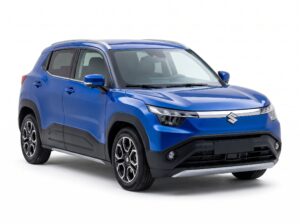
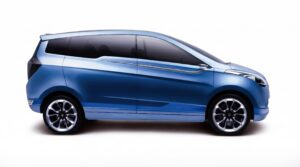
Maruti Suzuki eVX
Concept (Auto Expo 2023), now on sale as the e-Vitara

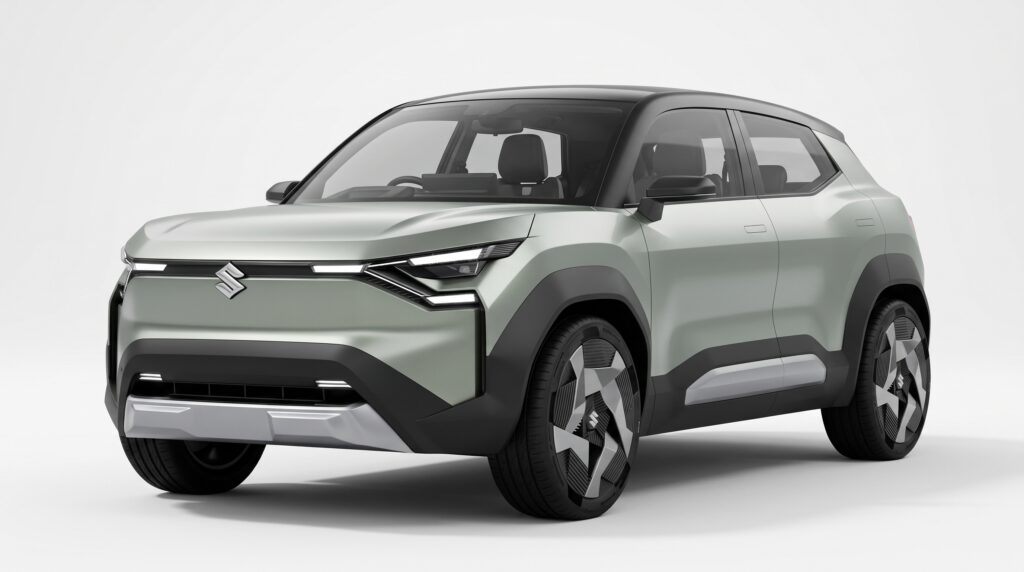
Maruti's landmark electric SUV concept from Auto Expo 2023, now in production as the e-Vitara. The concept's 550 km range claim largely held up, but its dual motor all wheel drive did not reach India.
*Ex-showroom Price in New Delhi
Maruti Suzuki eVX EV essentials
Maruti Suzuki eVX pros and cons
Pros
- The concept's 550 km range claim largely survived to production at 543 km ARAI, which is unusual
- 5 Star Bharat NCAP with 7 airbags standard is a strong safety package
- Level 2 ADAS at this price point is competitive with anything in the segment
- Built on HEARTECT-e, a dedicated electric platform rather than an adapted petrol architecture
- Maruti's service network of over 4,000 outlets is unmatched, which matters for first time EV buyers
- Nexa retail experience suits EV buyers better than a standard dealership
- Two battery options let buyers pay for the range they actually need
- Running cost near ₹1.20 per km against roughly ₹5.72 for a comparable petrol SUV
Cons
- The concept's dual motor all wheel drive did not reach India, with AllGrip-e reserved for other markets
- 310 litre boot is small for a midsize SUV and a family will notice it
- Real world range falls well short of the 543 km ARAI figure in summer with AC running
- Maruti has no established EV fast charging network of its own in India
- This is Maruti's first battery electric vehicle, so long term reliability data does not yet exist
- The 49 kWh variant's 440 km ARAI translates to noticeably less in real conditions
- Concept styling was toned down considerably for production
Best for
Maruti Suzuki eVX specifications
Battery & Charging
Efficiency & Real-world Range
Motor & Performance
Dimensions & Weight
Suspension Brakes & Tyres
Comfort & Tech
Safety
Warranty
Features
Battery & Performance
- Concept claimed roughly 60 kWh, production delivers 49 kWh and 61 kWh options
- 61 kWh production pack achieves 543 km ARAI against the concept's 550 km claim
- 49 kWh production pack achieves 440 km ARAI for buyers who do not need maximum range
- HEARTECT-e dedicated electric platform, engineered around a battery rather than adapted from petrol
- DC fast charging taking the battery from 10 to 80 percent in approximately 45 minutes
- AC charging from 10 to 100 percent in around 6.5 hours
- Skateboard battery layout creating a flat floor throughout the cabin
- 8 year or 1,60,000 km battery warranty on the production e-Vitara
- Regenerative braking with selectable levels
Comfort & Interior
- Dual screen setup with touchscreen infotainment and digital instrument cluster
- Wireless Android Auto and Apple CarPlay
- Panoramic sunroof on higher trims
- Ventilated front seats on higher trims
- Automatic climate control
- Wireless phone charging
- Suzuki Connect telematics with remote functions
- Flat floor from the battery layout, improving rear middle seat usability
- 310 litre boot
- Cabin pre-conditioning while plugged in
- Ambient interior lighting on higher trims
Safety
- 5 Star Bharat NCAP rating on the production e-Vitara
- 7 airbags standard
- Level 2 ADAS including adaptive cruise control and lane keep assist
- Autonomous emergency braking
- Electronic stability programme
- Hill hold assist
- 360-degree camera on higher trims
- Tyre pressure monitoring system
- ISOFIX child seat anchors
- High voltage automatic disconnect in a collision
Maruti Suzuki eVX trims and pricing
Compare available Maruti Suzuki eVX trims, their ex-showroom prices and key configuration details.
eVX Concept (Auto Expo 2023)
60 kWh claimed - 550 km claimed - dual motor AWD, 175 PS
e-Vitara 49 kWh (production)
49 kWh - 440 km ARAI - 144 bhp FWD
e-Vitara 61 kWh (production)
61 kWh - 543 km ARAI - 172 bhp FWD
About Maruti Suzuki eVX
The Maruti Suzuki eVX is the concept that became a real car, and comparing what it promised against what arrived is the most useful thing anyone researching it can do. Maruti showed the eVX at Auto Expo 2023 as its first serious electric statement for India, with a claimed 60 kWh battery, around 550 km of range, and a dual motor all wheel drive layout producing roughly 175 PS. Those numbers set expectations very high for a company that had, until then, said little about battery electric vehicles.
The production car is the Maruti e-Vitara, and it is on sale now. On range, Maruti essentially delivered. The 61 kWh version achieves 543 km ARAI against the concept’s 550 km claim, which is close enough that the original target was clearly realistic rather than showmanship. A smaller 49 kWh option covers 440 km ARAI for buyers who do not need the full figure. Pricing runs from ₹15.99 lakh to ₹20.01 lakh ex-showroom, DC fast charging takes the battery from 10 to 80 percent in around 45 minutes, and the car carries seven airbags, Level 2 ADAS, and a 5 star Bharat NCAP rating. On specification the e-Vitara honours what the eVX suggested.
Where the two diverge is drive layout, and this is the difference worth knowing before you walk into a showroom. The eVX concept was shown with dual motor all wheel drive. The production e-Vitara sold in India is front wheel drive only, with the AllGrip-e all wheel drive system reserved for certain other markets. So if the eVX’s AWD capability is what drew you to the car, that specific promise did not carry over to India. Everything else largely did. At EVUnlock, we cross-check specifications against official manufacturer documentation before publishing.
Trending news for Maruti Suzuki eVX
The eVX concept has reached production as the e-Vitara, and it is on sale now. Maruti's first battery electric vehicle for India arrived through Nexa dealerships priced from ₹15.99 lakh, built on the HEARTECT-e dedicated electric platform. For a company that had focused on CNG and mild hybrid technology for mass market efficiency, this marks a genuine strategic shift rather than a token entry.
Maruti enters India's most contested electric SUV segment. By the time the e-Vitara arrived, the midsize electric SUV space already included established products from Tata, Hyundai, MG, and Mahindra. Maruti's advantages are its 5 star Bharat NCAP rating, Level 2 ADAS, and a service network no rival can match. Its disadvantage is that it has no fast charging network of its own and no long term EV reliability record in India yet.
Maruti Suzuki eVX range and performance
The most interesting thing about the eVX to e-Vitara transition is that the range promise essentially held. Concept cars routinely claim figures that evaporate in production, but the eVX's 550 km target reached showrooms as 543 km ARAI on the 61 kWh pack, which is close enough to count as delivered. The 49 kWh option covers 440 km ARAI. Real world figures are lower, as they are for every electric vehicle. Expect roughly 350 km to 400 km from the 61 kWh in city driving with the air conditioning running, and around 300 km to 340 km from the 49 kWh. Highway driving at a sustained 100 km/h brings the 61 kWh closer to 310 km to 350 km, since aerodynamic drag rises with the square of speed on a tall SUV body. On performance, the production car produces 144 bhp on the 49 kWh and 172 bhp on the 61 kWh, with 192.5 Nm and a 0 to 100 km/h time around 8.7 seconds. That is comfortably quicker than a comparable petrol SUV in traffic, where instant electric torque matters more than any headline acceleration figure.
Maruti Suzuki eVX safety overview
The production e-Vitara carries a 5 star Bharat NCAP rating with seven airbags standard, which places it among the safest options in its class. Level 2 ADAS is included, covering adaptive cruise control, lane keep assist, and autonomous emergency braking, alongside electronic stability programme, hill hold assist, and a 360-degree camera on higher trims. One structural advantage comes from the platform itself. HEARTECT-e was designed around a battery from the outset rather than adapted from a petrol architecture, which allows better crash energy management and places the battery low in the floor. That lowers the centre of gravity considerably compared with a petrol SUV of similar height, improving stability in emergency lane changes in a way no electronic system can replicate. The eVX concept was never crash tested, so the 5 star rating belongs entirely to the production car.
Maruti Suzuki eVX battery and charging guide
DC fast charging takes the e-Vitara from 10 to 80 percent in approximately 45 minutes, which makes intercity travel practical. AC charging from 10 to 100 percent takes around 6.5 hours, suitable for overnight home charging. A CCS-II port is standard. Two practical points shape ownership. Charge rate tapers above 80 percent to protect cell longevity, so the final portion takes disproportionately long at a fast charger and is rarely worth waiting for unless you need maximum range for the next leg. More importantly, Maruti does not operate its own fast charging network in India, unlike Tata which has invested heavily in highway charging infrastructure. e-Vitara owners depend on third party charge point operators, and coverage varies considerably outside major metros. For a buyer with reliable home charging and predominantly urban driving, this is a minor issue. For anyone regularly driving intercity, it is worth investigating charger availability on your usual routes before committing.
Maruti Suzuki eVX warranty details
The production e-Vitara carries an 8 year or 1,60,000 km warranty on the battery, which matches the established norm across the Indian electric vehicle market and effectively removes the largest financial risk in EV ownership for most owners. Vehicle warranty terms follow Maruti's standard structure, and extended plans are available. The clause worth reading carefully is the guaranteed battery state of health percentage, which defines how much capacity degradation is actually covered rather than simply how long the warranty runs. Since this is Maruti's first battery electric vehicle in India, there is no long term precedent for how warranty claims are handled in practice, which is worth factoring into expectations.
Quick verdict: Maruti Suzuki eVX
The eVX did something concept cars rarely manage, which is arrive largely intact. Maruti claimed roughly 550 km at Auto Expo 2023 and delivered 543 km ARAI in production, a gap small enough that the original target was clearly grounded in engineering rather than marketing. Add a 5 star Bharat NCAP rating, seven airbags, Level 2 ADAS, and a dedicated electric platform, and the e-Vitara is a more complete first EV than most manufacturers manage. The honest caveats are three. The dual motor all wheel drive shown on the concept did not reach India, so if that was the appeal, it is not on offer here. The 310 litre boot is small for a midsize SUV and a family will feel it. And Maruti has no fast charging network of its own, which means public charging depends entirely on third party operators. What Maruti brings instead is a service network of over 4,000 outlets reaching towns where no other EV manufacturer operates, which for a first time electric buyer outside a metro is worth more than most specification advantages.
Maruti Suzuki eVX vs rivals: how it compares
Against established midsize electric SUVs in the ₹16 lakh to ₹20 lakh bracket, the e-Vitara's strengths are its 5 star Bharat NCAP rating, seven standard airbags, Level 2 ADAS, and Maruti's service reach. Tata's range in this segment counters with a considerably more developed charging network and years of accumulated EV ownership data, which matters for resale confidence. Hyundai and MG compete on features and established reliability records. Where the e-Vitara is weakest against all of them is boot space at 310 litres, and the absence of any Maruti operated charging infrastructure. Against the eVX concept itself, the production car keeps the range and battery promise while dropping all wheel drive for India. Against a comparable petrol SUV, the e-Vitara wins decisively on running cost and low speed responsiveness while losing on purchase price and refuelling convenience.
Maruti Suzuki eVX: who should buy it (and who should not)
Choose the 61 kWh unless your driving is strictly local and predictable. Its 543 km ARAI translates to roughly 350 km to 400 km in real city conditions, which comfortably handles intercity trips, while the 49 kWh at 440 km ARAI delivers around 300 km to 340 km and starts feeling restrictive as a sole vehicle. The roughly ₹1.5 lakh price gap buys meaningful usability. Before committing, do four things. Load your usual luggage into the 310 litre boot during the test drive, since that is the car's clearest practical limitation. Check charger availability on the routes you actually drive, because Maruti operates no network of its own. Confirm current pricing and which ADAS features are included on your chosen trim. And verify what state subsidies and registration waivers apply where you live, as these can shift the on-road price by well over a lakh at this price point.
Maruti Suzuki eVX ownership and running costs
At approximately ₹18 lakh on-road for a 61 kWh variant and around 7 km per kWh real world efficiency, running cost works out to roughly ₹1.20 per kilometre at ₹8.5 per kWh. Over 15,000 km a year that is around ₹18,000 in electricity. A comparable petrol SUV at 18 km/l and ₹103 per litre costs approximately ₹5.72 per kilometre, or ₹85,800 over the same distance, giving an annual fuel saving of roughly ₹68,000. Annual maintenance on an electric SUV in this class typically runs ₹8,000 to ₹13,000 against ₹18,000 to ₹26,000 for the petrol equivalent, adding a further ₹10,000 to ₹13,000 of yearly saving. Combined, expect to save around ₹78,000 to ₹81,000 a year at average mileage. Against a purchase premium of roughly ₹4 lakh to ₹5 lakh over an equivalent petrol SUV, payback arrives at approximately five to six years at 15,000 km annually, or three years at 25,000 km.
Maruti Suzuki eVX tax benefits and incentives
The e-Vitara qualifies for the standard Indian electric vehicle incentives. Section 80EEB of the Income Tax Act allows individual buyers a deduction of up to ₹1.5 lakh on interest paid on an electric vehicle loan, worth roughly ₹46,800 in tax saved over the loan tenure for someone in the 30 percent bracket. GST on electric vehicles is 5 percent against 28 percent plus cess on comparable petrol SUVs, which is already reflected in ex-showroom pricing and represents a substantial saving at this price point. State-level benefits vary considerably. Delhi offers a purchase subsidy alongside a registration fee waiver, Maharashtra and Gujarat offer purchase subsidies, and states including Uttar Pradesh and Rajasthan waive road tax on electric vehicles. On a car priced around ₹18 lakh, a full registration waiver alone can save ₹1.2 lakh to ₹1.8 lakh. Corporate buyers can additionally claim accelerated depreciation. State policies are revised frequently, so confirm current terms at the dealership.
Maruti Suzuki eVX maintenance and service
Service intervals are expected at 15,000 km or annually, following the pattern of comparable electric vehicles in India. The electric drivetrain removes engine oil and filter changes, spark plugs, air filters, fuel filters, and clutch wear, which together account for the bulk of what petrol SUV owners pay at each service. What remains is tyre rotation every 10,000 km, brake fluid checks at extended intervals since regenerative braking substantially reduces pad wear, cabin air filter replacement, battery coolant, and an annual battery health diagnostic. Expect ₹8,000 to ₹13,000 annually against ₹18,000 to ₹26,000 for a comparable petrol SUV. Tyres wear somewhat faster because of the additional battery weight, so budget for replacement closer to every 40,000 km on 18 inch rubber. The significant consideration is that this is Maruti's first battery electric vehicle in India, so EV-trained technician coverage is still being built out across the network. Maruti's raw service reach is unmatched, but confirm that your nearest workshop is EV-equipped rather than assuming it.
EV Running Cost Calculator
*Estimated figures based on entered electricity price, fuel price, mileage and average daily driving. Actual running costs can vary.
Related articles for Maruti Suzuki eVX


Frequently asked questions about Maruti Suzuki eVX
Is the Maruti eVX the same as the e-Vitara?
Effectively yes. The eVX was the concept shown at Auto Expo 2023, and the e-Vitara is the production car that came from it. They share the same basic idea of a midsize electric SUV on a dedicated platform. The eVX name was not carried over to the showroom, so if you are searching for an eVX to buy, the e-Vitara is the car you are looking for.
Can you buy the Maruti eVX?
Not under that name. The eVX was a concept vehicle and was never sold. What you can buy is the production version, the Maruti e-Vitara, available through Nexa dealerships from ₹15.99 lakh ex-showroom. If a website or dealer claims to be taking bookings for an eVX specifically, they are referring to the e-Vitara.
What were the Maruti eVX concept specifications?
Maruti showed the eVX at Auto Expo 2023 with a claimed battery of roughly 60 kWh, a range target of around 550 km, and a dual motor all wheel drive layout producing approximately 175 PS. The styling was more rugged and concept-like than the production car. Two of those three claims essentially reached production, with range and battery size closely matched. The all wheel drive did not.
Did the eVX's all wheel drive make it to production?
Not in India. The eVX concept was shown with a dual motor all wheel drive setup, but the production e-Vitara sold in India is front wheel drive only. Suzuki's AllGrip-e all wheel drive system exists for the platform but has been reserved for certain other markets. This is the single clearest difference between what the concept promised and what Indian buyers can actually purchase.
What is the range of the production e-Vitara?
440 km ARAI on the 49 kWh battery and 543 km on the 61 kWh. Real world range is lower, as with every electric vehicle. Expect roughly 350 km to 400 km from the 61 kWh in city driving with the air conditioning running, and around 300 km to 340 km from the 49 kWh. Highway driving at sustained speeds reduces these further because aerodynamic drag rises sharply above 100 km/h.
What is the Maruti e-Vitara price in India?
₹15.99 lakh to ₹20.01 lakh ex-showroom, with the 49 kWh variants starting at ₹15.99 lakh and the 61 kWh from around ₹17.49 lakh. On-road pricing adds road tax, registration, and insurance, though several states waive registration charges for electric vehicles. Confirm current figures at a Nexa dealership, since prices are revised periodically.
Is the Maruti e-Vitara safe?
Yes. The production e-Vitara carries a 5 star Bharat NCAP rating with seven airbags standard, alongside Level 2 ADAS including adaptive cruise control, lane keep assist, and autonomous emergency braking. Electronic stability programme and hill hold assist are standard, with a 360-degree camera on higher trims. The battery is mounted low in the floor, which lowers the centre of gravity and improves stability in emergency manoeuvres compared with a petrol SUV of similar height.
Should I buy the 49 kWh or 61 kWh e-Vitara?
The 61 kWh unless your driving is strictly local. Its 543 km ARAI translates to roughly 350 km to 400 km in real city use, which comfortably covers intercity trips. The 49 kWh at 440 km ARAI delivers around 300 km to 340 km real world, which is adequate for daily commuting but starts feeling restrictive if the car is your only vehicle. The price gap of roughly ₹1.5 lakh buys meaningful usability.
Owner feedback for Maruti Suzuki eVX
No approved owner feedback yet. Be the first to share your experience.
Available colours
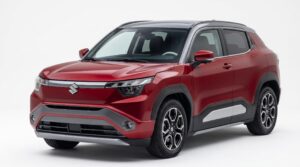
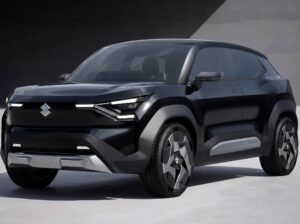
The production e-Vitara is offered through Nexa in a palette including Arctic White, Splendid Silver, Grandeur Grey, Opulent Red, Nexa Blue, and Bluish Black, with dual tone options pairing the body colour with a contrasting black roof on selected trims. The eVX concept was shown in a distinctive show finish that did not carry over to production, which is standard practice. Colour availability varies by variant and is revised periodically, so confirm current options at a Nexa dealership.