
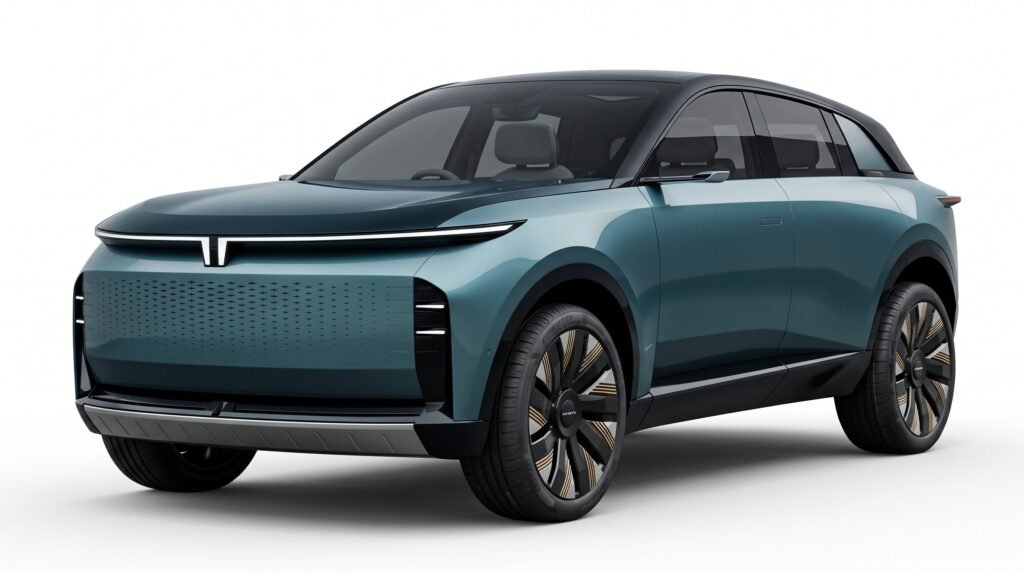
 Featured EV
1 / 2 Images
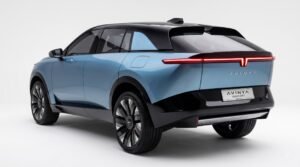
Tata Avinya X
Premium Electric SUV-Coupe (Concept)

Tata's most ambitious concept yet. An electric SUV-coupe on a JLR-derived born-electric platform, 4,300 mm long on a 2,900 mm wheelbase, 500 km-plus target range and a lounge-style cabin. Concept only - not on sale.
*Ex-showroom Price in New Delhi
Tata Avinya X EV essentials
Tata Avinya X pros and cons
Pros
- Genuinely advanced platform - derived from JLR's Electric Modular Architecture
- Extraordinary packaging: 2,900 mm wheelbase within a 4,300 mm footprint
- 500 km-plus range target with ultra-fast charging ambition
- 205 mm target ground clearance suits Indian road conditions properly
- Interior concept is genuinely original - wellness focus rather than screen-count competition
- Full Level 2 ADAS suite listed in published specification
- Would give Tata a credible premium EV, a segment it has never occupied
- Production earmarked for Tata's Sanand plant, so local manufacturing keeps pricing plausible
- Sustainable materials and V2L plus V2V functionality
Cons
- Concept only - you cannot buy, book or test drive one
- No official price, launch date or verified specification from Tata
- Estimated price range spans Rs 30 lakh to Rs 45 lakh - too wide to plan around
- Estimated launch varies from late 2026 to mid-2027 depending on source
- The original 2022 Avinya concept was targeted at 2025 and has not arrived
- SUV-coupe roofline will cost boot height against a conventional SUV shape
- 22-inch wheels look spectacular but would be costly to replace and harsh on rough roads
- Tata has no track record in the premium segment this car targets
- Concept interiors rarely reach production intact - expect the lounge features to be diluted
Best for
Tata Avinya X specifications
Reality Check - read this first
Platform & Architecture
Battery, Range & Charging
Dimensions & Packaging
Exterior Design
Interior & Technology
Safety & ADAS (published listings)
Ownership Expectations
Features
Battery & Performance
- Built on a next-generation born-electric architecture derived from JLR's Electric Modular Architecture (EMA)
- Same platform family as the Jaguar Type 00 concept
- Floor-mounted skateboard battery pack - no engine or transmission tunnel
- Avinya family target: 500 km-plus range on a single charge
- Gen 3 architecture designed to add 500 km of range in under 30 minutes of ultra-fast charging
- Ultra-fast DC charging capability is central to the Avinya concept
- Regenerative braking confirmed in published specification listings
- CCS-II charging port expected, matching Tata's entire current EV range
- Vehicle-to-Load (V2L) and Vehicle-to-Vehicle (V2V) functionality reported
- Platform designed for high structural safety with advanced water and dust protection
- Next-generation materials and proprietary energy management algorithms
- Modular architecture supports multiple battery sizes and drive configurations
- Exact battery capacity not published; 500 km-plus implies roughly 70-80 kWh
- Production planned at Tata Passenger Electric Mobility's Sanand plant, Gujarat
Comfort & Interior
- Lounge-style rear seating - Tata describes the cabin as a sanctuary
- Terracotta-toned rear interior with sustainable materials
- Aroma diffusers built into the cabin
- Fabric-wrapped soundbars integrated into the interior architecture
- Concealed air vents for an uncluttered dashboard
- Floating central touchscreen with a slim display running across the dashboard
- Dual 12.3-inch displays reported - one instrument cluster, one infotainment
- Two-spoke steering wheel
- Swivelling front seats shown on the concept
- Speakers integrated into the headrests
- Panoramic glass roof
- Multi-zone automatic climate control
- Ventilated seats
- Wireless phone charging
- Premium audio system
- Powered boot opening and keyless entry
- Rain-sensing wipers and automatic headlamps
- Powered outside rear-view mirrors
- Flush door handles with a C-pillar touch sensor for rear door access
- Connected car suite with AI and machine learning features and voice control
- Four-seat lounge configuration reported as a possible production option
- 2,900 mm wheelbase on a 4,300 mm car - best-in-class cabin space per Tata
Safety
- Driver, passenger and side airbags listed in published specification
- Electronic Stability Control and traction control
- ABS with EBD and brake assist
- 360-degree surround view camera
- Blind spot camera and blind spot monitor
- Rear camera with dynamic guidelines
- Tyre Pressure Monitoring System
- Forward Collision Warning
- Autonomous Emergency Braking
- Lane Departure Warning and Lane Keep Assist
- Adaptive Cruise Control
- Blind Spot Collision Avoidance Assist
- Adaptive High Beam Assist
- Speed Assist System
- Central locking
- Platform designed for high structural safety with next-level water and dust protection
- Note: concept vehicle - no crash test has been conducted
- Tata's recent production EVs including Punch EV and Nexon EV hold 5-star Bharat NCAP ratings
Tata Avinya X trims and pricing
Compare available Tata Avinya X trims, their ex-showroom prices and key configuration details.
Avinya X Concept (as shown)
Bharat Mobility Global Expo, January 2025 - Samudra exterior, terracotta lounge interior, 22-inch aero wheels, T-shaped matrix LED lighting
Expected: Standard Range (production)
Reported expectation - entry battery, single-motor, around 500 km target range
Expected: Long Range / AWD (production)
Reported expectation - larger battery, dual-motor all-wheel drive, full ADAS suite
About Tata Avinya X
The Tata Avinya X is the most ambitious car Tata Motors has ever shown. Unveiled at the Bharat Mobility Global Expo in January 2025, it is an electric SUV-coupe built on a next-generation born-electric architecture – a modified version of Jaguar Land Rover’s Electric Modular Architecture, the same platform family that underpins the Jaguar Type 00 concept. It is Tata reaching directly into premium territory, and the engineering underneath it is genuinely serious.
Start with the proportions, because they tell you what kind of car this is. The Avinya X measures 4,300 mm long but rides on a 2,900 mm wheelbase, with a target ground clearance of 205 mm and 22-inch aero-optimised alloy wheels. That wheelbase-to-length ratio is extreme, and it is only possible on a dedicated EV platform where there is no engine or transmission tunnel to package around. The practical consequence is the thing Tata leads with in its own communication: best-in-class cabin space. Nearly the entire footprint of the car is interior.
The design is a clean-sheet effort. An upright front end with a closed-off grille, T-shaped matrix LED lighting front and rear, rounded panels over bulged wheel arches, a slanting roofline into a rakish rear window, flush door handles, skid plates at both ends, active aero elements, and a touch sensor hidden in the C-pillar to open the rear doors. Tata showed it in a colour it calls Samudra, inspired by the shimmer of ocean waves.
Inside, Tata is chasing something more unusual than luxury – it describes a sanctuary. Lounge-style rear seating, terracotta-toned rear cabin trim, sustainable materials, fabric-wrapped soundbars, concealed air vents and aroma diffusers, with a deliberately uncluttered dashboard. A floating central touchscreen sits alongside a slim display running across the dash and a two-spoke steering wheel. Reports suggest the production car could offer a four-seat lounge configuration.
On range, the Avinya family’s stated ambition is 500 km-plus, and the Gen 3 architecture the original 2022 Avinya concept introduced was designed to add 500 km of range in under 30 minutes of ultra-fast charging.
What you cannot do is buy one. The Avinya X is a concept. Tata has not announced a price, a launch date or a single verified specification. Media estimates place it between Rs 30 lakh and Rs 45 lakh with a launch somewhere between late 2026 and mid-2027, with production planned at Tata Passenger Electric Mobility’s Sanand plant in Gujarat. Treat every number on this page as concept specification or informed estimate, not fact.
Trending news for Tata Avinya X
Two developments matter most for the Avinya X right now.
First, the reveal itself moved the programme forward substantially. Tata unveiled the Avinya X at the Bharat Mobility Global Expo in January 2025, and it is a markedly more resolved vehicle than the original 2022 Avinya concept. Where the first concept was an abstract design study - catamaran-inspired, blending hatchback, SUV and MPV cues - the Avinya X is a coherent SUV-coupe with T-shaped matrix LED lighting, 22-inch aero wheels, active aerodynamics, flush door handles and a C-pillar touch sensor for the rear doors. The interior is equally developed, with lounge-style rear seating, terracotta trim, fabric-wrapped soundbars, concealed vents and aroma diffusers. Tata showed it in a bespoke colour it calls Samudra, inspired by ocean waves. That level of detail typically indicates a design close to being locked for production.
Second, the platform story has become clearer and it is the most significant thing about this car. The Avinya X uses a modified version of Jaguar Land Rover's Electric Modular Architecture - the same platform family as the Jaguar Type 00 concept. Because JLR sits within the Tata group, this gives Tata access to premium EV engineering that would otherwise take years and enormous investment to develop independently. Production is earmarked for Tata Passenger Electric Mobility's Sanand plant in Gujarat, which means local manufacturing and therefore pricing that a fully imported premium EV could never match.
The caution remains: the original Avinya was targeted at 2025 and has not arrived. Current estimates for the Avinya X range from late 2026 to mid-2027, and none of them come from Tata.
Tata Avinya X range and performance
The Avinya family was conceived around one headline capability, and it is worth understanding precisely what has been claimed and by whom.
On range, the target is 500 km-plus on a single charge, and published specification listings for the Avinya X quote 500 km. Tata has not stated a certification cycle, so it is not clear whether that figure would be an ARAI, MIDC or WLTP number - and the difference between them is substantial. On the more optimistic Indian cycles, a 500 km claim would typically translate to somewhere near 370 to 400 km in real-world driving with the air-conditioning running. Judge it on that basis rather than the headline.
On charging, the ambition is more striking. The Gen 3 architecture introduced with the original 2022 Avinya concept was designed to add 500 km of range in under 30 minutes of ultra-fast charging. If a production car delivers anything close to that, it would sit among the fastest-charging electric vehicles available anywhere, and it would fundamentally change what an Indian EV can do on a long journey. It is an ambitious target and should be treated as one until a production car is tested.
On performance, Tata has published no power, torque or acceleration figures. What can be inferred from the platform is meaningful: EMA is a modular architecture supporting multiple drive configurations including all-wheel drive, and a car positioned between Rs 30 lakh and Rs 45 lakh in the premium EV segment would need meaningfully more than 200 bhp to be credible against its rivals. A floor-mounted battery pack keeps the centre of gravity low, which typically produces stable, planted handling.
The genuinely notable engineering figure is the packaging. A 2,900 mm wheelbase within a 4,300 mm body is remarkable, and it is only achievable because a born-electric platform has no engine bay or transmission tunnel. Combined with a 205 mm target ground clearance, it suggests a car that should ride well over Indian surfaces while offering interior space out of proportion to its footprint - which is exactly what Tata claims.
Tata Avinya X safety overview
The Avinya X is a concept vehicle. It has never been crash-tested by Bharat NCAP, Global NCAP or any other body, and it has no safety rating of any kind. That is the honest starting point.
What can be said is more encouraging than that sounds, for two reasons.
The first is the platform. The architecture underpinning the Avinya family was designed from the outset around high structural safety, with next-level water and dust protection and next-generation materials - and it derives from Jaguar Land Rover's Electric Modular Architecture, developed to European premium standards. A born-electric platform also brings inherent structural advantages: the battery pack forms a rigid element in the floor, there is no engine to intrude into the cabin in a frontal impact, and crash load paths can be designed without working around an internal combustion powertrain.
The second is Tata's recent record. The Punch EV and Nexon EV both hold 5-star Bharat NCAP ratings, and Tata has made crash performance a central part of its brand positioning in India. A flagship premium EV arriving without a 5-star result would undercut that positioning badly, so there is strong commercial reason to expect Tata to target it.
On equipment, published specification listings for the Avinya X are extensive: driver, passenger and side airbags, Electronic Stability Control, traction control, ABS with EBD and brake assist, a 360-degree camera, blind spot camera and monitor, rear camera with dynamic guidelines, and a Tyre Pressure Monitoring System. The ADAS suite listed covers Forward Collision Warning, Autonomous Emergency Braking, Lane Departure Warning, Lane Keep Assist, Adaptive Cruise Control, Blind Spot Collision Avoidance Assist, Adaptive High Beam Assist and a Speed Assist System - a full Level 2 package.
Treat all of that as intent rather than specification. Concept equipment lists routinely change before production, and none of it has been confirmed for a car you can buy.
Tata Avinya X battery and charging guide
Charging is arguably the most interesting technical claim attached to the Avinya programme.
The Gen 3 architecture introduced with the original 2022 Avinya concept was designed to support ultra-fast charging capable of adding a minimum of 500 km of range in under 30 minutes. To put that in context, the fastest-charging EVs currently on sale in India manage roughly 10 to 80 percent in the region of 20 to 40 minutes on packs considerably smaller than what the Avinya X would carry. Delivering 500 km in half an hour would require both a high-voltage architecture and public chargers capable of feeding it - which is a genuine constraint in India today, where most public DC chargers run at 50 to 60 kW.
That gap matters practically. Even if the car is capable, the charging speed you actually experience depends on the infrastructure available on your route. India's ultra-fast charging network is growing but remains concentrated on major corridors and metro locations.
For home charging, the Avinya X would be expected to support standard AC wallbox charging with an overnight full charge, following the pattern of every Tata EV. The charging port is expected to be CCS-II, the Indian standard used across Tata's entire current range - which means a production Avinya X would work with existing public networks from day one.
Vehicle-to-Load and Vehicle-to-Vehicle functionality have both been reported. V2L lets the car power external appliances, which is genuinely useful during a power cut or outdoors. V2V allows one electric vehicle to charge another, which is rarer and would be a notable inclusion.
Tata has published no charging curve, no peak charging rate in kilowatts and no 10 to 80 percent timing. Those numbers will determine whether the 30-minute claim is realistic, and they do not yet exist publicly.
Tata Avinya X warranty details
Tata has not announced warranty terms for the Avinya X, because it is a concept vehicle rather than a product. What follows is the most useful available guide: what Tata currently offers across its production EV range, which is the most likely starting point for a future Avinya.
Every Tata electric vehicle currently on sale - the Tiago EV, Tigor EV, Punch EV, Nexon EV, Curvv EV, Harrier EV and Sierra EV - carries a battery and motor warranty of 8 years or 1,60,000 km, whichever comes first. That has been consistent across the range for several years and applies regardless of price point, so there is reasonable ground to expect a premium model to match or exceed it.
For a car positioned between Rs 30 lakh and Rs 45 lakh, Tata would face pressure to do more than match its mass-market terms. Premium EV buyers in that band expect longer vehicle warranties, comprehensive roadside assistance, and often complimentary servicing packages and home charger installation. Whether Tata offers those will say a great deal about how seriously it intends to compete in the segment.
One genuine structural advantage is already in place. Tata operates the largest EV service network in India, extending well into smaller towns with trained EV technicians. Premium EV buyers currently choosing between imported alternatives frequently find service concentrated in a handful of metros. If Tata brings its network reach to a premium product, that is a meaningful competitive advantage that no specification sheet captures.
When the production car is announced, the details worth reading carefully will be the battery capacity degradation threshold that triggers a warranty replacement, whether coverage transfers to a second owner, and what servicing schedule is required to keep it valid.
Quick verdict: Tata Avinya X
The Avinya X is the most convincing statement of intent Tata Motors has made about its future, and it is worth taking seriously for reasons that go beyond concept-car theatre.
The substance is in the platform. Building on a modified version of Jaguar Land Rover's Electric Modular Architecture gives Tata access to premium EV engineering it could not credibly have developed alone in this timeframe, and the group ownership makes that access real rather than aspirational. The packaging that platform enables - a 2,900 mm wheelbase inside a 4,300 mm body, with 205 mm of ground clearance - is genuinely impressive and delivers exactly the interior space Tata claims. Planning production at Sanand rather than importing is what could make a premium Indian EV priced sensibly, which is the hardest part of this segment.
The interior concept deserves credit too. Rather than competing on screen count, Tata has pursued something more considered: lounge-style rear seating, aroma diffusers, fabric-wrapped soundbars, concealed vents and a deliberately calm dashboard. Whether that survives to production is another question - concept cabins rarely do intact - but the thinking behind it is more original than most.
The reservations are equally real. This is a concept, and the Avinya programme has already missed its original 2025 target after the 2022 reveal. Estimated pricing spans Rs 15 lakh in width and estimated timing spans a year, both of which tell you nothing is settled. The 500 km in 30 minutes charging claim depends on infrastructure India largely does not yet have. And Tata has never operated in the premium segment, where brand perception is a genuine barrier no amount of specification overcomes.
Who should follow it: anyone interested in where India's EV industry is heading, and buyers who want a premium electric SUV built and serviced locally.
Who should look elsewhere now: anyone who needs a car in the next eighteen months. The Tata Harrier EV and Sierra EV are the closest things you can actually buy.
Tata Avinya X vs rivals: how it compares
The Avinya X does not have direct rivals yet, because nothing quite like it exists from an Indian manufacturer. Two comparisons are useful.
Within Tata's own range: the Harrier EV and Sierra EV are the closest cars you can actually buy. Both are substantial electric SUVs with real range and modern equipment, and both are on sale now with published specifications and prices. What the Avinya X would add over them is a dedicated born-electric platform rather than an adapted architecture, premium positioning, considerably more advanced charging capability and a fundamentally different interior concept. If you want a large Tata EV in the next year, buy one of those two - the Avinya X is not a decision you can make yet.
Against the premium electric SUVs the Avinya X would target: at Rs 30 lakh to Rs 45 lakh it would land against the BYD Sealion 7, Hyundai Ioniq 5, Kia EV6 and the entry rungs of the German luxury EV ranges. Against those, the Avinya X would have two advantages and one disadvantage. The advantages are local manufacturing at Sanand, which avoids the import duties that inflate rival pricing, and Tata's service network reach, which extends far beyond the metros where premium EV service is currently concentrated. The disadvantage is brand perception - Tata has never sold a car in this bracket, and premium buyers pay for badge as much as engineering.
Against the original Tata Avinya concept: the Avinya X is a substantially more resolved vehicle. The 2022 concept was a design study blending hatchback, SUV and MPV cues with catamaran inspiration; the Avinya X is a coherent SUV-coupe with production-plausible detailing. Both share the born-electric architecture and 500 km-plus ambition, and neither has reached showrooms.
Tata Avinya X: who should buy it (and who should not)
You cannot buy an Avinya X, so this section covers whether to wait and what to watch.
The honest recommendation is not to wait if you need a car within the next eighteen months. There is no confirmed launch date, no confirmed price, and no confirmed specification. The Avinya programme was announced in April 2022 with production targeted for 2025, and that did not happen. Estimates for the Avinya X range from late 2026 to mid-2027, and the Rs 15 lakh spread in estimated pricing tells you the market genuinely does not know where this car will land.
If you want a large Tata EV now, the Harrier EV and Sierra EV are both on sale with published specifications, real prices and cars in showrooms. If you want a premium electric SUV specifically, the BYD Sealion 7, Hyundai Ioniq 5 and Kia EV6 are available today and can be test-driven and compared properly.
If you do want to track the Avinya X, watch for four specific signals rather than media speculation about dates. First, Tata publishing official specifications - battery capacity, power output and a certified range figure. Second, bookings opening. Third, homologation or ARAI certification records appearing in public filings. Fourth, confirmation of production timing at the Sanand plant. Media launch dates for this car have already been wrong once.
Also worth watching: whether the 22-inch wheels survive to production. They look spectacular on a show stand, but on Indian roads they would ride harshly and cost a great deal to replace. A production car on 19 or 20-inch wheels would be a sign that Tata is engineering for real-world use rather than show-stand impact - which would be a good sign, not a disappointing one.
When it does launch, apply normal due diligence: verify the certified range cycle, check the actual 10 to 80 percent DC charging time against the 30-minute headline, read the battery warranty degradation threshold, and test drive over rough surfaces.
Tata Avinya X ownership and running costs
No precise ownership cost can be calculated for a concept car with no confirmed price or battery capacity. What can be modelled is the shape of the answer, using the published targets and Tata's existing EV range as reference points.
If the Avinya X arrives with a pack in the 70 to 80 kWh region delivering a real-world 370 to 400 km, then charging at a home tariff of around Rs 10 per unit would cost roughly Rs 700 to Rs 800 for a full charge. Across 385 km of real range, that works out near Rs 1.80 to Rs 2.00 per kilometre - higher per kilometre than a small EV, simply because a larger, heavier premium SUV consumes more energy.
Against petrol: a comparable premium petrol SUV returning about 12 kmpl at Rs 100 per litre costs roughly Rs 8.30 per kilometre. The Avinya X would therefore save around Rs 6.40 per kilometre - close to Rs 96,000 a year at 15,000 km, and considerably more for high-mileage owners. In the premium segment, where the alternative is a thirsty petrol or diesel SUV, the running-cost saving is proportionally larger than it is at the budget end of the market.
Public ultra-fast charging would cost meaningfully more. At commercial tariffs of Rs 18 to Rs 24 per unit, cost per kilometre roughly doubles or triples - and a car built around ultra-fast charging invites more public charging than a typical EV, so this matters more here than usual.
Servicing should follow the EV pattern: no engine oil, filters, spark plugs, clutch or exhaust, with annual costs at roughly a third to a half of an equivalent premium petrol SUV.
Two costs to plan for specifically. First, tyres - 22-inch wheels on a heavy premium EV mean expensive rubber that wears faster than most owners expect. Second, insurance, which scales with vehicle value and would be substantial on a Rs 30 to 45 lakh car.
The factor that cannot be modelled is depreciation. Tata has no track record in this price band, and residual values for a first-generation premium EV from a brand new to the segment are genuinely uncertain.
Tata Avinya X tax benefits and incentives
Whenever the Avinya X reaches production, it would qualify for the same electric vehicle tax treatment available to every EV sold in India - and on a car in the Rs 30 lakh to Rs 45 lakh band, those provisions are worth a great deal in absolute terms.
GST on electric vehicles is charged at 5 percent, against a much higher rate plus cess on comparable petrol or diesel SUVs. On a premium vehicle this is the single largest saving and it is already built into the ex-showroom price. It is a substantial part of why electric SUVs can be priced closer to their petrol equivalents than their engineering costs would suggest.
Local manufacturing compounds that advantage. Because production is planned at Tata Passenger Electric Mobility's Sanand plant in Gujarat, the Avinya X would avoid the import duties that inflate the price of premium EVs brought into India as completely built units. That is arguably the most important commercial fact about this car: it is what would allow a genuinely premium Indian EV to be priced competitively rather than aspirationally.
Road tax and registration exemptions vary substantially by state. Delhi, Maharashtra, Gujarat, Tamil Nadu, Karnataka, Telangana and others waive or sharply reduce these charges for electric vehicles. On a Rs 40 lakh car, a full road tax waiver can be worth several lakh rupees, so your state of registration materially changes the on-road price.
Under Section 80EEB, individual buyers financing an electric vehicle can claim a deduction of up to Rs 1.5 lakh on loan interest, subject to the loan being sanctioned within the eligible window and the buyer using the old tax regime.
Businesses should note the more favourable depreciation treatment on electric vehicles, which is particularly relevant in this price band where company registration is common.
EV incentive policies are revised frequently and several have been narrowed in recent years. Any benefit you factor into a decision to wait may not exist by the time this car arrives.
Tata Avinya X maintenance and service
No service schedule exists for the Avinya X, but the maintenance picture for a premium EV on a born-electric platform is predictable in shape, and there are two model-specific points worth flagging in advance.
The general picture is favourable. There is no engine oil, no oil or combustion air filter, no spark plugs, no timing belt, no clutch and no exhaust system. Servicing would consist largely of inspection: brake fluid, battery thermal management coolant, cabin air filter, tyre rotation, suspension checks and software and battery health checks. Across Tata's existing EV range that translates to longer service intervals and annual costs at roughly a third to a half of a comparable petrol vehicle.
Regenerative braking means brake pads and discs last considerably longer, with the standard EV caveat that lightly used brakes benefit from inspection and cleaning at every service.
The first model-specific point is tyres. If the production car keeps anything close to the concept's 22-inch wheels, tyres become the dominant running cost. Large-diameter, low-profile tyres on a heavy premium EV are expensive, wear faster than owners expect, and are more vulnerable to pothole damage on Indian roads. Budget for this properly, and watch whether the production car drops to 19 or 20-inch wheels - which would be a sensible engineering decision.
The second is the technology load. Matrix LED lighting, active aerodynamic elements, flush door handles, a C-pillar touch sensor, swivelling seats and aroma diffusers are all mechanisms that can fail, and each is more expensive to fix than a conventional equivalent. Premium EVs generally carry higher out-of-warranty repair costs for exactly this reason, which is a strong argument for taking any extended warranty offered.
Battery care would follow standard practice: charge to 80 percent for daily use, avoid extended periods at 0 or 100 percent, and treat ultra-fast charging as a travel tool rather than a routine, since repeated high-rate charging accelerates cell ageing.
The reassurance is Tata's service network - the largest EV footprint in India, and a genuine advantage over imported premium rivals whose service is concentrated in metros.
EV Running Cost Calculator
*Estimated figures based on entered electricity price, fuel price, mileage and average daily driving. Actual running costs can vary.
Related articles for Tata Avinya X
Frequently asked questions about Tata Avinya X
Is the Tata Avinya X on sale in India?
No. The Avinya X is a concept vehicle, unveiled at the Bharat Mobility Global Expo in January 2025. It is not on sale, bookings have not opened, and Tata Motors has not announced a launch date, a price or a verified specification. Everything published about it - including on this page - comes from the concept reveal, Tata's own design communication and credible industry reporting rather than from a production specification sheet.
What is the Tata Avinya X built on?
It uses a next-generation born-electric architecture that is a modified version of Jaguar Land Rover's Electric Modular Architecture, or EMA - the same platform family that underpins the Jaguar Type 00 concept. Because JLR is part of the Tata group, this platform sharing gives Tata access to genuinely premium EV engineering. The architecture is designed for high structural safety, advanced water and dust protection, next-generation materials and proprietary energy management software, and it supports multiple battery sizes and drive configurations.
What is the expected price of the Tata Avinya X?
Media estimates range from around Rs 30 lakh to Rs 45 lakh ex-showroom, which is an unusually wide spread and reflects how little has been confirmed. Tata has announced no pricing. For context, that band would place the Avinya X well above anything Tata currently sells and into territory occupied by premium electric SUVs from established luxury brands - which is exactly the point of the car. Production is planned at Tata's Sanand plant in Gujarat, and local manufacturing is what would make pricing at the lower end of that band achievable.
When will the Tata Avinya X launch?
No official date exists. Estimates range from late 2026 to mid-2027, with some sources specifying June 2027. Treat these with caution: the original Tata Avinya concept was shown in April 2022 with production targeted for 2025, and that did not happen. The Avinya X is an evolved concept in the same family, so the programme has already demonstrated it can slip. Watch for bookings opening, official specifications being published, and homologation records appearing - those are the real signals.
What range and charging will the Tata Avinya X offer?
The Avinya family's stated ambition is 500 km-plus on a single charge, and published listings for the Avinya X quote 500 km. On charging, the Gen 3 architecture introduced with the original 2022 Avinya concept was designed to add 500 km of range in under 30 minutes of ultra-fast charging - an aggressive target that would place it among the fastest-charging EVs available anywhere. Tata has not published a battery capacity, but a 500 km-plus real target on a car this size implies a pack in the region of 70 to 80 kWh.
How big is the Tata Avinya X inside?
This is the most striking thing about it. The concept measures 4,300 mm long but rides on a reported 2,900 mm wheelbase - an unusually high ratio only achievable on a dedicated EV platform with no engine bay or transmission tunnel to package around. Tata's own communication claims best-in-class cabin space, and the numbers support that claim. Target ground clearance is 205 mm, which is genuinely generous for Indian conditions. The trade-off is the SUV-coupe roofline, which will cost boot height compared with a conventional square-backed SUV.
What is different about the Tata Avinya X interior?
Tata is pursuing wellness rather than screen count, which is unusual. The cabin is described as a sanctuary: lounge-style rear seating, terracotta-toned trim, sustainable materials, fabric-wrapped soundbars, concealed air vents and built-in aroma diffusers, with a deliberately uncluttered dashboard. A floating central touchscreen sits alongside a slim display running across the dash, with a two-spoke steering wheel. The concept also showed swivelling front seats and speakers built into the headrests. Reports suggest a four-seat lounge layout could be offered in production. Concept interiors are usually diluted on the way to showrooms, so temper expectations on the more theatrical elements.
What is the difference between the Tata Avinya and the Avinya X?
The Avinya is the family name for Tata's premium born-electric sub-brand, introduced with a concept in April 2022 that previewed the Gen 3 architecture and a design inspired by a catamaran - an amalgamation of premium hatchback, SUV and MPV forms. The Avinya X, revealed in January 2025 at Bharat Mobility, is an evolved concept in that same family with a more resolved SUV-coupe body, T-shaped matrix LED lighting, 22-inch aero wheels and a far more developed interior concept. Both share the born-electric architecture and the 500 km-plus ambition. Neither has reached production.
Should I wait for the Tata Avinya X?
Only if you have no timeline and are genuinely attached to this specific car. There is no confirmed date, price or specification, and the Avinya programme has already missed its original 2025 target. If you want a premium electric SUV in India now, cars from Hyundai, Kia, BYD and the German brands are on sale with published specifications you can verify. If you want a Tata EV today, the Harrier EV and Sierra EV are the closest things in the range to what the Avinya X promises, and both are available. Revisit this page when Tata makes an official announcement.
Owner feedback for Tata Avinya X
No approved owner feedback yet. Be the first to share your experience.
Available colours
Tata has confirmed one exterior colour for the Avinya X, and it is the shade the concept was shown in: Samudra, which Tata describes as inspired by the shimmer of ocean waves. It is a deep blue-green with a shifting, liquid quality that suits the car's rounded surfaces and active aero detailing, and it is clearly intended as the model's signature colour in the way Signature Teal Blue became the signature shade of Tata's Ziptron range. Inside, the concept pairs it with a terracotta-toned rear cabin using sustainable materials - a warm, earthy counterpoint to the cool exterior, and part of the wellness-focused sanctuary theme Tata is pursuing rather than the usual black-and-grey premium default. No production palette has been announced. Tata's recent EVs typically launch with five to seven exterior options combining a signature shade, two or three neutrals such as white, grey and black, and one bold colour, so a similar structure is a reasonable expectation. The full colour range will be added here once Tata announces production specification.